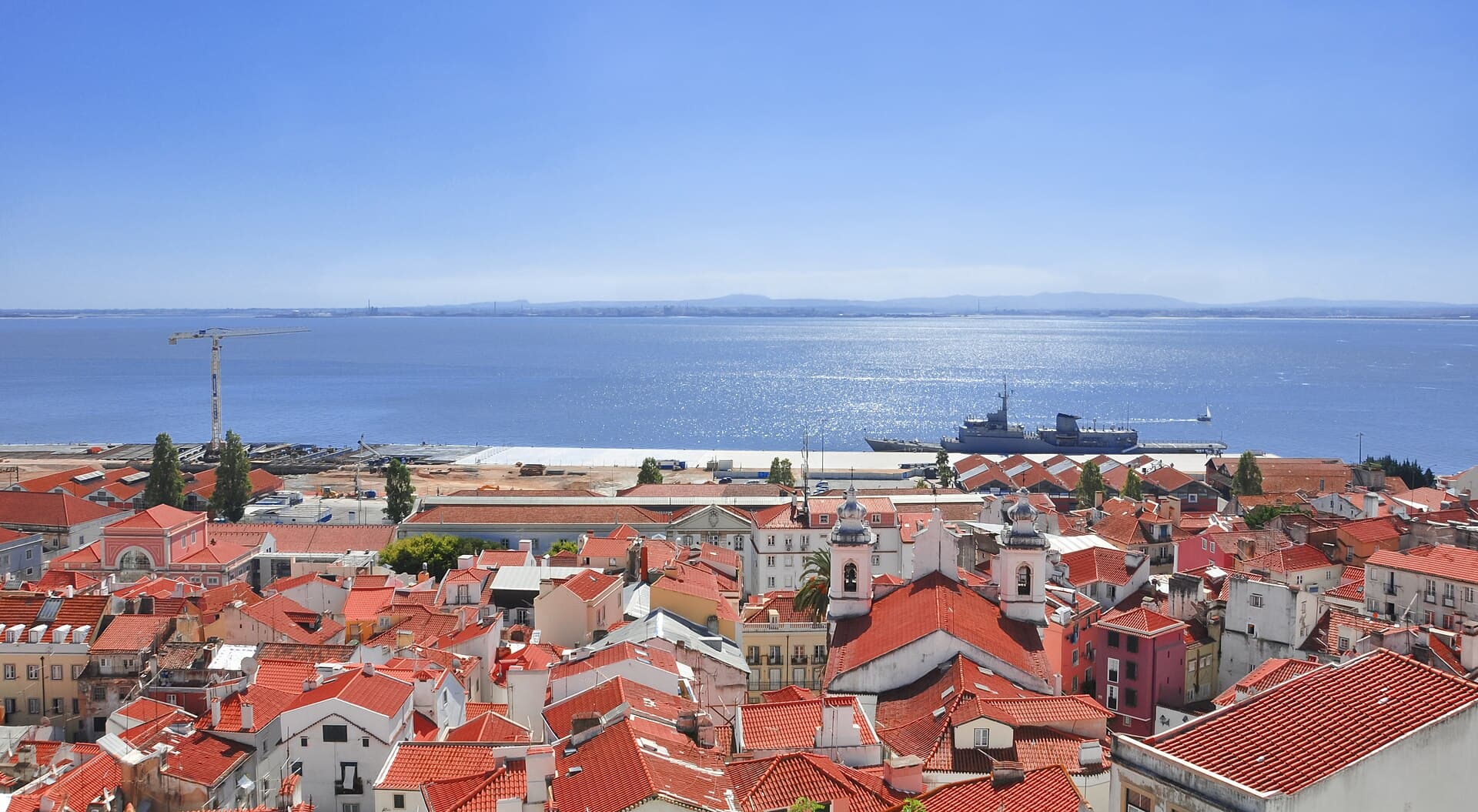
Private, fixed-price transfers from Lisbon Airport to the city and the coast around it — plus what to see and how to get into town once you land.
Lisbon is one of the few European capitals whose airport stands inside the city. Humberto Delgado lies a few kilometres from the centre, so the run in from the arrivals hall is short, and what shapes it is not distance but gradient. The city is built over steep hills above the Tagus, and its oldest quarters climb them in lanes too narrow for a car. West along the river is Belém, east the Parque das Nações, and beyond the city the coast runs out to Cascais while the wooded Serra de Sintra rises to the north-west.
Most first days are spent between the river and the castle hill. Praça do Comércio opens straight onto the Tagus, the grid of the Baixa runs behind it, and above that Alfama survived the earthquake of 1755 as a labyrinth of narrow streets and small squares. Belém, downstream, holds the tower and the monastery that Lisbon is known for. Sintra and Cascais are both close enough for a day out, which is why a good number of arrivals carry straight on past the city.
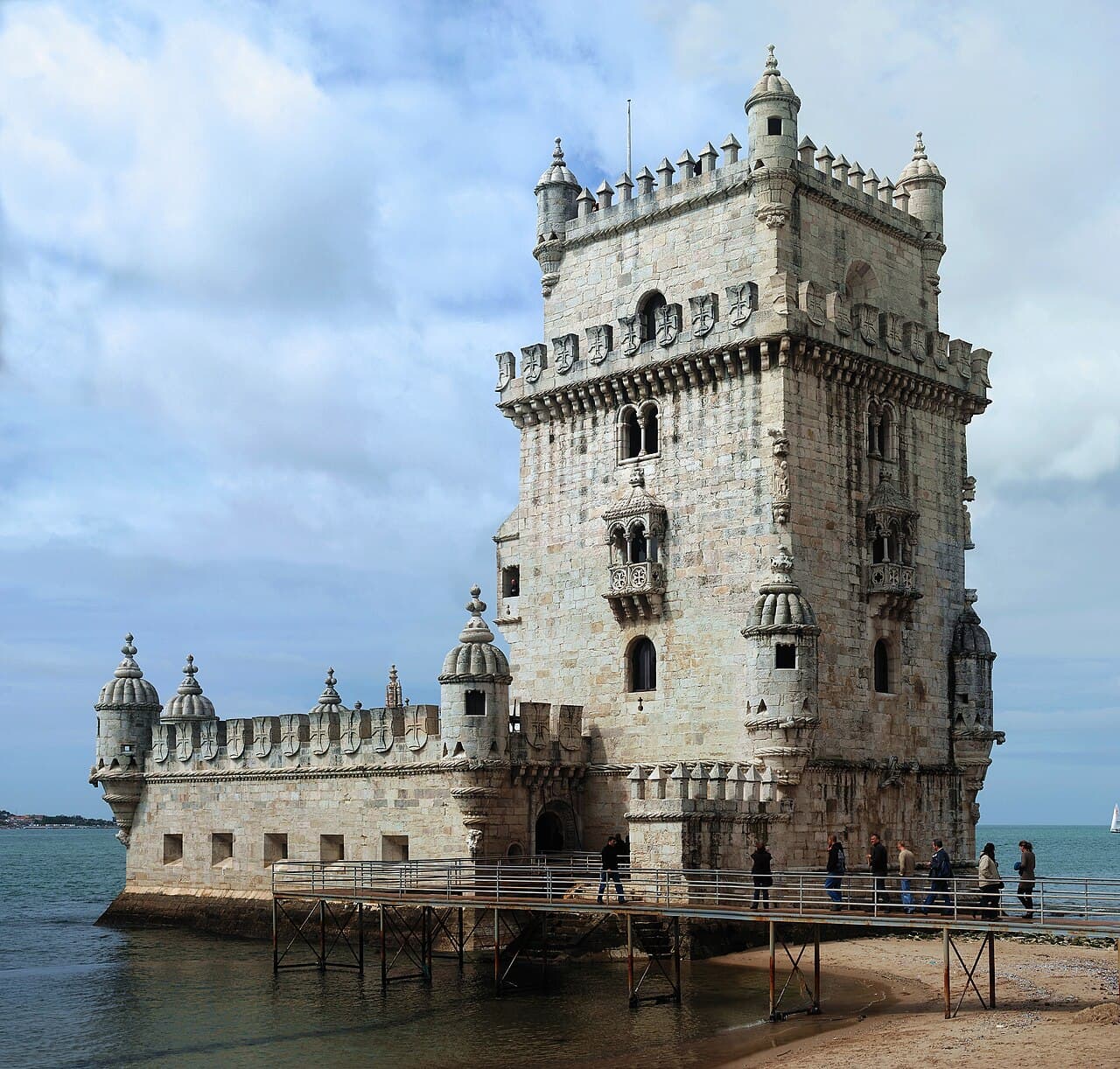
Belém, downstream along the Tagus
Both were raised to mark Portugal’s age of discovery, and both became UNESCO World Heritage Sites in 1983. The tower was built between about 1514 and 1519 for King Manuel I to a design by the military architect Francisco de Arruda, stands around 30 metres tall in the Manueline style and served as a point of embarkation and disembarkation for Portuguese explorers. Work on the monastery began on 6 January 1501; Vasco da Gama and the poet Luís de Camões were moved to carved tombs in its nave in 1880.
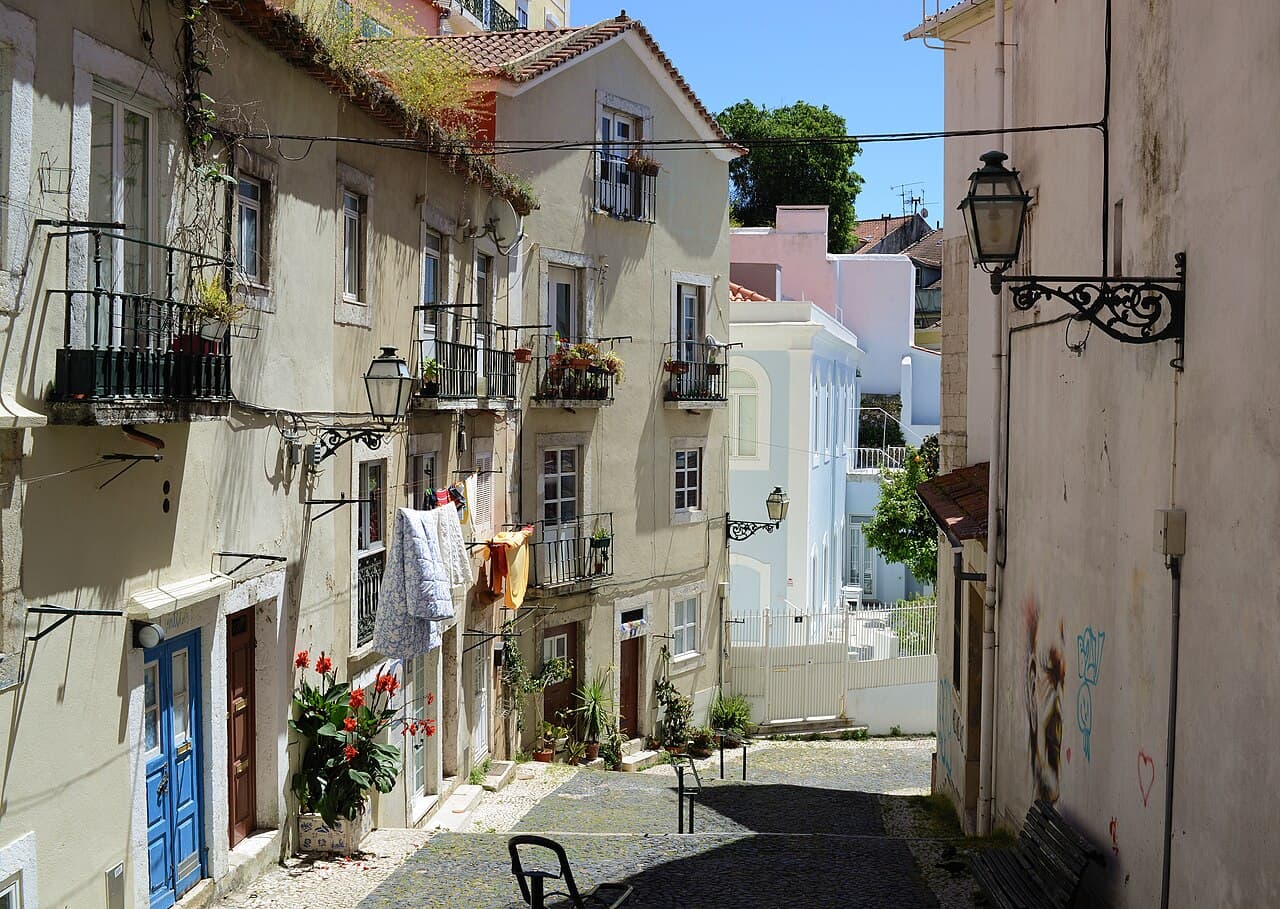
Old town, on the slope above the river
Alfama is the oldest quarter of Lisbon, a slope of lanes between the castle and the Tagus, and its name comes from an Arabic word meaning hot springs. The 1755 earthquake did not destroy it, and it has remained a labyrinth of narrow streets and small squares, with the terraces of Santa Luzia and Portas do Sol looking out over the rooftops. Above stands São Jorge Castle, ten towers on the highest point of the citadel, taken from the Moors in 1147 by Afonso Henriques.
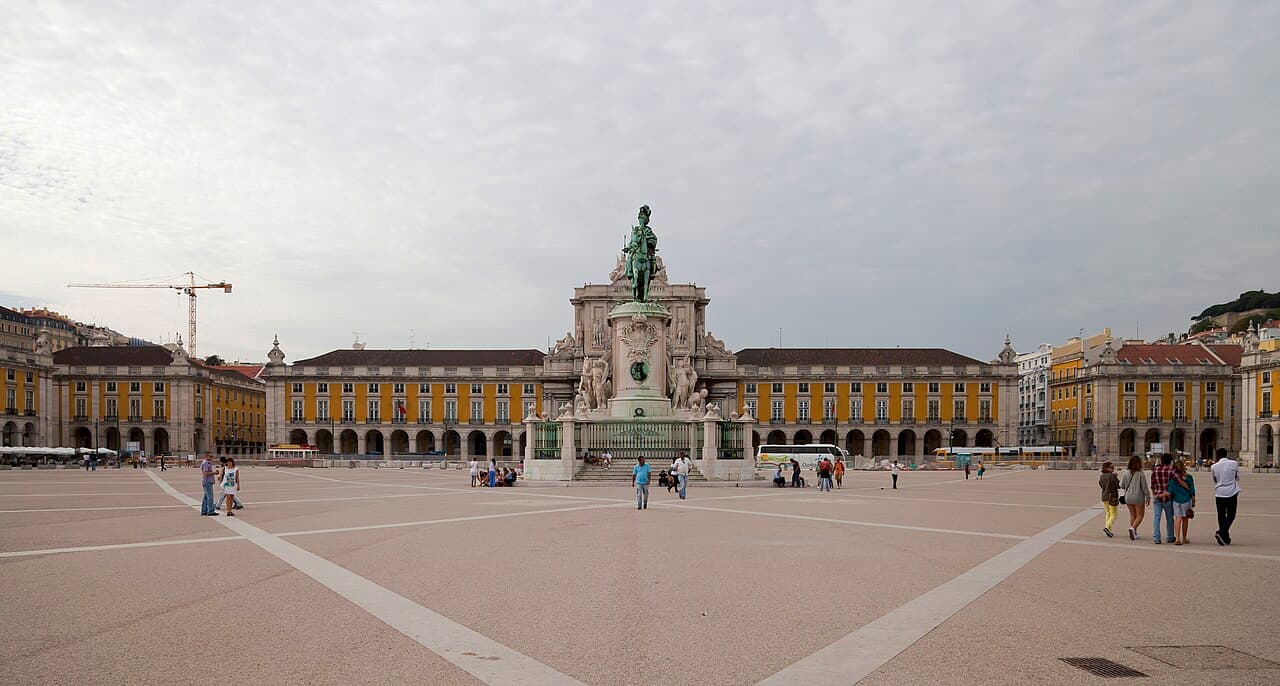
Baixa, on the riverfront
The square was the palace yard, Terreiro do Paço, until the earthquake of 1 November 1755 destroyed the Ribeira Palace that stood here. The Marquis of Pombal had it rebuilt as a U opening towards the Tagus, 175 metres on each side. The equestrian statue of King José I was inaugurated at its centre in 1775, and the Rua Augusta Arch behind it was completed in 1875. A few streets away, Carris tram 28 climbs from Martim Moniz through Graça and Estrela on a network that opened in 1873.
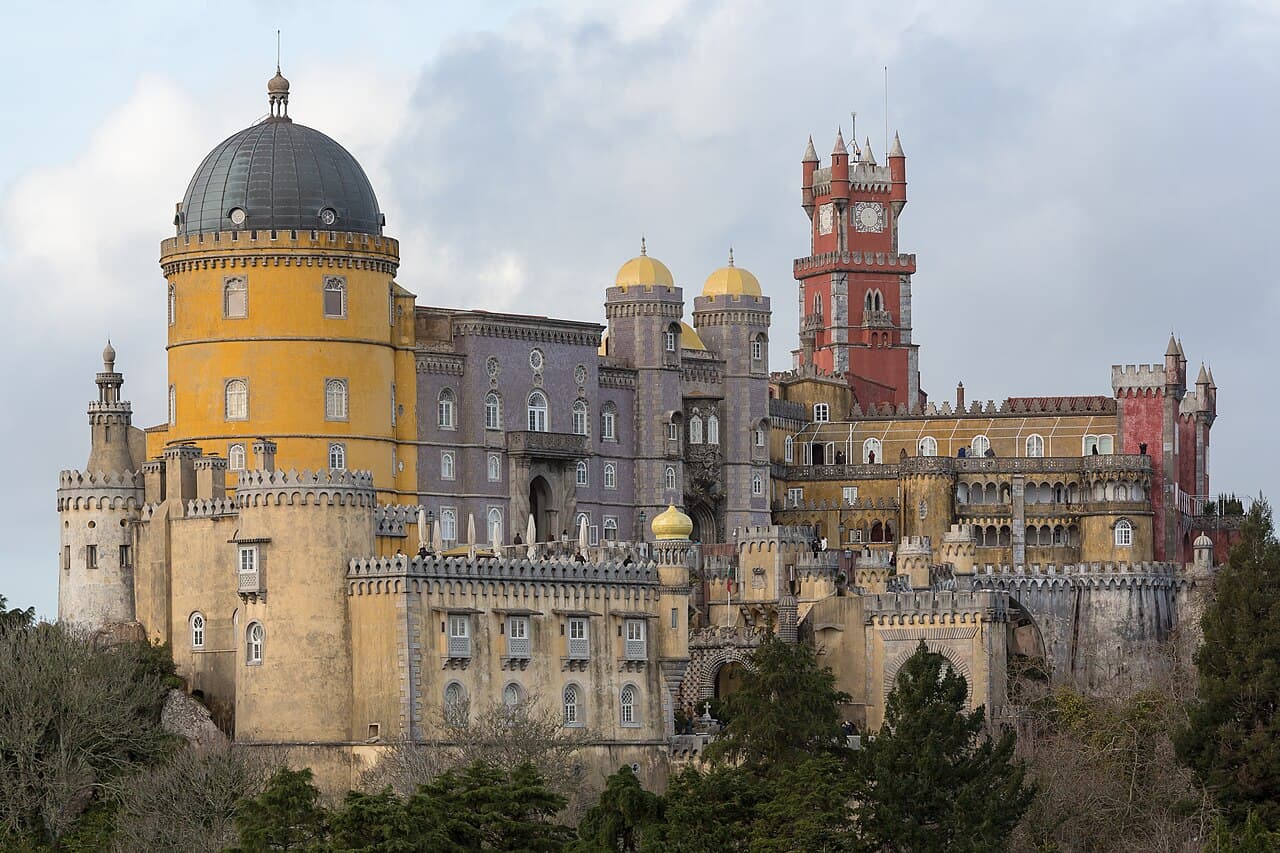
On a hilltop in the Sintra Mountains, north-west of Lisbon
King Ferdinand II built Pena between 1842 and 1854 on the top of a hill in the Sintra Mountains above the town, and on a clear day it can be seen from Lisbon. The design, by the German engineer Wilhelm Ludwig von Eschwege, mixes Neo-Gothic, Neo-Manueline, Neo-Islamic and Neo-Renaissance in one Romanticist building. Around it lies a park of more than 200 hectares planted with trees from North America, China, Japan, Australia and New Zealand. UNESCO listed it in 1995 as part of the Cultural Landscape of Sintra.
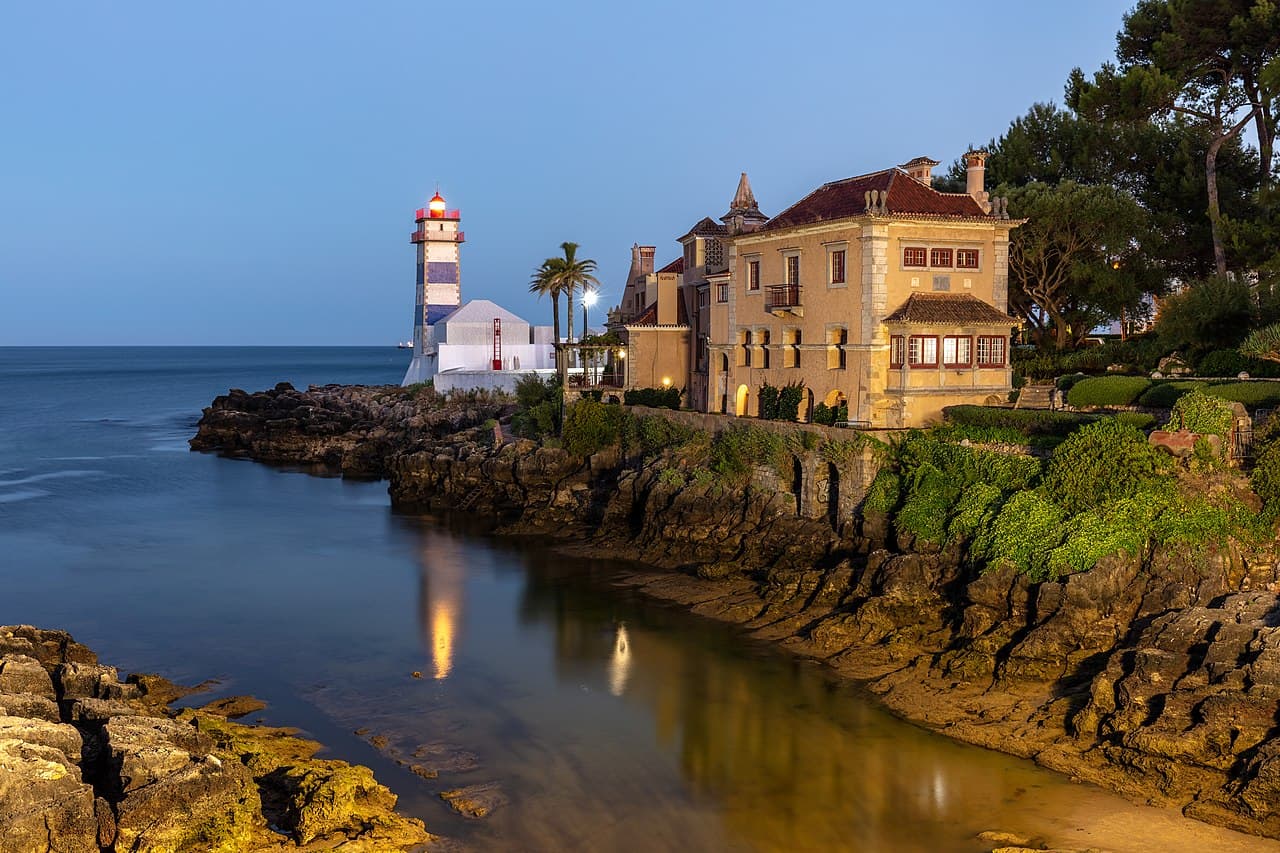
On the coast west of Lisbon, where the Tagus meets the Atlantic
Cascais was supplying fish to Lisbon by the 13th century, and became fashionable when King Luís I made it the royal summer residence from 1870 to 1908. Its citadel began as a small fortress around 1488 and was enlarged into a star-shaped Renaissance fortification in the late 16th century. The municipality counts seventeen beaches: the sheltered ones east of the town have calm water, while Guincho, out towards the cape, is a surfing, windsurfing and kitesurfing beach.
Prices start from the lowest published fare for this airport and depend on the destination and vehicle class. Cancel up to 24 hours before pickup for a 90% refund.
Photo credits Paolo Costa Baldi (CC BY-SA 3.0) · Alvesgaspar (CC BY-SA 3.0) · Alvesgaspar (CC BY-SA 3.0) · Diego Delso (CC BY-SA 3.0) · CEphoto, Uwe Aranas (CC BY-SA 3.0) · Diego Delso (CC BY-SA 4.0)