Private, fixed-price transfers from Madeira Airport to Funchal and the towns along the island’s coast — plus what to see and how to reach the city once you land.
Madeira is a volcanic island in the Atlantic, about 805 km south-west of mainland Portugal, and nearly every holiday here begins at the airport, 13.2 km east-north-east of Funchal. The runway is a landmark in its own right: when it was extended in 2000 it was carried out over the sea on a platform supported by 180 columns, each about 70 metres tall. From the airport the south coast runs two ways — west through Caniço and Garajau to Funchal and Câmara de Lobos, east to Machico in the next bay along.
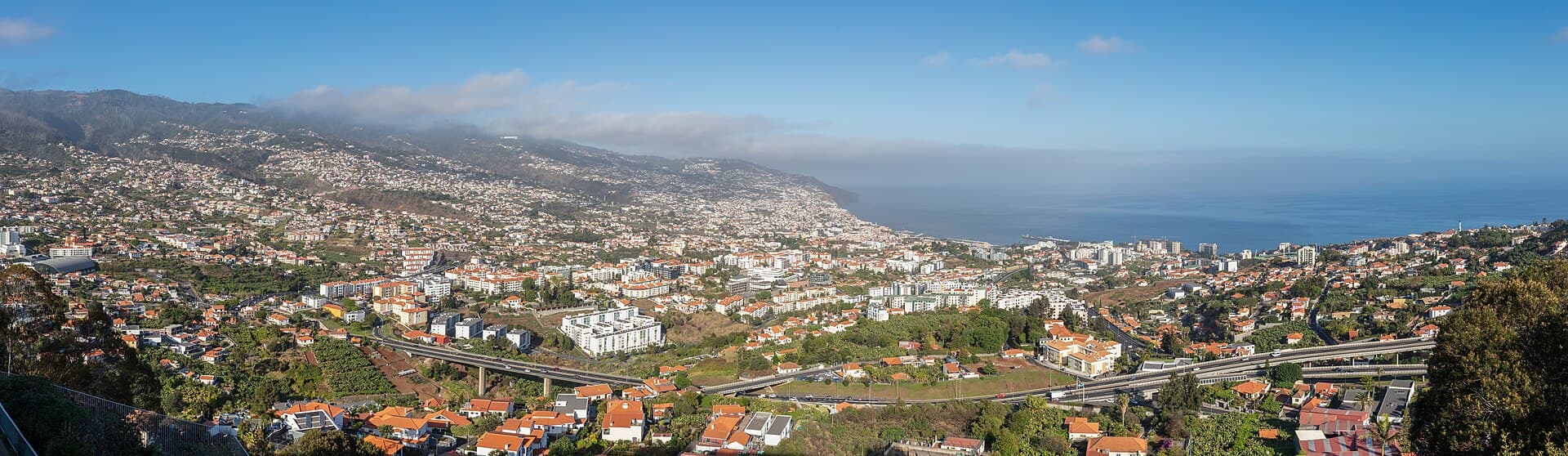
Funchal sits inside a natural amphitheatre-shaped valley whose slopes begin at the coast and rise to 1,200 metres, which is why a cable car is one of the sensible ways to travel in the city. Beyond the capital the island turns vertical: Cabo Girão falls 580 metres to the sea, Pico Ruivo reaches 1,862 metres, and more than 2,170 km of levadas — irrigation channels begun in the 16th century — carry walking paths across the interior. In the north-west, Porto Moniz has pools in the volcanic rock that the Atlantic refills.
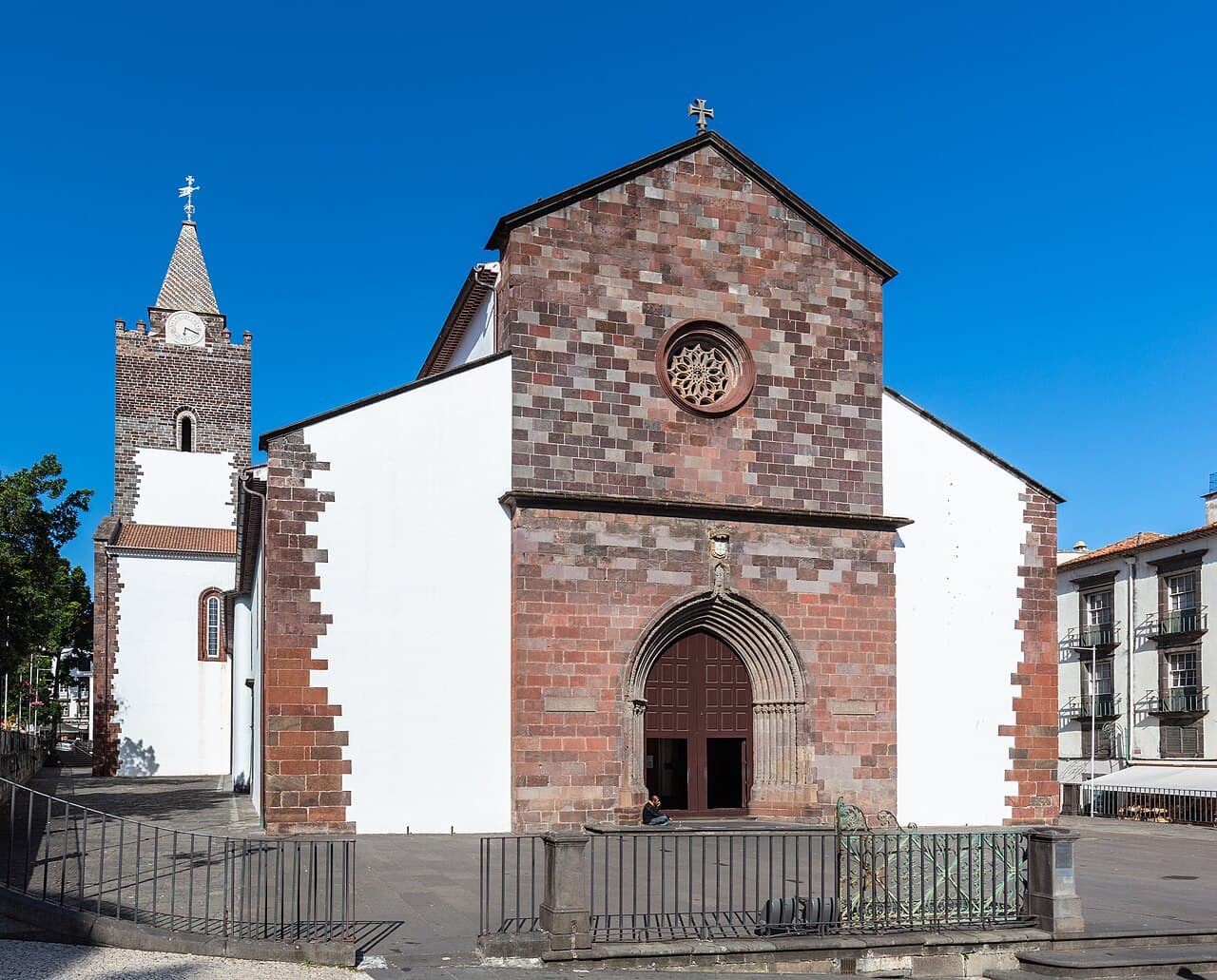
City centre, Funchal
Funchal is the sixth largest city in Portugal, with a population of 105,795, and it is built inside a natural amphitheatre-shaped valley with gentle slopes that begin at the coast and rise to 1,200 metres. At its heart stands the Sé, dedicated to Nossa Senhora da Assunção and raised to cathedral in 1514. Down at the water, the Port of Funchal — once the only major port in Madeira — has since 2007 been dedicated to passenger transport, cruise ships, ferries and yachts.
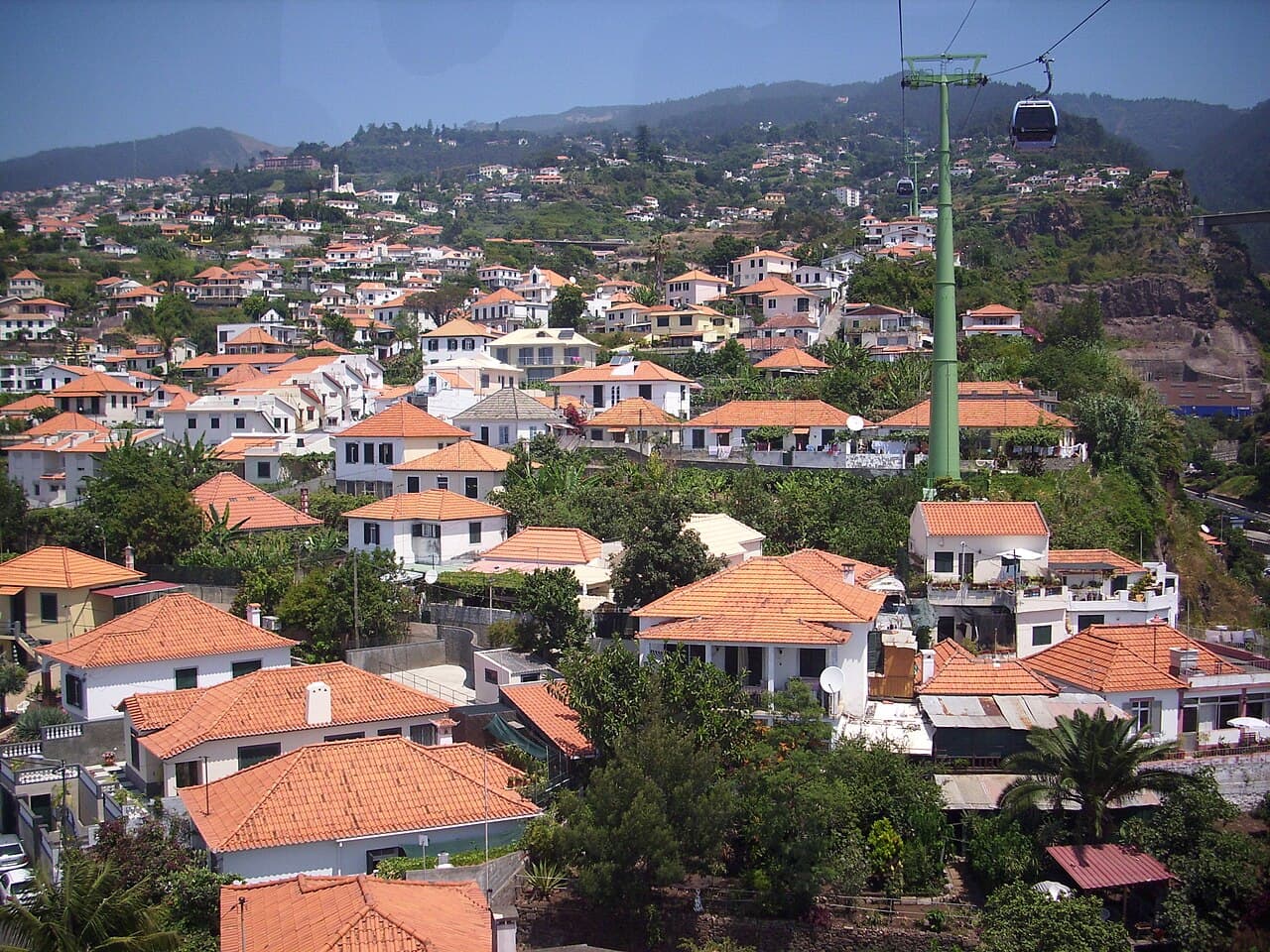
Almirante Reis Park to Monte
The quickest way out of the old town is upwards. The cable car runs 3,173 metres from Almirante Reis Park, by the water in central Funchal, to the suburb of Monte, climbing a height difference of 560 metres in about fifteen minutes. It opened in November 2000 and has been in service since; 39 cabins, each seating seven passengers, give it a capacity of up to 800 passengers an hour. The view back over the red roofs and the bay is the reason to ride it.
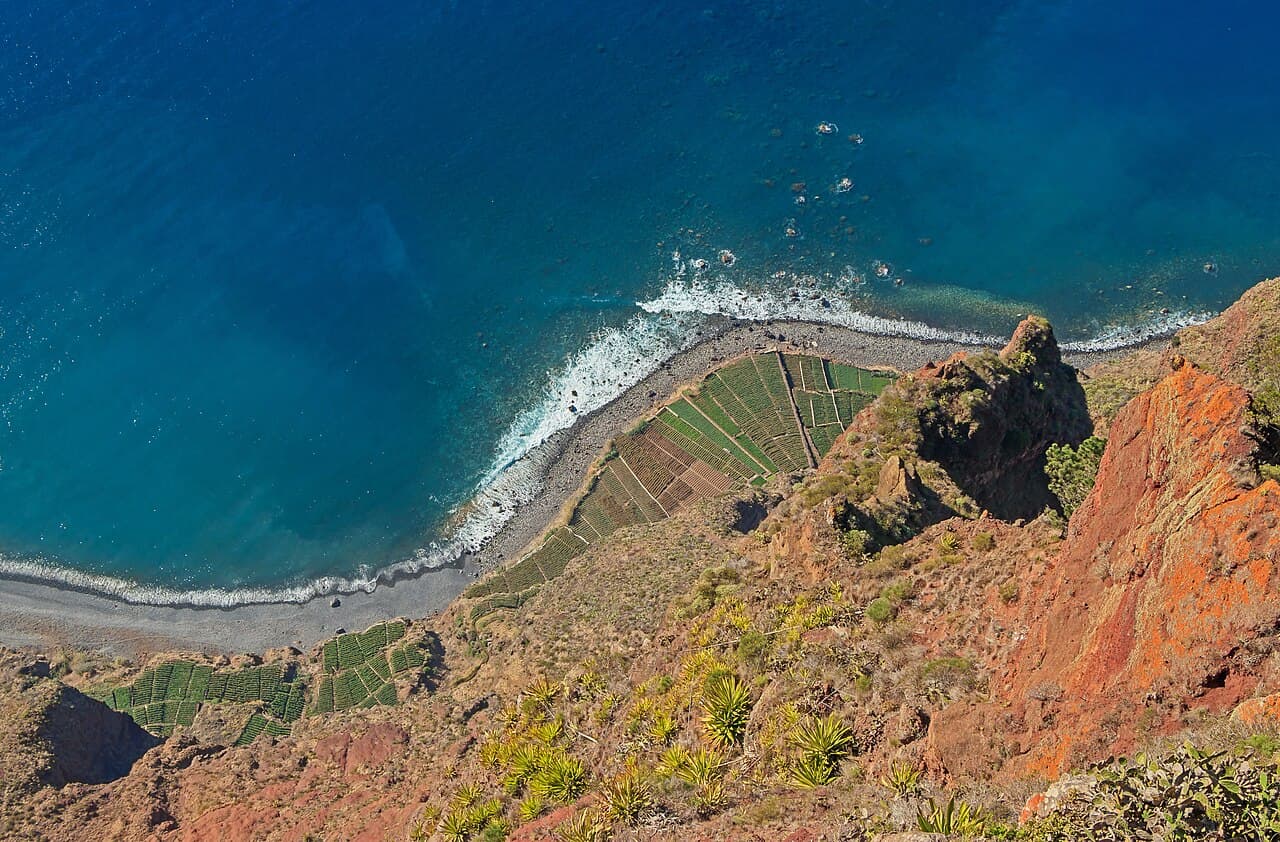
Less than 2 km west of Câmara de Lobos
West of Funchal the coast rears up into one of Europe’s great sea cliffs. Cabo Girão reaches 580 metres at its highest point, with the escarpment running from 560 to 589 metres, and since late October 2012 a glass-floored skywalk has projected from the top — the highest cliff skywalk in Europe. It stands less than two kilometres west of the centre of Câmara de Lobos, so it pairs naturally with a look at the fishing harbour below.
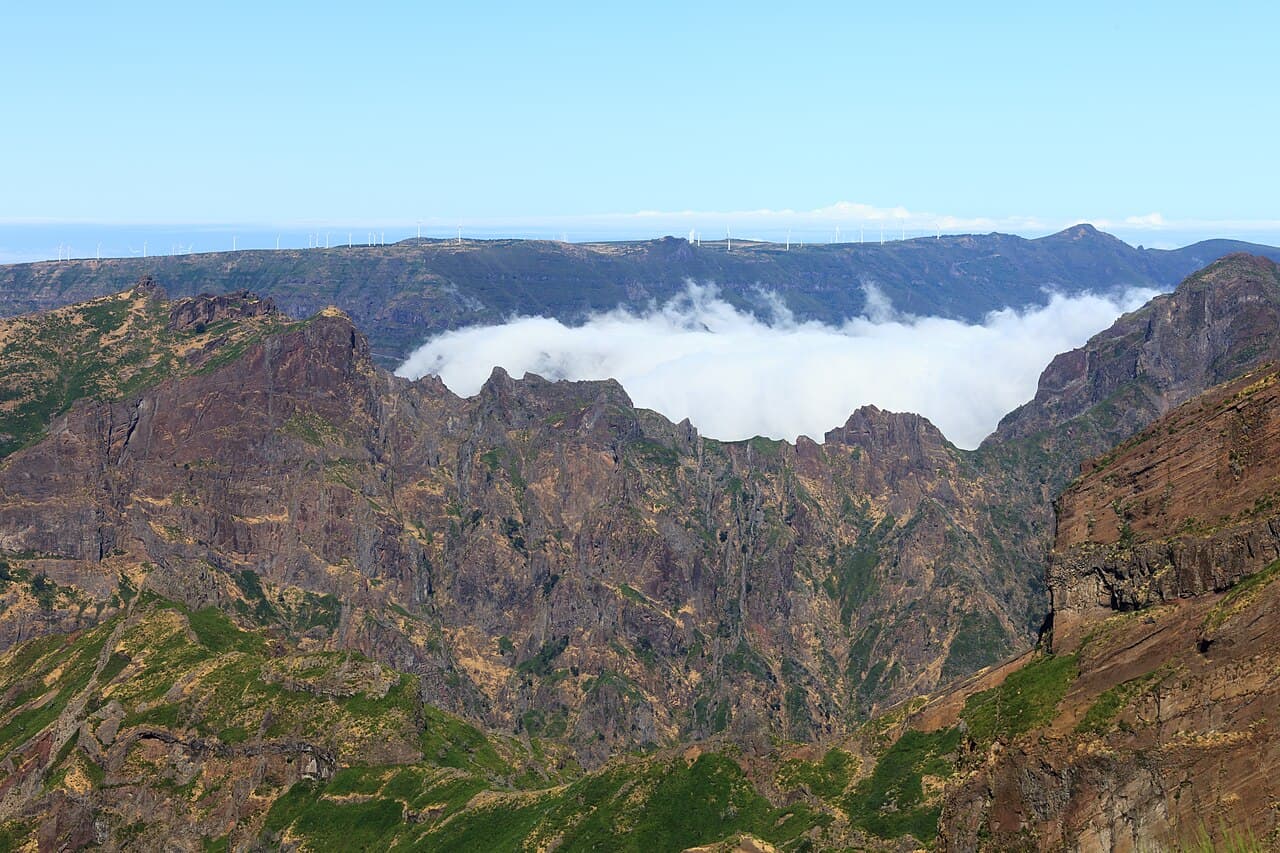
Central mountains, inland from Funchal
At 1,818 metres, Pico do Arieiro is the third highest peak on the island and the rare one you can drive to: there is easy road access to the summit, with a large car park, a restaurant and a souvenir shop. It is the starting point for walkers heading to Pico Ruivo, the highest point in Madeira, and on a clear day Porto Santo is visible about 48 km to the north-east. Cloud often sits below the summit rather than above it.
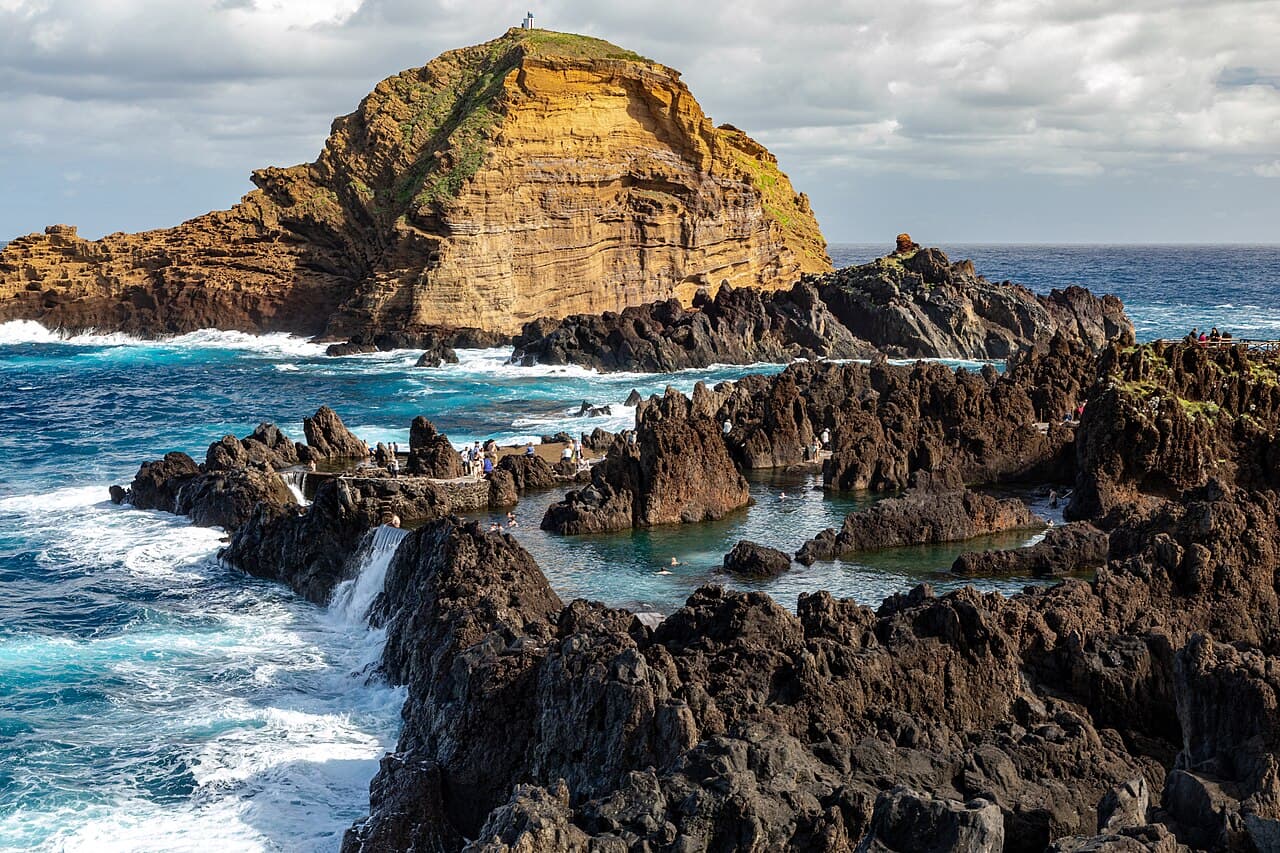
North-west corner of the island
In the north-western corner of Madeira, Porto Moniz has a natural complex of lava pools that are popular with locals and tourists alike — basins in the volcanic rock that the Atlantic refills from the open sea. The municipality covers 82.93 square kilometres and had 2,711 inhabitants at the 2011 census, and it takes in Ponta do Tristão, the island’s northernmost point. Reaching it means crossing the island, so treat it as a day out rather than an afternoon.
Prices start from the lowest published fare for this airport and depend on the destination and vehicle class. Cancel up to 24 hours before pickup for a 90% refund.
Photo credits Diego Delso (CC BY-SA 4.0) · Diego Delso (CC BY-SA 4.0) · Hoo man (CC BY-SA 3.0) · H. Zell (CC BY-SA 3.0) · Luis Miguel Bugallo Sánchez (Lmbuga) (CC BY-SA 4.0) · Dietmar Rabich (CC BY-SA 4.0)