Private, fixed-price transfers from Girona Airport to the Costa Brava resorts, to Girona itself and as far as Barcelona — plus what to see once you arrive.
Girona–Costa Brava Airport sits inland, 12.5 km south-west of Girona beside the village of Vilobí d’Onyar, and it serves two quite different places. The short journeys run south and east to the Costa Brava: Lloret de Mar, Tossa de Mar and Blanes are the closest of the big resorts, with the quieter coves around Palafrugell, Begur and L’Escala further north. The long journey runs the other way. Low-cost airlines spent years selling this airport under Barcelona’s name, but the city is roughly a hundred kilometres away, and our price list shows the difference plainly.
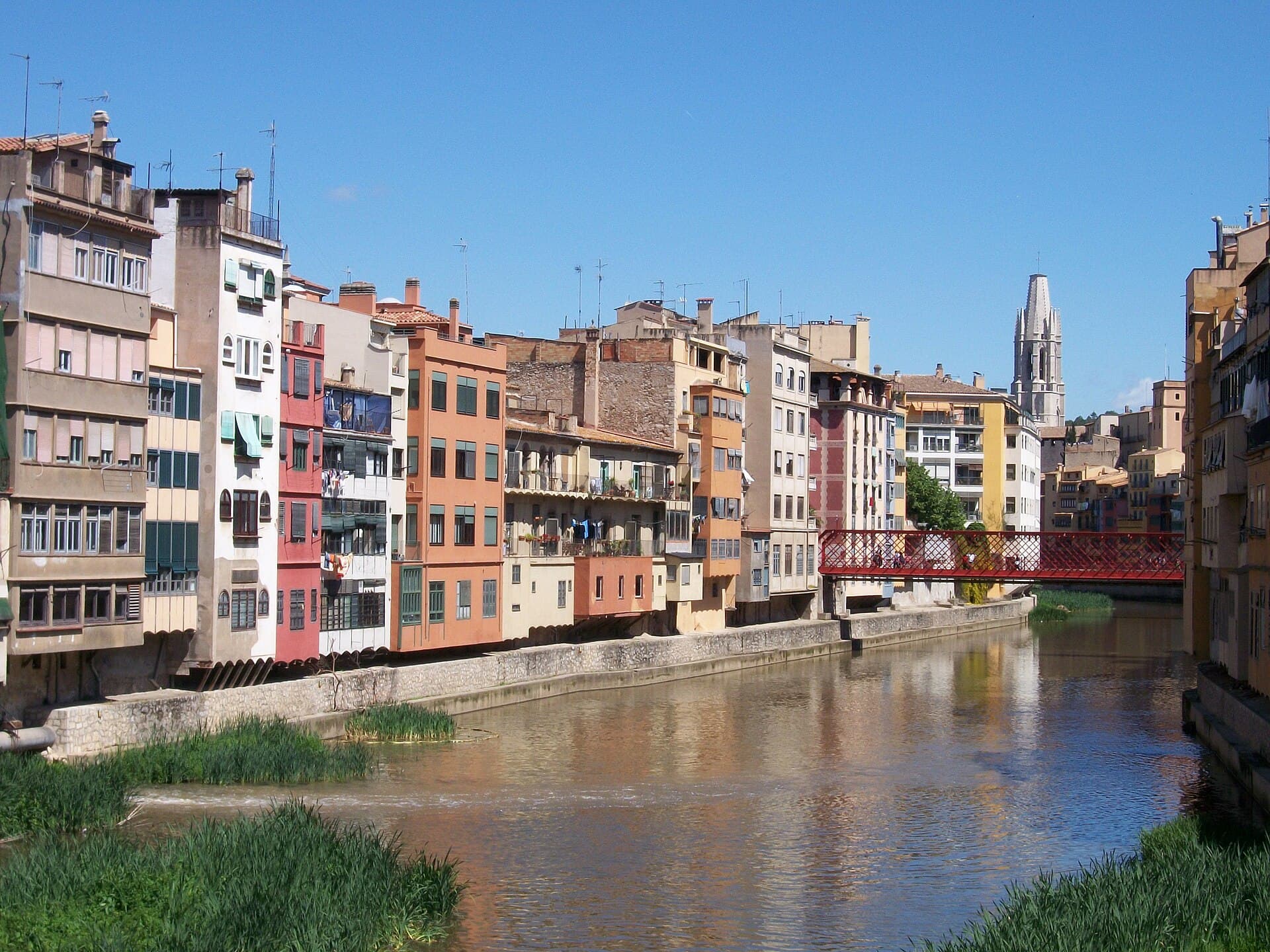
Girona itself deserves more than a change of transport. The old city stands above the Onyar, whose riverfront houses have been painted in 29 colours since 1982, and behind them rise the cathedral, the medieval Jewish quarter and a walk along the rebuilt city walls. North of the city the ground opens out towards Figueres and the Empordà, where Salvador Dalí’s museum, the Greek and Roman ruins at Empúries and the bridge at Besalú make a day out that never goes near a beach.
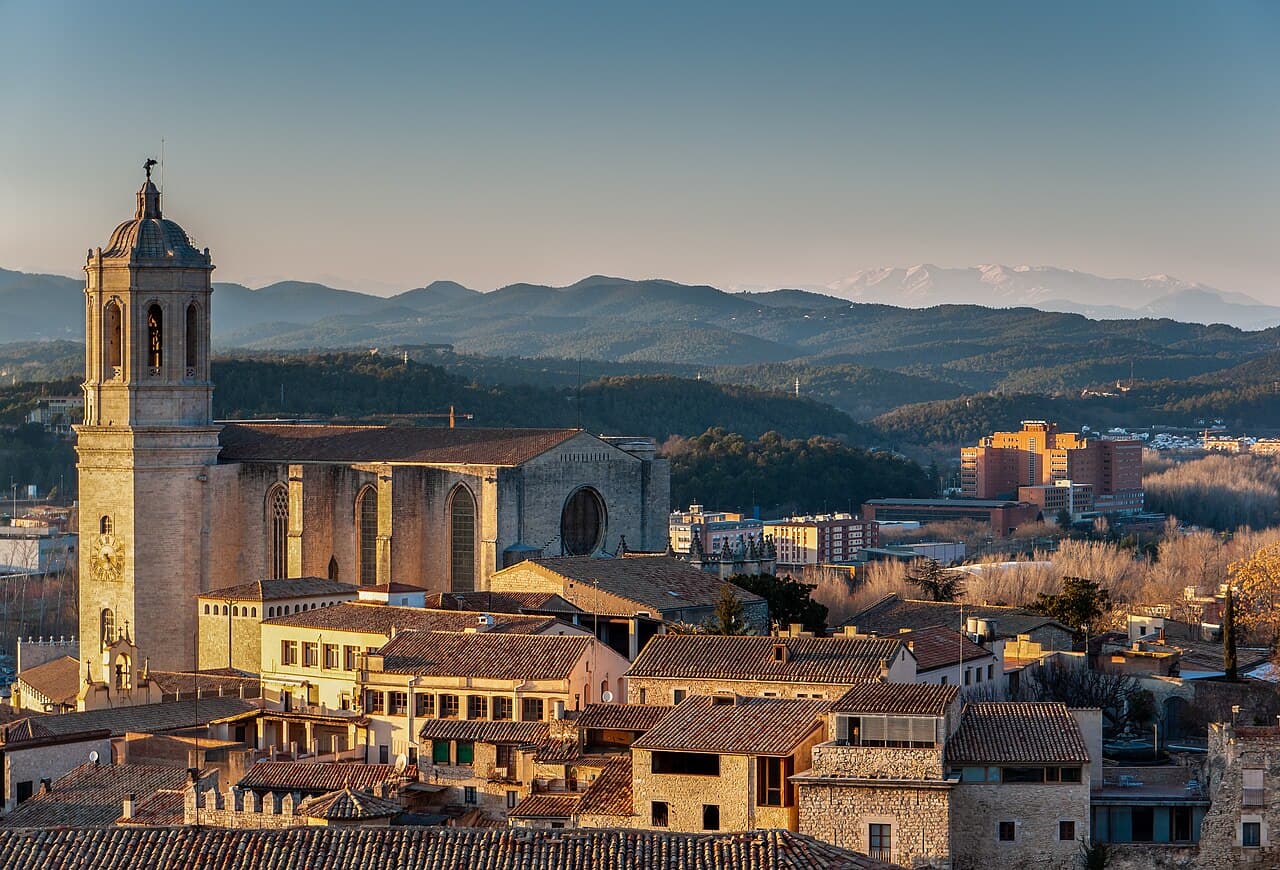
Old town, Girona
The cathedral stands at the top of a broad Baroque staircase completed in 1607, above the roofs of the old city. Work began in 1015 and finished only in the 18th century, which is why Romanesque, Gothic and Baroque all meet in one building. Its Gothic nave is 22.98 metres across — the widest in the world, and among all naves second only to St Peter’s in Rome. The museum holds the Tapestry of Creation and the 10th-century Gerona Beatus.
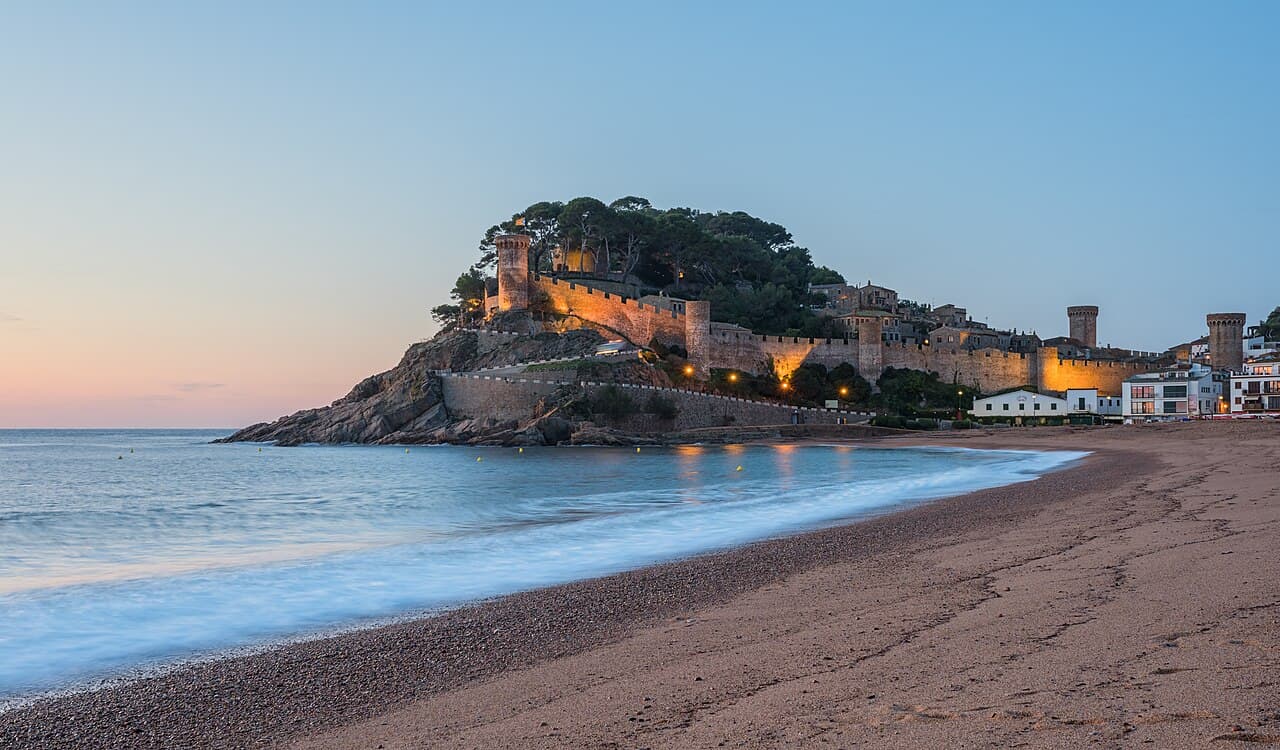
Tossa de Mar, on the Costa Brava
Tossa is the one town on this coast still held inside its medieval walls. The Vila Vella keeps the entire original perimeter of battlemented stone walls, four turrets and three cylindrical towers with parapets, much as it stood at the end of the 14th century, and it was declared a national historic monument in 1931. A lighthouse occupies the highest point, where a castle and a windmill once stood. Below the walls the main beach, Platja Gran, runs 380 metres.
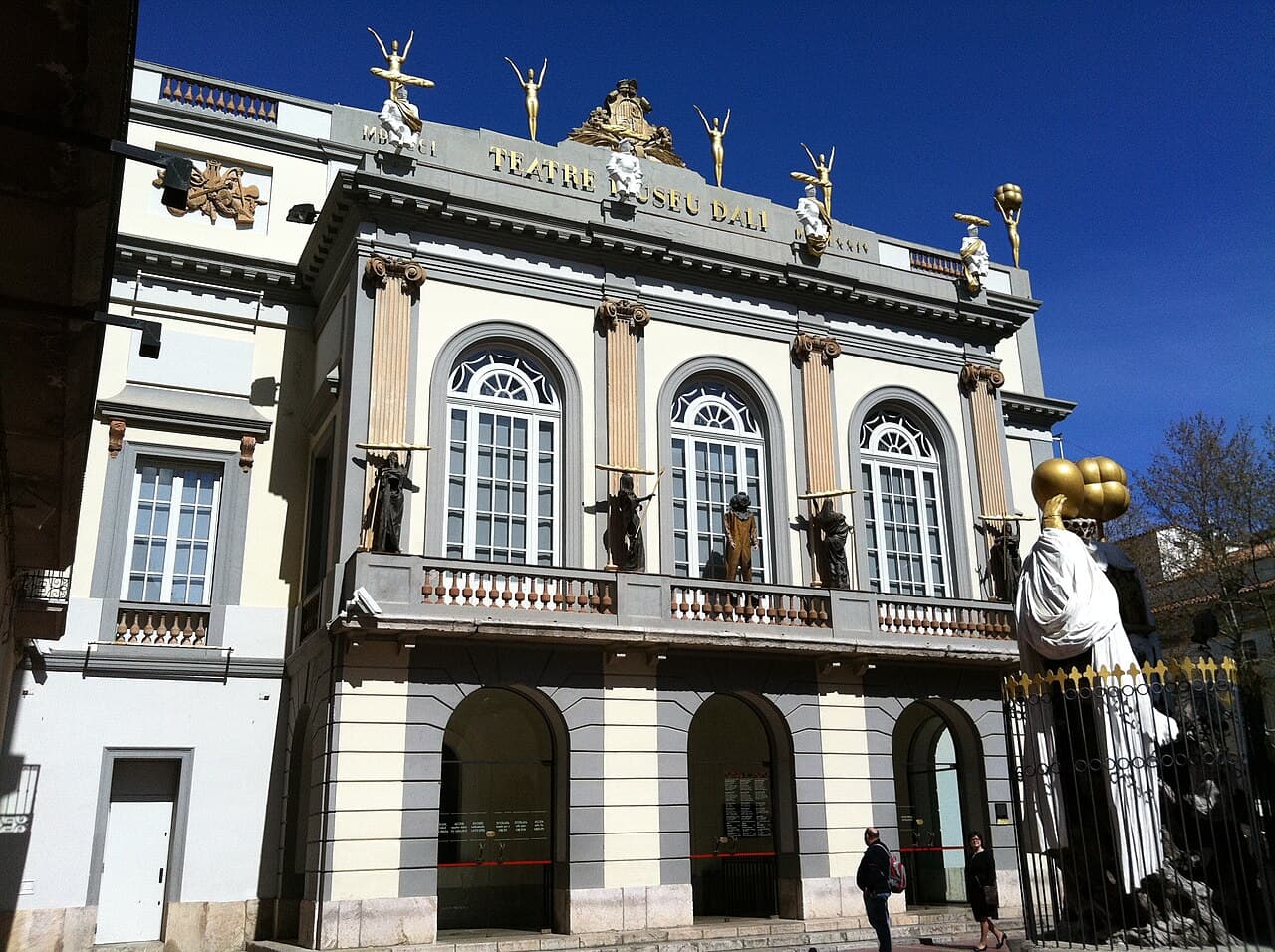
Figueres, north of Girona
Salvador Dalí built his museum inside the theatre of his home town — a building burned during the Spanish Civil War and left in ruins until he rebuilt it. It opened on 28 September 1974 and holds the single largest and most diverse collection of his work, from early paintings to the Mae West Lips Sofa, in rooms he designed to be walked through like a dream. Dalí is buried in a crypt below the stage floor. It received 1,368,755 visitors in 2016.
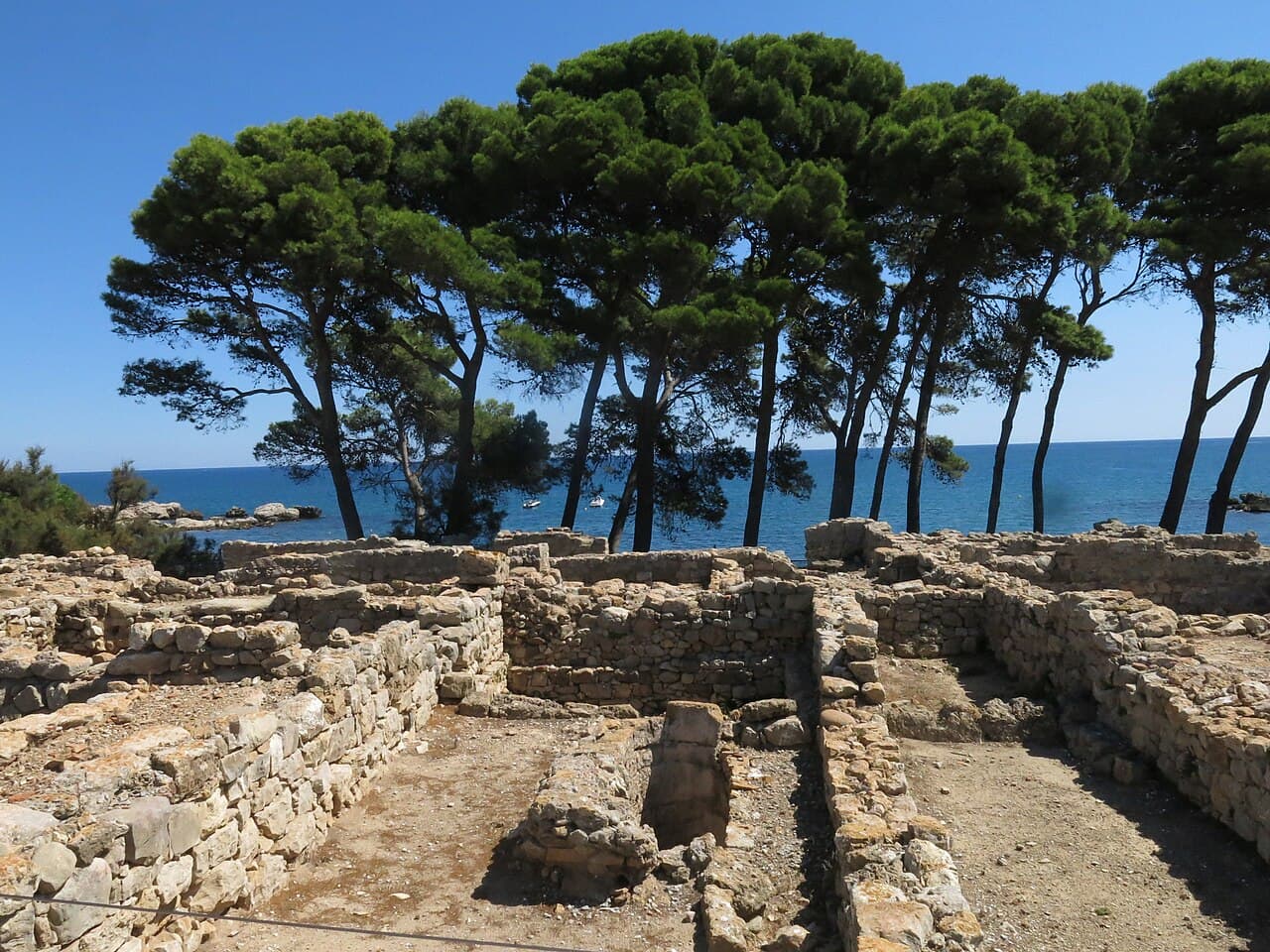
Between L’Escala and Sant Martí d’Empúries
Greeks from Phocaea founded a settlement here in 575 BC, and around 550 BC it spread to the mainland as the Neapolis, which grew into the largest Greek colony in the Iberian Peninsula. When Rome landed in 218 BC in answer to Hannibal, this is where the conquest of Hispania began. Both towns are still on the ground — Greek temples and a Roman forum, houses with mosaic floors and a Palaeochristian basilica — excavated systematically since 1908.
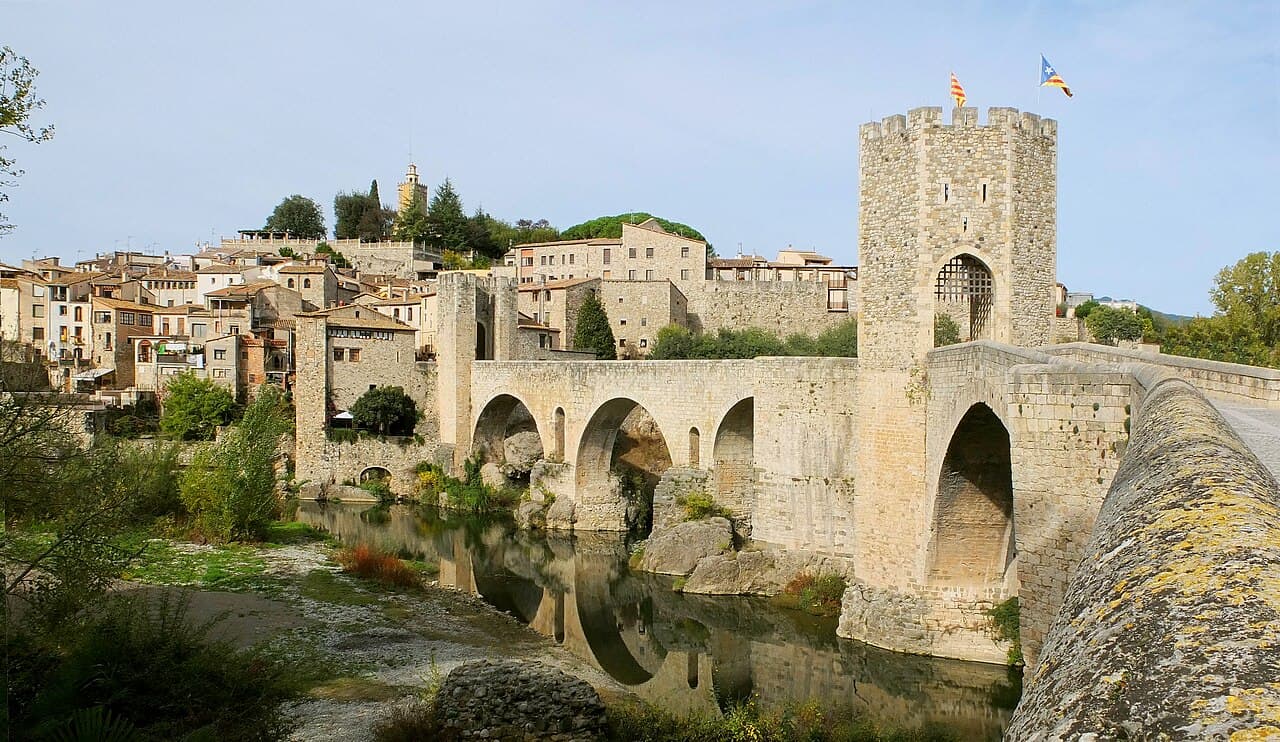
Besalú, in the Garrotxa
You arrive in Besalú across a 12th-century Romanesque bridge with seven uneven arcs, two towers and a gateway at its midpoint — the image the town is known by. Inside it stands a restored mikveh, a Jewish ritual bath of the 11th or 12th century and the only Romanesque one left in Spain, with the remains of a medieval synagogue in the lower town. The whole place has been a protected historical property since 1966.
Prices start from the lowest published fare for this airport and depend on the destination and vehicle class. Cancel up to 24 hours before pickup for a 90% refund.
Photo credits Florent Pécassou (CC BY-SA 3.0) · Ermell (CC BY-SA 4.0) · Moahim (CC BY-SA 4.0) · Kippelboy (CC BY-SA 3.0) · Enric (CC BY-SA 4.0) · Palauenc05 (CC BY-SA 4.0)