Private, fixed-price transfers from Gran Canaria Airport to the capital and the resorts of the south coast — plus what to see and how to get into Las Palmas once you arrive.
Gran Canaria is the third-largest of the Canary Islands, a roughly round island about 50 km across, and Gran Canaria Airport is its only commercial airport, so almost every holiday here begins there. The airport lies on the Bay of Gando on the east coast, 19 km south of Las Palmas, and journeys from it run in two opposite directions. To the north is the capital. To the south are the resorts: San Agustín, Playa del Inglés and Maspalomas around the dunes, then Meloneras, and further west along the coast Arguineguín, Puerto Rico, Amadores and Puerto de Mogán.
The island is often called a “miniature continent” for the variety of its landscapes, and it rewards a trip away from the beach. In Las Palmas, the old quarter of Vegueta keeps the Cathedral of Santa Ana and the house named after Columbus, while Las Canteras beach runs along the other side of the city. Inland, the volcanic monolith of Roque Nublo rises near the centre of the island, and a third of Gran Canaria is protected as a UNESCO Biosphere Reserve. On the south-west coast, Puerto de Mogán is a fishing village and marina laced with canals.
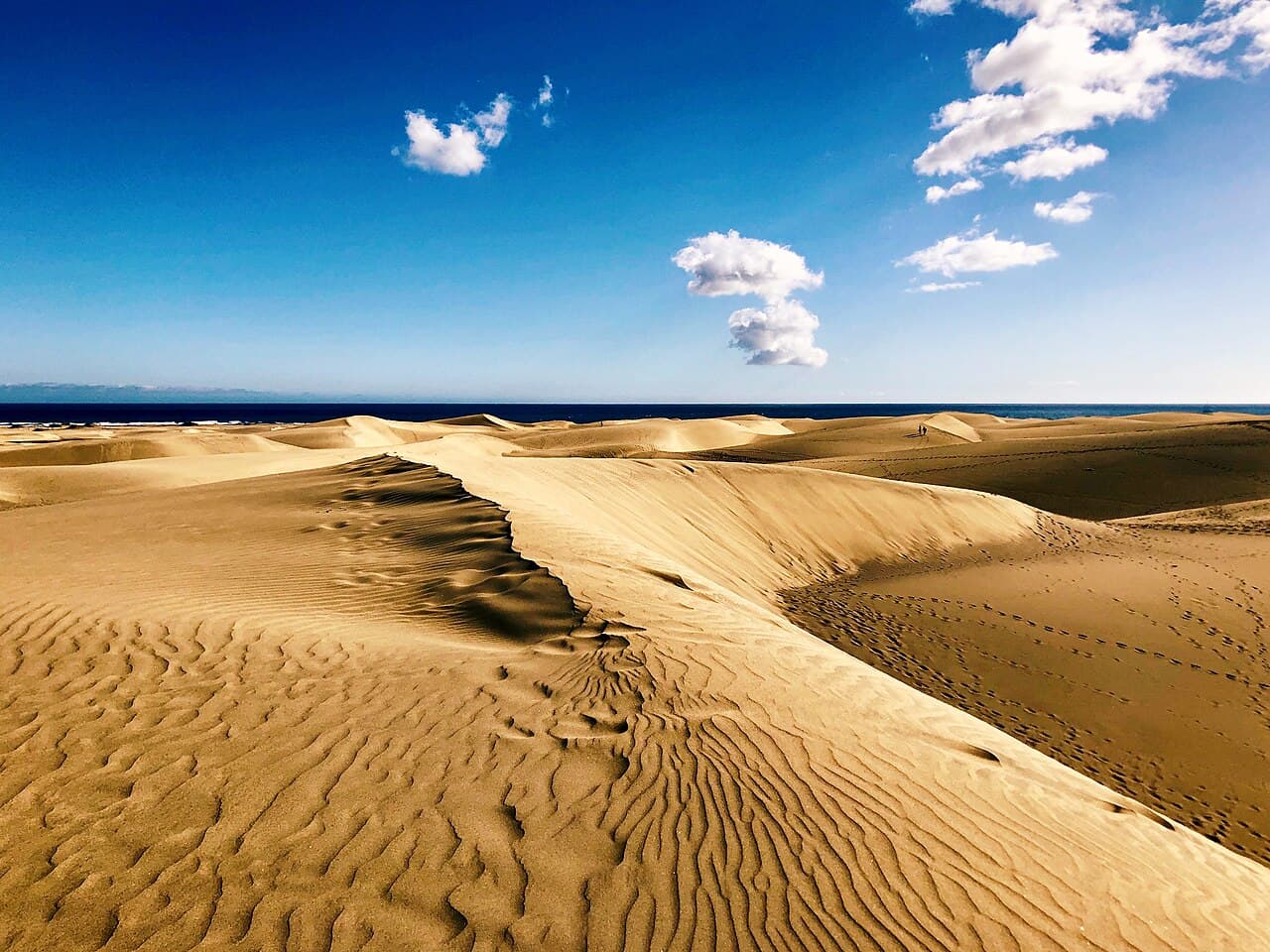
Between Playa del Inglés and the lighthouse
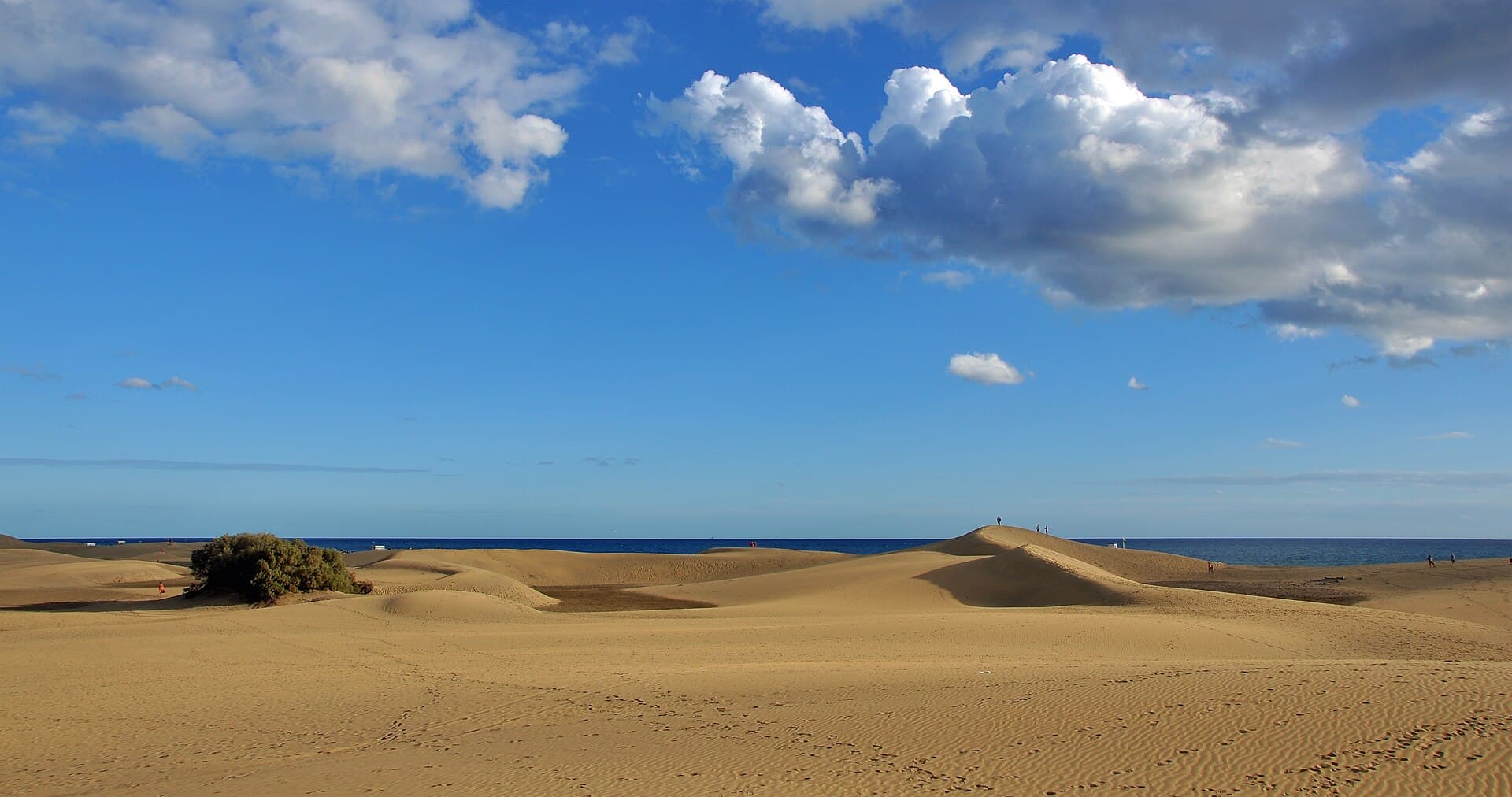
The Maspalomas Dunes cover 404 hectares of the south coast, between Playa del Inglés and the Maspalomas lighthouse. They formed during the last ice age, when the marine shelf lay dry and the wind blew its sand towards the island. Today the dunes are a protected nature reserve, and El Charco, a natural lagoon at their edge, attracts many species of birds. The 56-metre lighthouse at the southern point was completed in 1890 to guide ships sailing between Europe and the Americas.
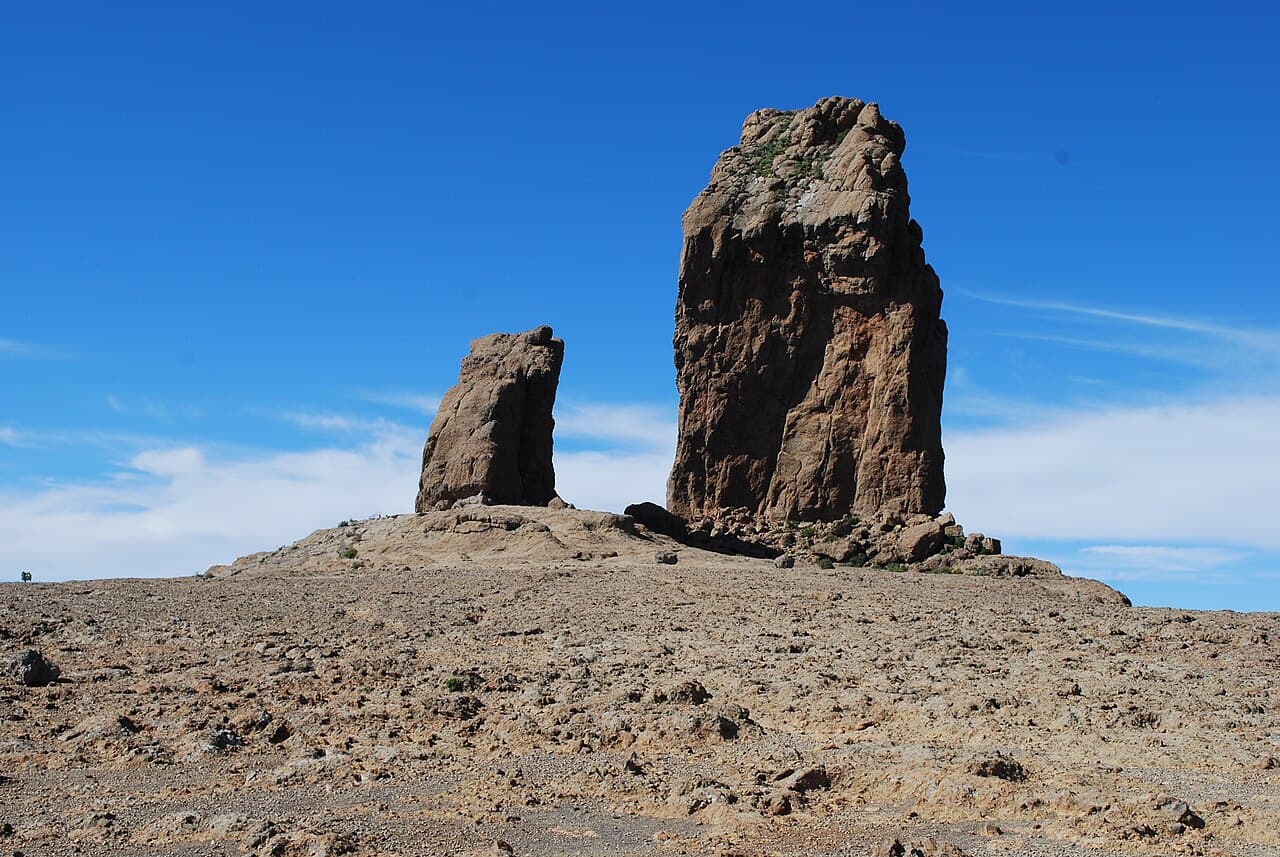
Tejeda, near the centre of the island
Roque Nublo — the “clouded rock” — is a volcanic monolith 80 metres tall, formed by an eruption around 4.5 million years ago. Its top stands 1,813 metres above sea level, which makes it the third-highest point on Gran Canaria after Morro de la Agujereada and Pico de las Nieves. The rock rises in the municipality of Tejeda, near the geographical centre of the island, within the 260 km² Nublo Rural Park, and other formations such as Roque del Fraile and La Rana stand close by.
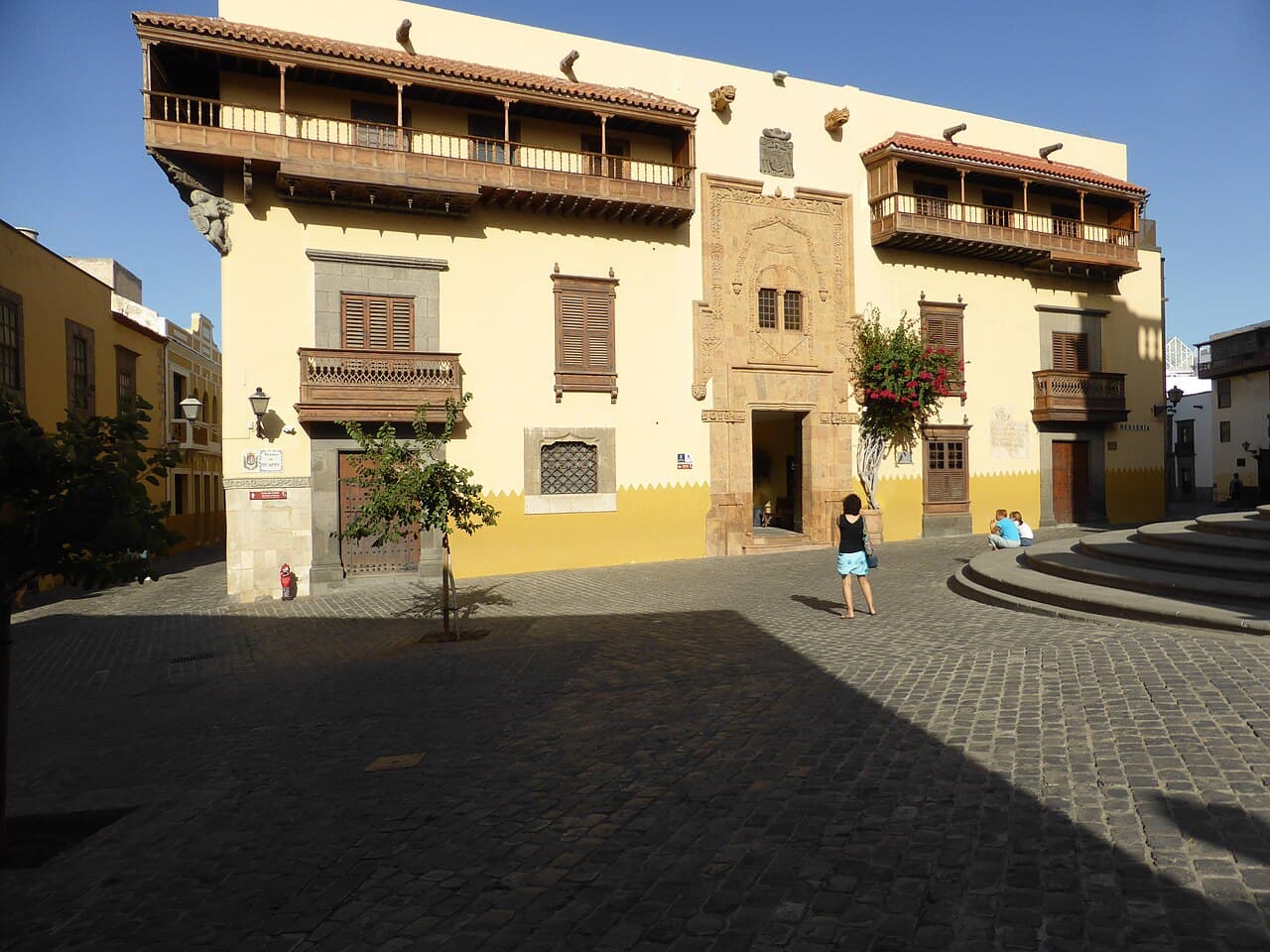
Old town, Las Palmas
Vegueta is where Las Palmas began: Juan Rejón founded the city here on 24 June 1478. The Cathedral of Santa Ana, begun in 1500 beside the Plaza Mayor de Santa Ana, is considered the most important monument of Canarian religious architecture, and inside its piers are carved to imitate palm trees. Behind the cathedral, the Casa de Colón museum is named after Christopher Columbus, who anchored at Las Palmas in 1492 to repair the rudder of the Pinta. Vegueta and Triana are on UNESCO’s tentative World Heritage list.
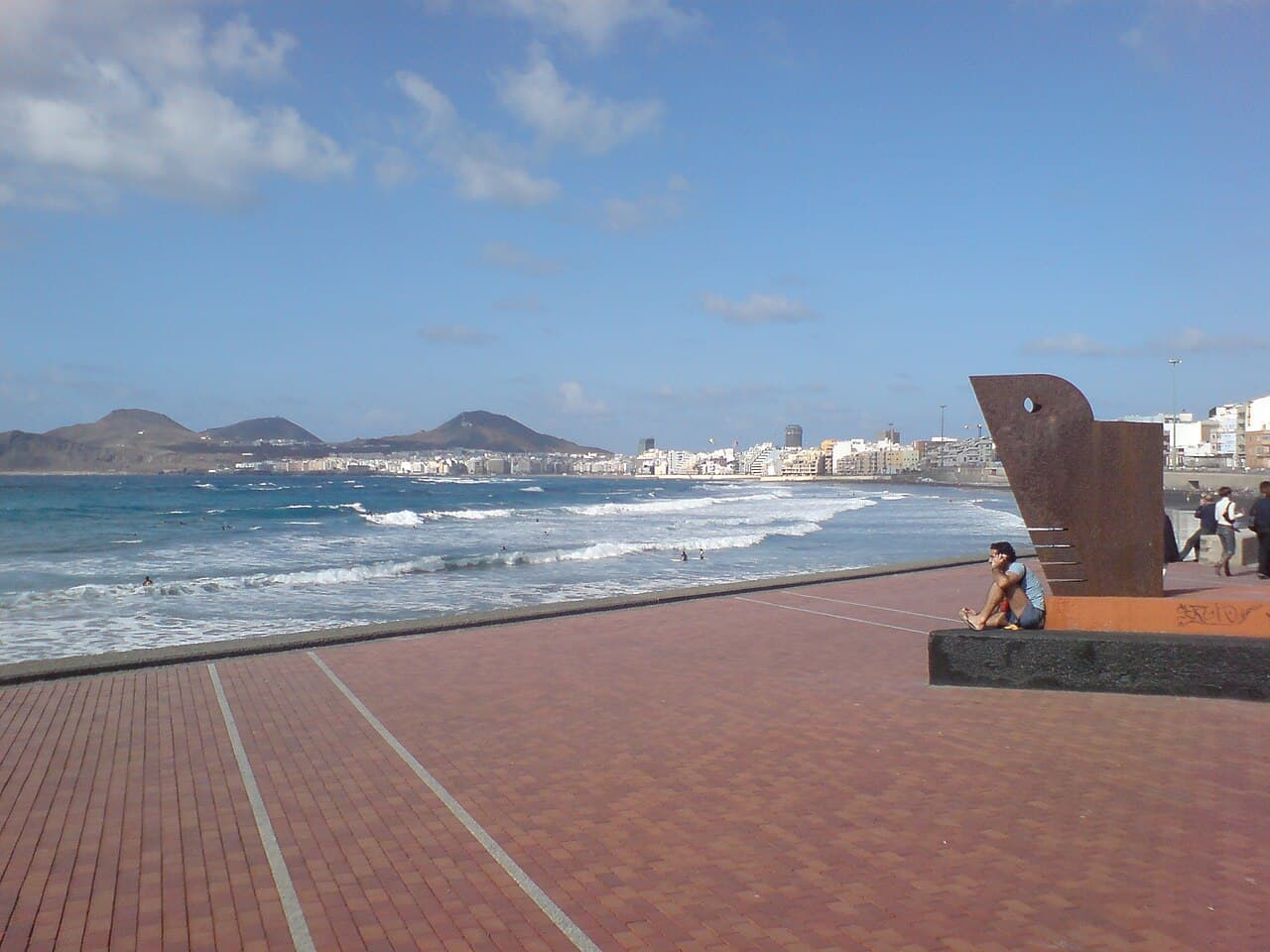
Isthmus of Guanarteme, Las Palmas
Las Canteras is the main city beach of Las Palmas: just over three kilometres of sand, from the foothills of La Isleta to near the mouth of the Tamaraceite ravine. About 200 metres offshore, a natural sandstone reef called La Barra runs parallel to the shore for some two kilometres and shelters much of the beach from Atlantic currents. The reef was once quarried — cantera in Spanish — which gave the beach its name. The Paseo de Las Canteras promenade runs from the Alfredo Kraus Auditorium to La Puntilla.
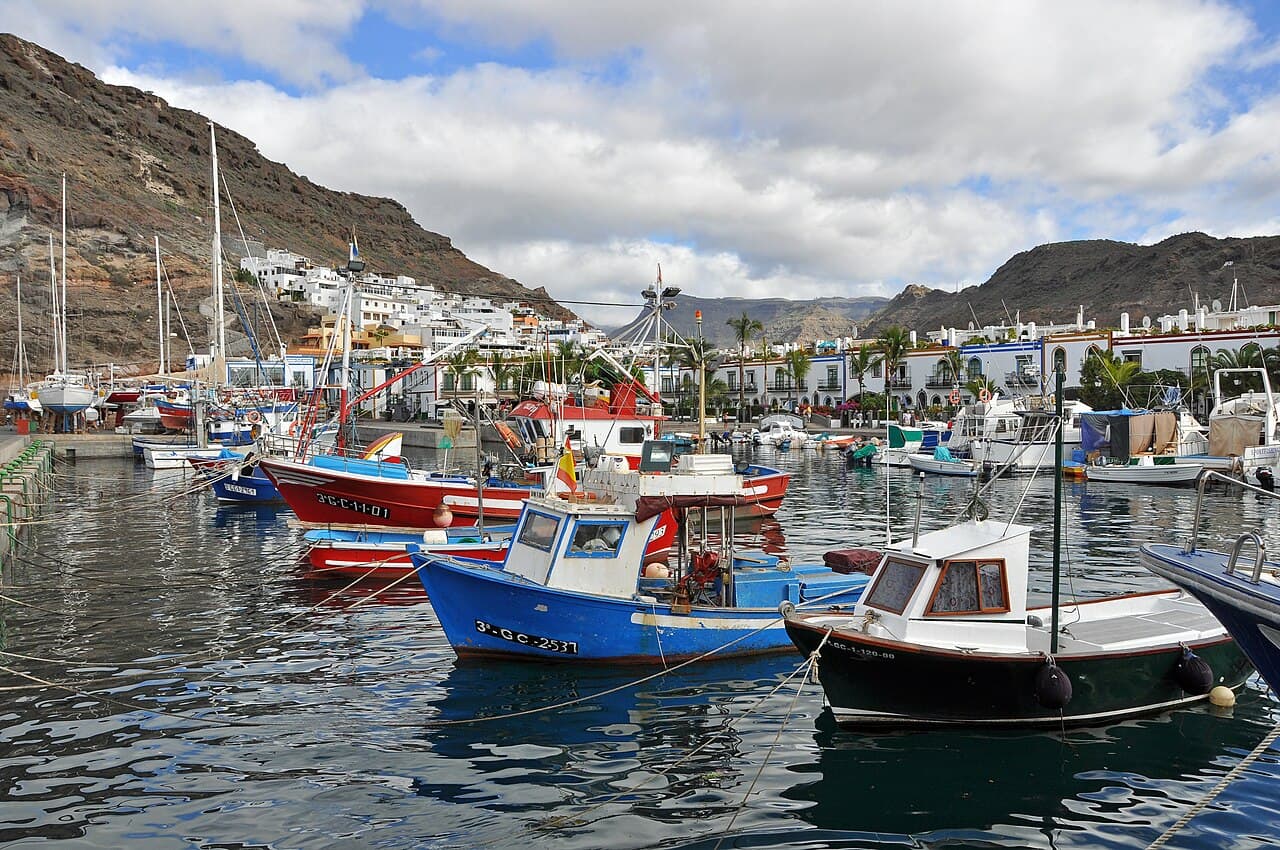
South-west coast, Mogán
Puerto de Mogán is a fishing village and marina at the mouth of a steep-sided valley on the south-west coast. Canals link the marina with the fishing harbour, which has earned it the nicknames “Little Venice” and “Venice of the Canaries”. Restaurants and bars line the marina and the beach front, and on Fridays a popular market brings in visitors from all over the island. Very few buildings rise above two storeys, and the island government restricts new buildings taller than that.
Prices start from the lowest published fare for this airport and depend on the destination and vehicle class. Cancel up to 24 hours before pickup for a 90% refund.
Photo credits Marc Ryckaert (MJJR) (CC BY 3.0) · Marcela Střelcová (CC BY-SA 4.0) · Rob Koster (CC BY-SA 3.0) · CARLOS TEIXIDOR CADENAS (CC BY-SA 4.0) · Pepelopex (CC BY-SA 3.0) · Marc Ryckaert (MJJR) (CC BY 3.0)