Private, fixed-price transfers from Ibiza Airport to the town and the resorts around the island — plus what to see and how to get into Ibiza Town once you arrive.
Ibiza is one of the Balearic Islands, 571.6 square kilometres of pine-covered hills and coves lying about 150 km from Valencia, and almost every holiday here begins at its airport. The terminal sits 7 km south-west of Ibiza Town, on the flat southern corner of the island, and from there the roads fan out in three directions: north-east past Playa d’en Bossa and the capital to Santa Eulària des Riu, west across the middle to Sant Antoni de Portmany on its sunset-facing bay, and south to the quay in Ibiza port where the boats leave for Formentera.
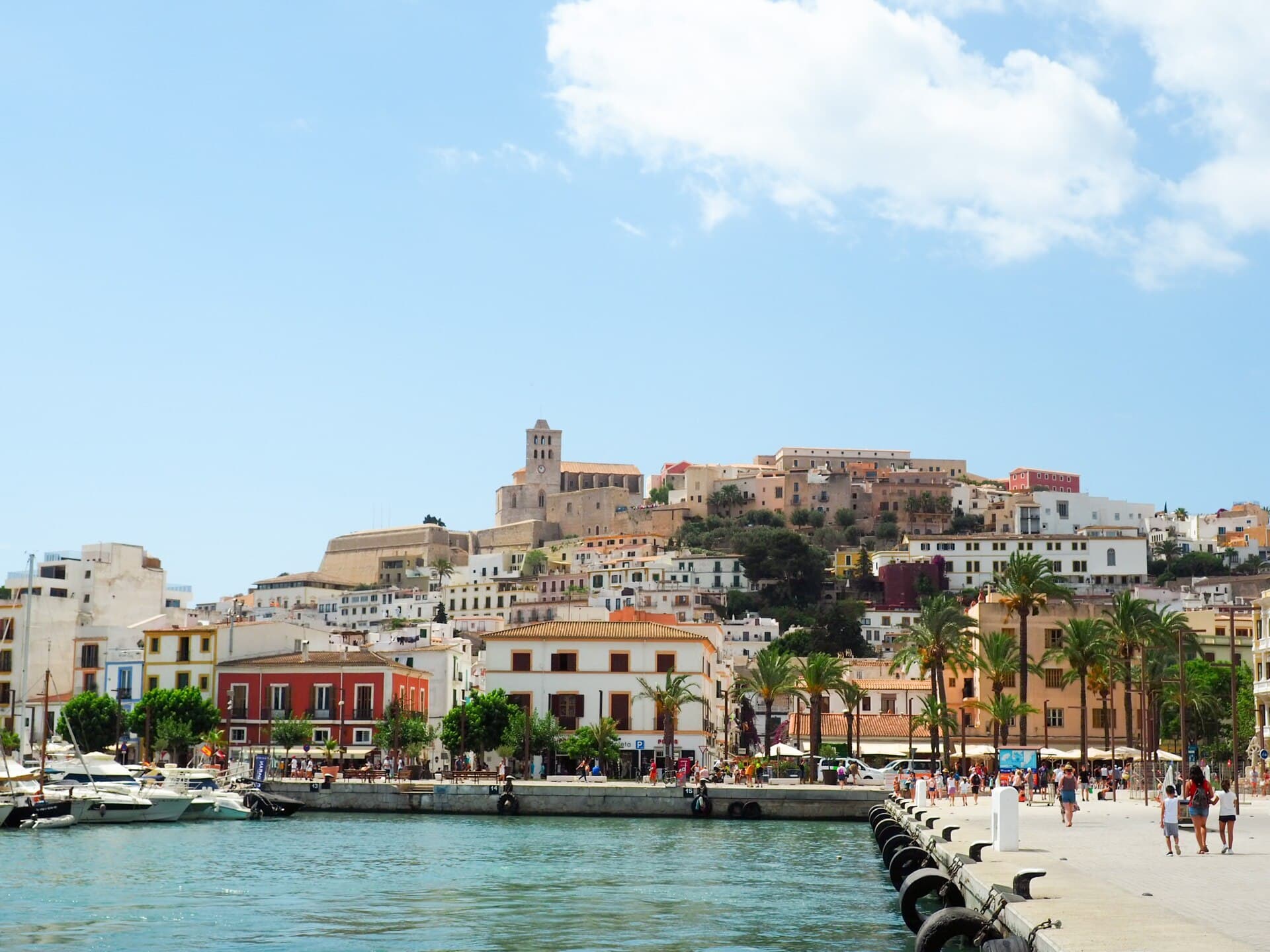
Ibiza Town itself deserves more than the drive through it. Dalt Vila, the “Upper Town”, stands on a fortified hill above the harbour, and UNESCO declared the city a World Heritage Site on 4 December 1999 — a listing that covers the Renaissance walls, the Punic necropolis of Puig des Molins on the slope below them and the Posidonia seagrass meadows in the sea between Ibiza and Formentera. Beyond the capital, the salt pans and beaches of the Salines park fill the corner south of the runway, Es Vedrà rises out of the water off the south-west coast, and Formentera lies about half an hour away by boat.
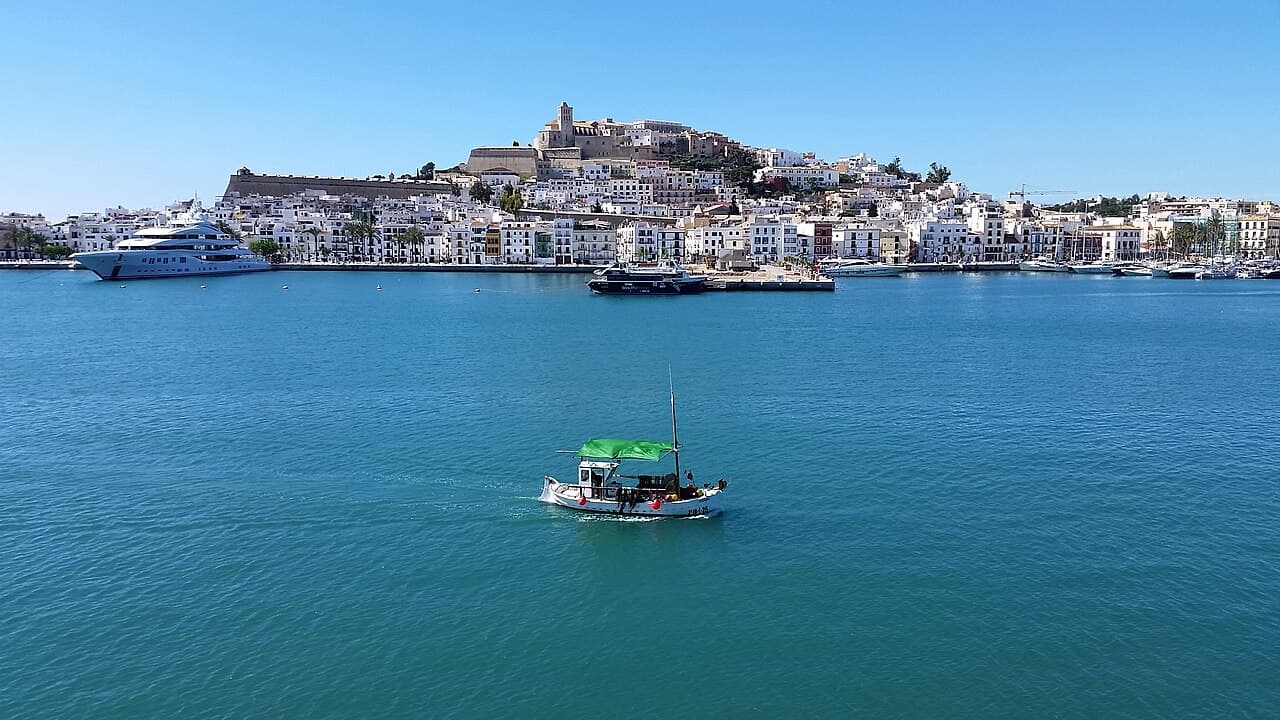
Old town, Ibiza Town
Dalt Vila — literally “Upper Town” — is the fortified hill above Ibiza’s harbour, and the reason UNESCO declared the city a World Heritage Site on 4 December 1999. The listing takes in the Renaissance walls that still ring the old town and the Punic necropolis of Puig des Molins on the slope below, founded by the Phoenicians in the 7th century BC and holding around 3,000 tombs from the Punic era. The cathedral stands at the top of the hill; the newer district outside the walls is the Eixample, the “Extension”.
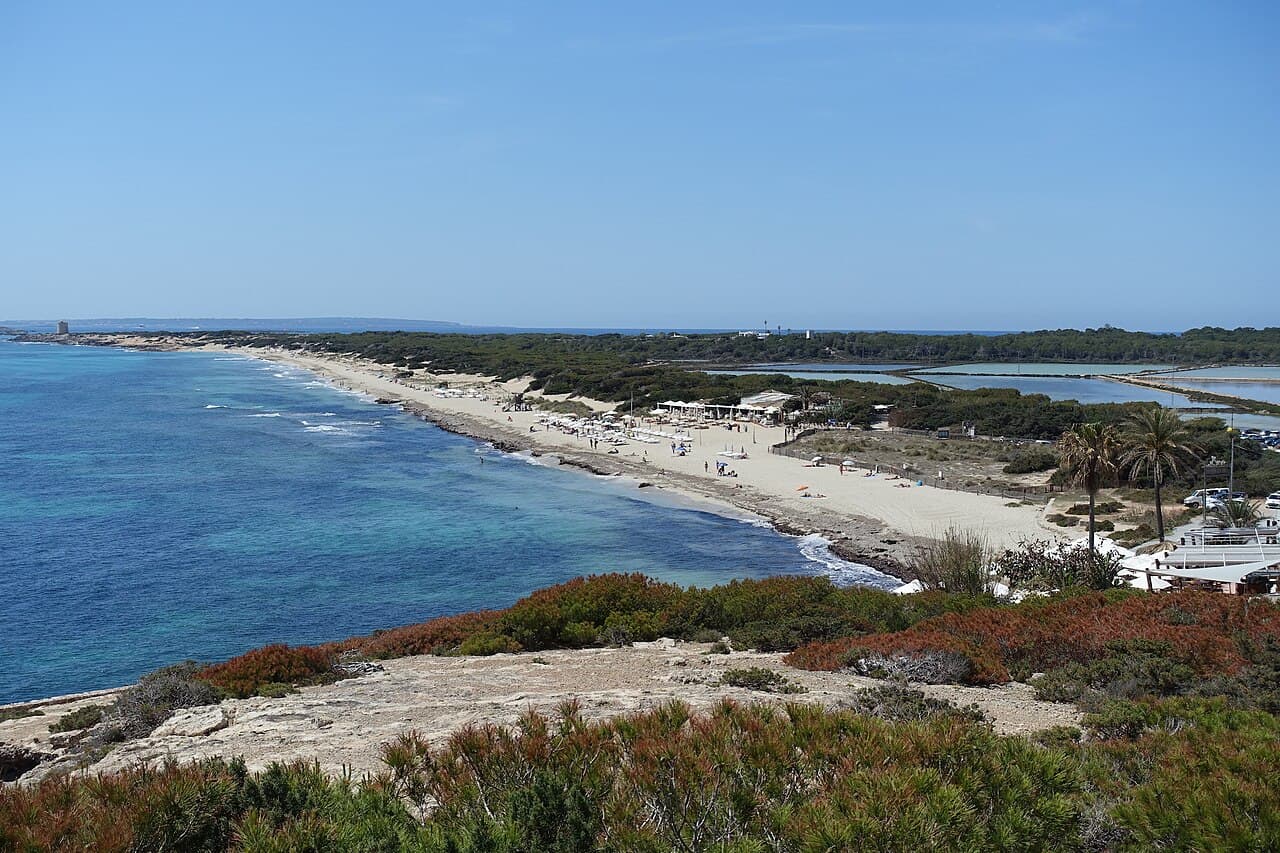
Southern tip, south of the airport
The Salines Nature Park fills the southern tip of the island, where salt pans first worked by the Phoenicians are still worked today. Two of Ibiza’s best-known beaches, ses Salines and Es Cavallet, lie on its shore, with Cap des Falcó beyond them. Offshore are the Posidonia seagrass meadows that give the water here its clarity, and the sea between Ibiza and Formentera is a UNESCO World Heritage Site because of them.
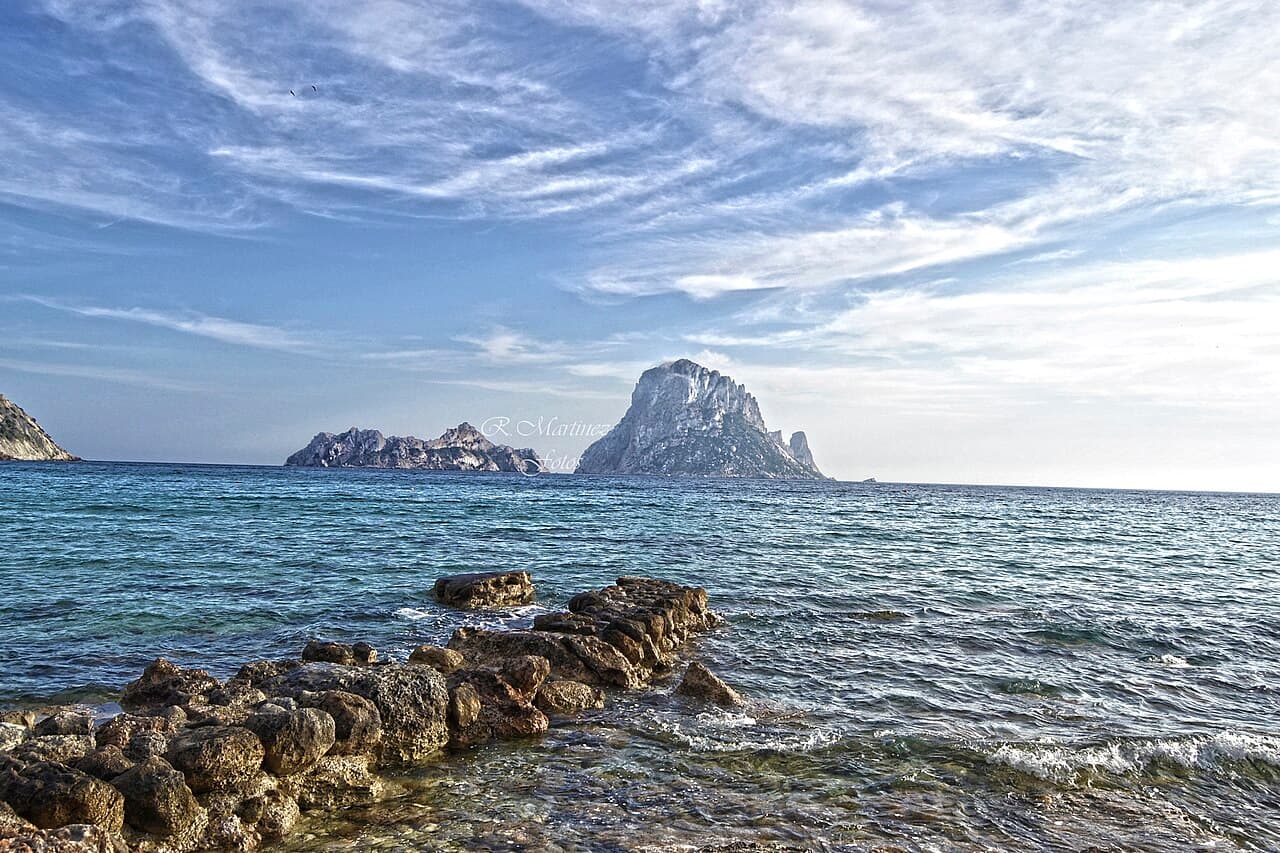
Off Cala d’Hort, south-west coast
Es Vedrà is a small rocky island 413 metres high, standing about 2.4 km off the coast at Cala d’Hort in the municipality of Sant Josep de sa Talaia. It belongs to the Cala d’Hort nature reserve and carries its own sub-species of the Ibizan wall lizard as well as a colony of endangered Eleonora’s falcons. Myth has long attached itself to the rock: sirens were said to live there and to have tried to lure Odysseus, and it is held sacred to Tanit, the Phoenician goddess who is Ibiza’s patroness.
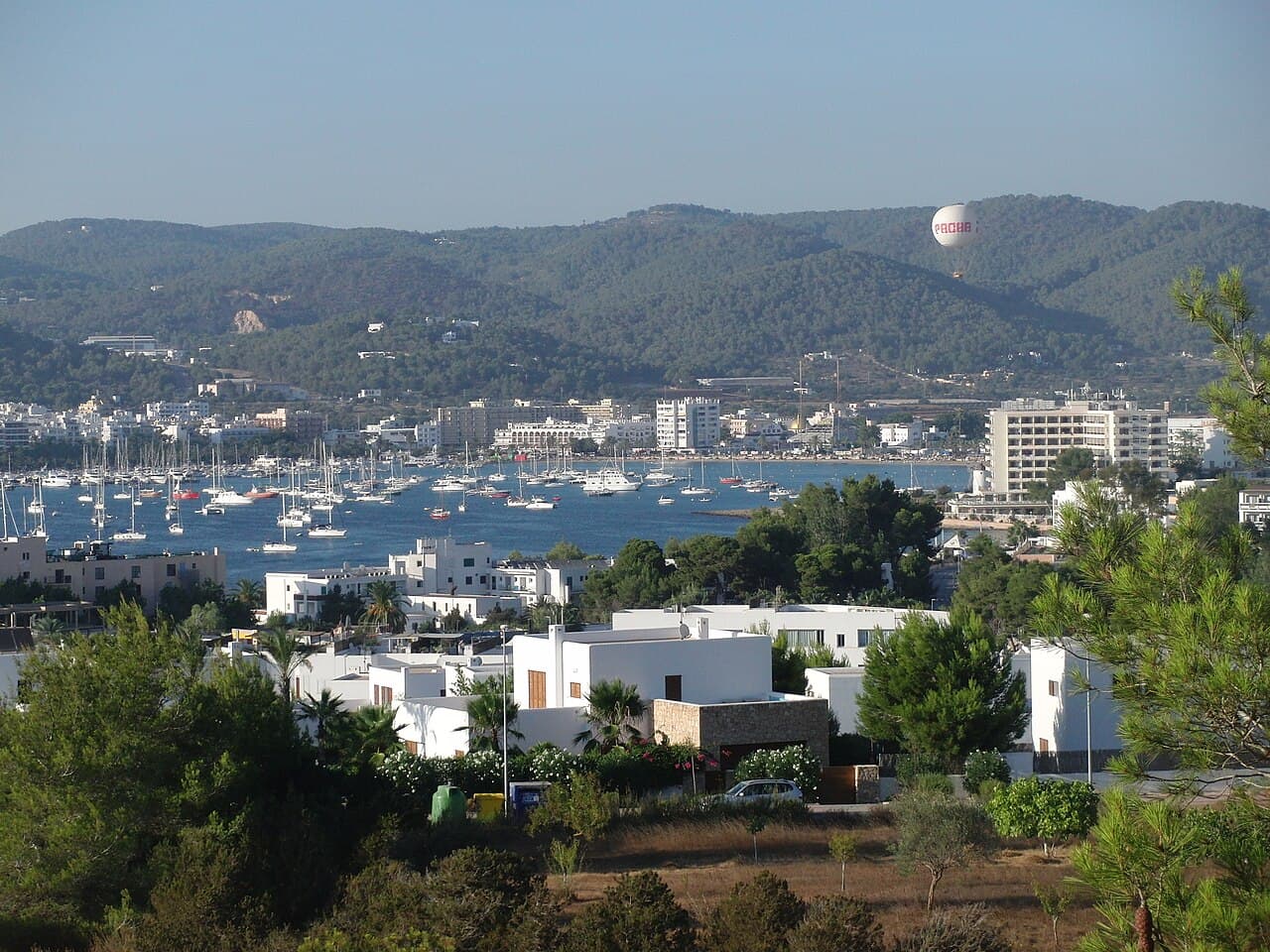
West coast
Sant Antoni is the second-largest town and municipality on the island, on the western coast, with a population of 22,446 at the 2012 count. It grew out of a fishing village when hotels and tourist resorts were built there from the late 1950s. Its west-facing shore is why people come at the end of the day: the sunset strip is where visitors meet at sunset at bars including the Café del Mar. The West End, a few streets around Carrer de Santa Agnès, is the louder half of the town.
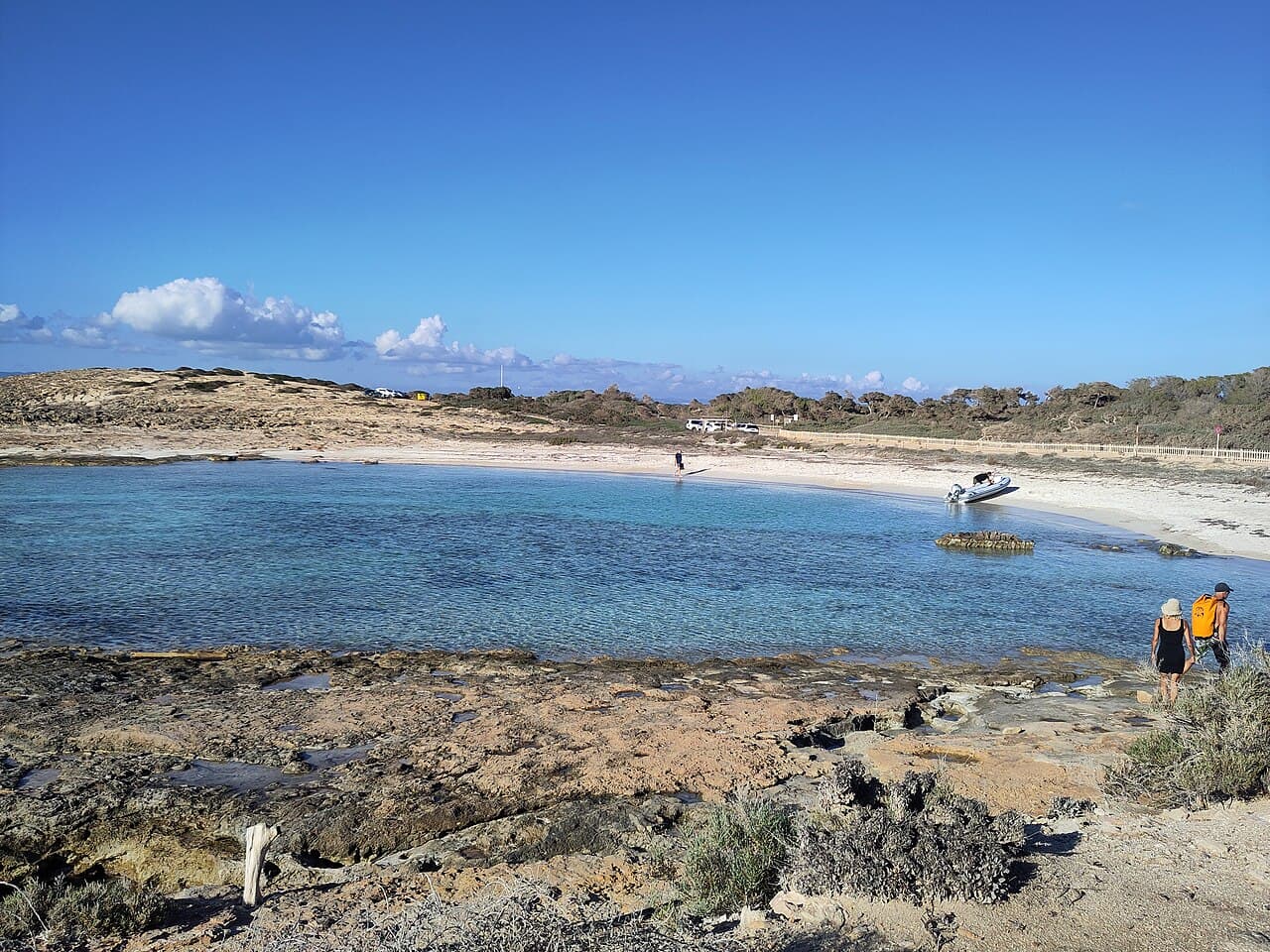
South of Ibiza, reached by boat
Formentera lies south of Ibiza and has no airport of its own. Ferries run from their own terminal in Ibiza port, with departures every half hour in high season on fast catamarans carrying more than 200 passengers, and the crossing takes about 30 minutes. The island covers 83.24 square kilometres, the main island is 19 km long, and the official estimate at 1 January 2023 put the population at 11,389. Ses Illetes, Migjorn and Cala Saona are its best-known beaches, and the Far de la Mola lighthouse stands at the far end.
Prices start from the lowest published fare for this airport and depend on the destination and vehicle class. Cancel up to 24 hours before pickup for a 90% refund.
Photo credits erwin@jetcamp.com (CC BY 2.0) · RoxFuchs (CC BY-SA 4.0) · JanManu (CC BY-SA 4.0) · Raucci Martieri (CC BY 3.0) · JanManu (CC BY-SA 3.0) · Joan Gené (CC0)