Private, fixed-price transfers from Palma de Mallorca Airport to the capital and the resorts around the island — plus what to see and how to get into Palma once you arrive.
Mallorca is the largest of the Balearic Islands, and almost every holiday here begins at Palma de Mallorca Airport. From the airport the island opens up in three directions. Palma sits on the bay that carries its name, with Can Pastilla, Playa de Palma and S’Arenal on one side and Illetas, Palma Nova and Magaluf on the other, and the coast continues west to Santa Ponça and Paguera. The mountains of the Serra de Tramuntana run along the north-west, and across the interior plain lie the Bay of Alcúdia in the north-east and the resorts of the east coast.
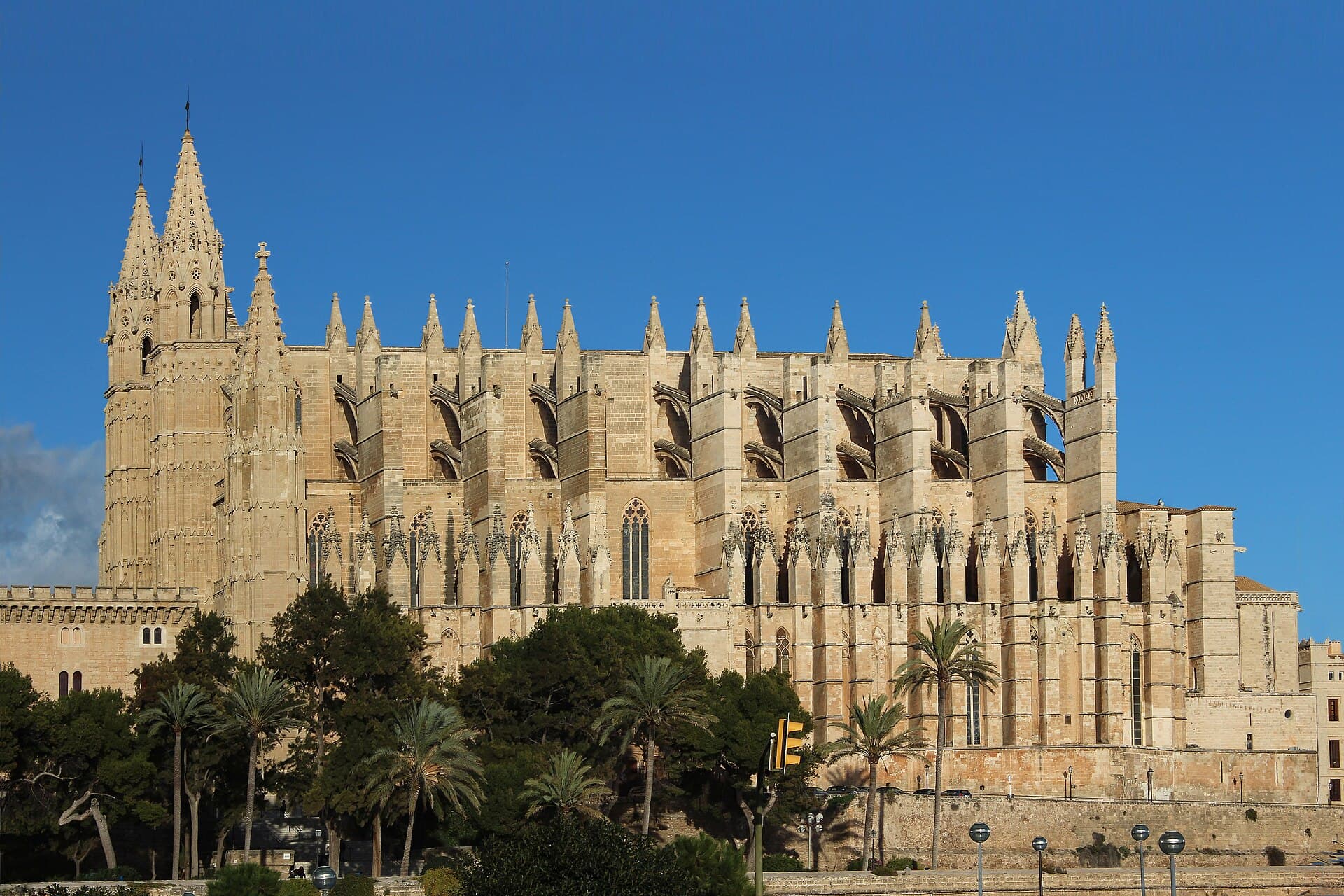
Palma itself is worth more than a glimpse from the motorway. The Gothic cathedral stands on the seafront against the old city walls, and Bellver Castle, one of the few circular castles in Europe, looks out from a wooded hill west of the centre. Further afield, the road to Cap de Formentor leads to a lighthouse on the island’s northernmost point, the Caves of Drach near Porto Cristo hide an underground lake, and Valldemossa keeps the former monastery where Chopin stayed in the winter of 1838–39.
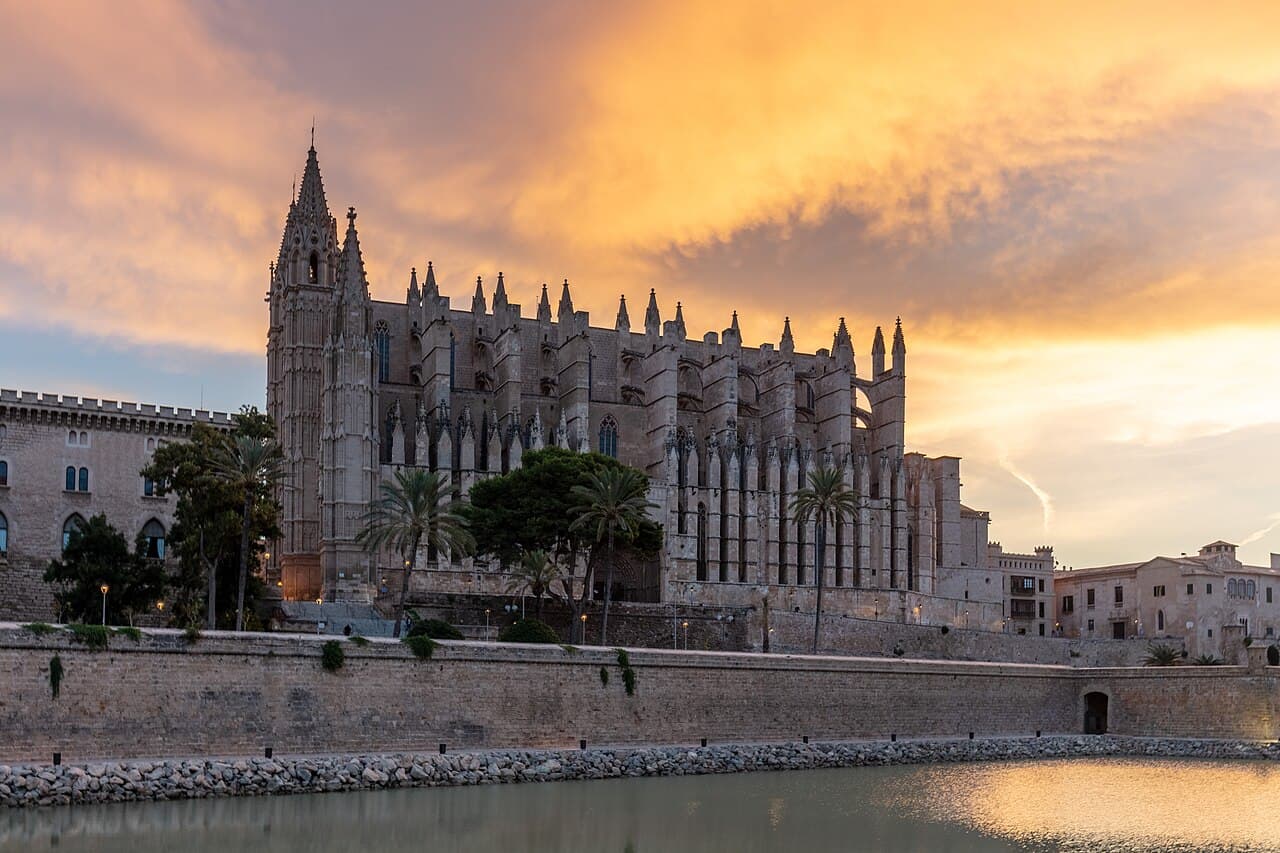
Seafront, central Palma
La Seu is Palma’s most popular sight, standing on the shore against the old city walls, beside the Royal Palace of La Almudaina. Work began soon after the conquest of 1229, on the site of the city’s largest mosque, and continued into the 17th century. Its rose window, nearly 14 metres across, is the second-largest Gothic rose window in the world. Antoni Gaudí reworked the interior from 1903 to 1914, and Miquel Barceló covered the Chapel of Sant Pere in ceramic in 2001–2006.
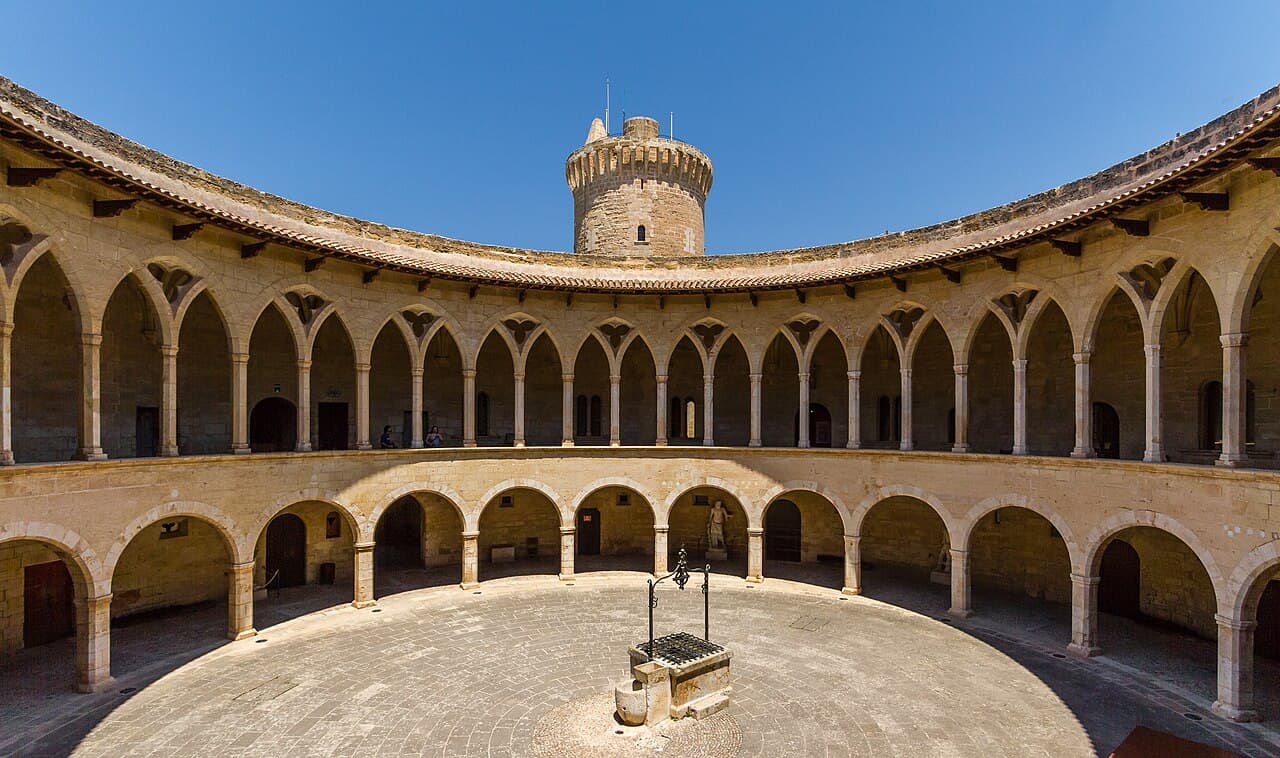
Hilltop, 3 km west of the centre
Built in the 14th century for King James II of Majorca, Bellver is one of the few circular castles in Europe. Round towers cling to its circular walls, and inside, a two-storey palace looks onto a round courtyard with a well at its centre through a gallery of Gothic arches. For long stretches between the 18th and mid-20th centuries it served as a military prison. The Republic gave the castle and its surrounding forest to the city in 1931, and today it houses Palma’s History Museum.
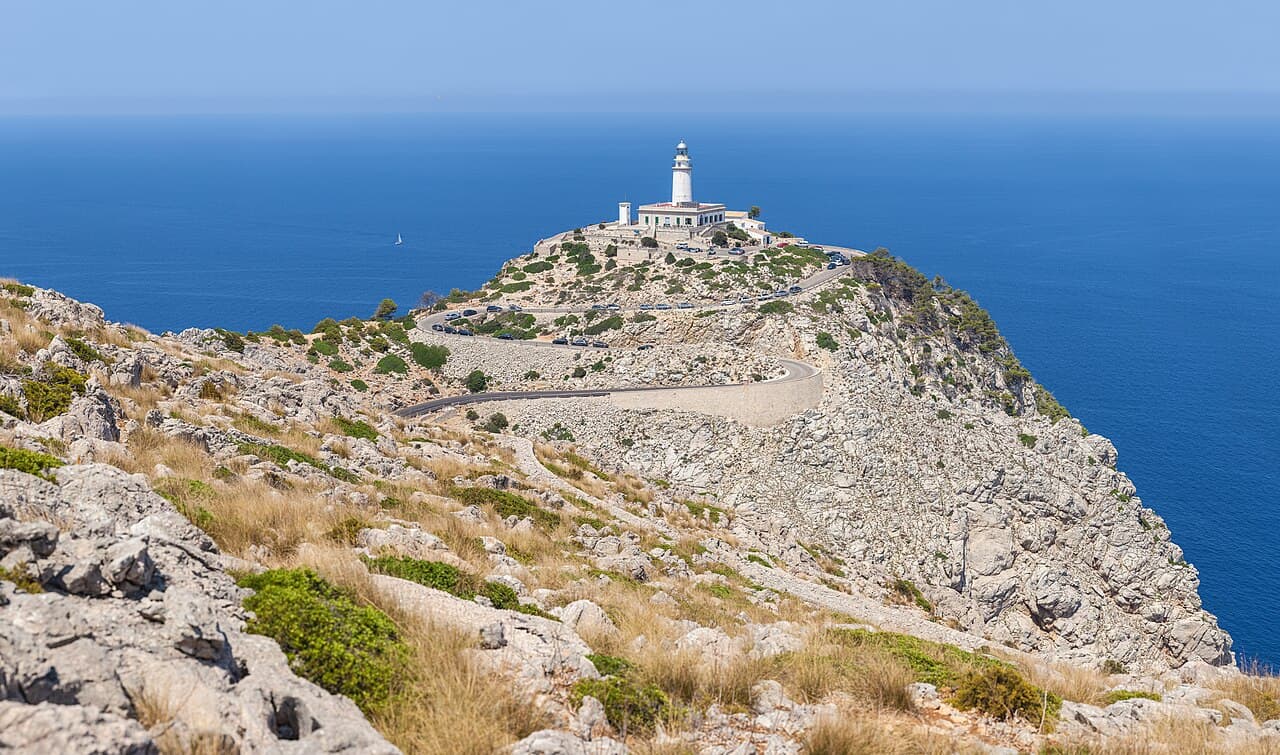
Northernmost point of the island
The Formentor peninsula ends at the northernmost point of Mallorca. A 13.5 km road, built in 1925 by the engineer Antonio Parietti, runs out to the cape from Port de Pollença; when the lighthouse opened in 1863, it could only be reached by sea or along a mule track. From the Mirador del Mal Pas lookout, the sea lies some 300 metres below the cliffs and the panorama reaches as far as Menorca to the east.
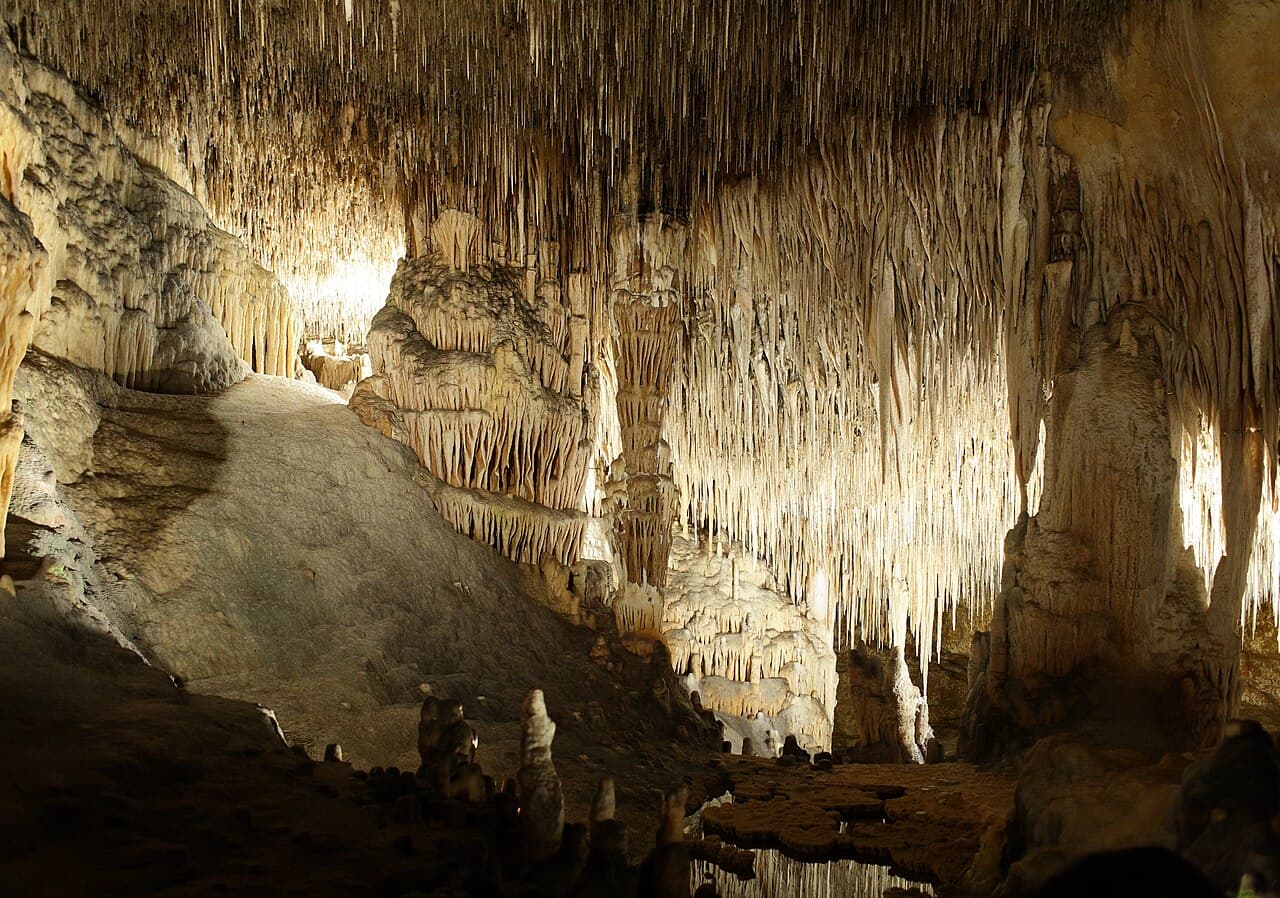
Porto Cristo, Manacor
Four connected caves stretch for about 2.4 km near Porto Cristo, in the municipality of Manacor, and reach a depth of 25 metres. They were first mentioned in a letter dated 1338. The French speleologist Édouard-Alfred Martel explored them in 1896 and found Martel Lake, an underground lake about 115 metres long. The caves are open to visitors for a fee, and a visit usually ends with a classical music concert played by musicians on small rowing boats.
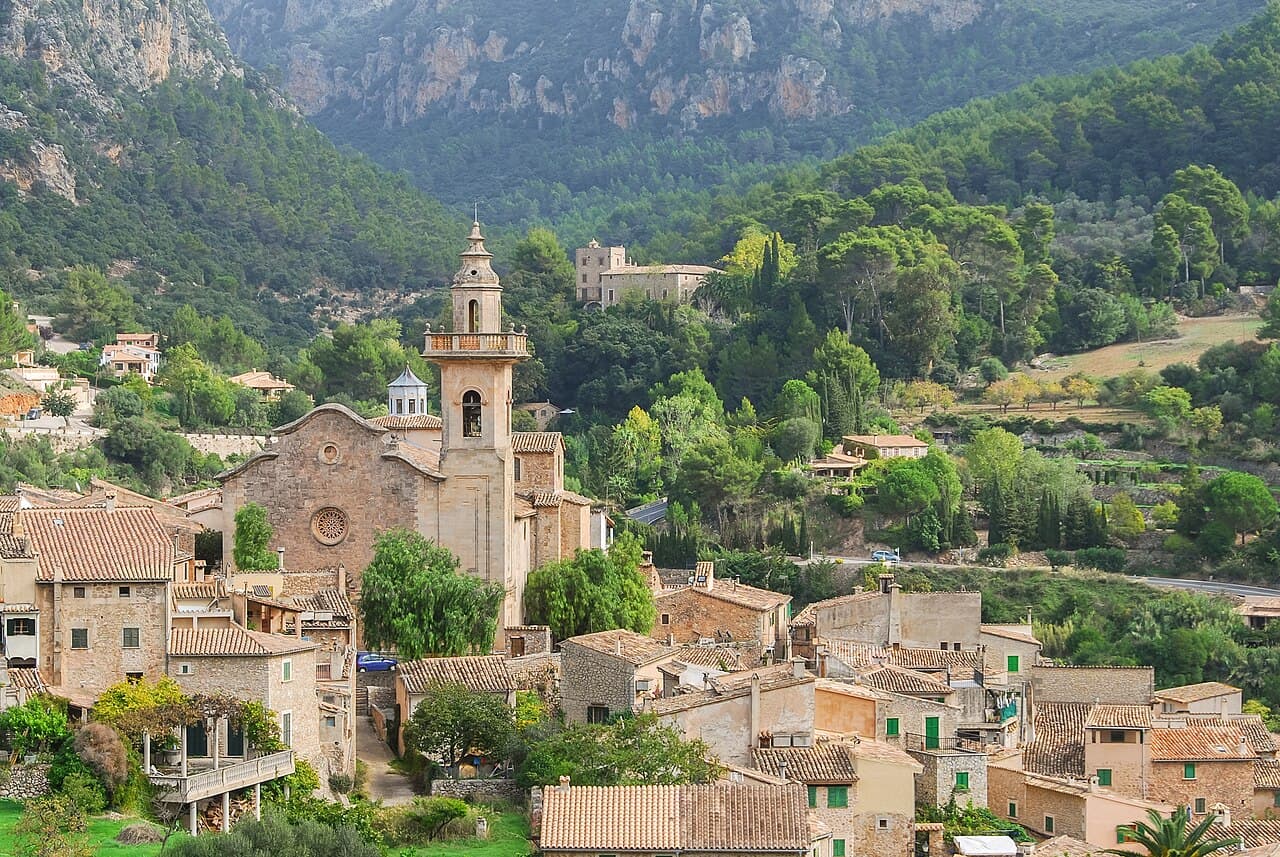
Serra de Tramuntana
Valldemossa lies in the Serra de Tramuntana, a UNESCO World Heritage Site since 2011. Its landmark is the Royal Charterhouse, once a royal summer residence, which King Martin the Humane gave to the Carthusian order in 1399. Frédéric Chopin and George Sand spent the winter of 1838–39 on Mallorca, moving from Palma to the former monastery, where Chopin completed his 24 Preludes. Two of the monks’ cells are now museums dedicated to the couple, and the Chopin Festival has been held there every August since 1930.
Prices start from the lowest published fare for this airport and depend on the destination and vehicle class. Cancel up to 24 hours before pickup for a 90% refund.
Photo credits Heuschrecke (Dmitry Tonkonog and Ksenia Fedosova) (CC BY-SA 3.0) · Diego Delso (CC BY-SA 4.0) · Friedrich Haag (CC BY-SA 4.0) · Thomas Wolf, www.foto-tw.de (CC BY-SA 3.0 de) · Javier Pérez Montes (CC BY-SA 4.0) · Abrget47j (CC BY-SA 3.0)