Private, fixed-price transfers from Venice Marco Polo Airport to Piazzale Roma, the mainland and the coast — plus what to see and how to cross the last stretch into the city.
Venice is really two places. The airport stands at Tessera on the mainland, about 7.5 km north-east of the city centre, while the historic city lies out in the lagoon on 126 islands joined by 472 bridges. One 4 km causeway, the Ponte della Libertà, carries the road and the railway across from Mestre, and it ends at the Piazzale Roma and Tronchetto terminals: vehicles cannot pass beyond them. Everything after that point moves on foot or on water, which is why arriving in Venice takes a little more thought than most airport transfers.
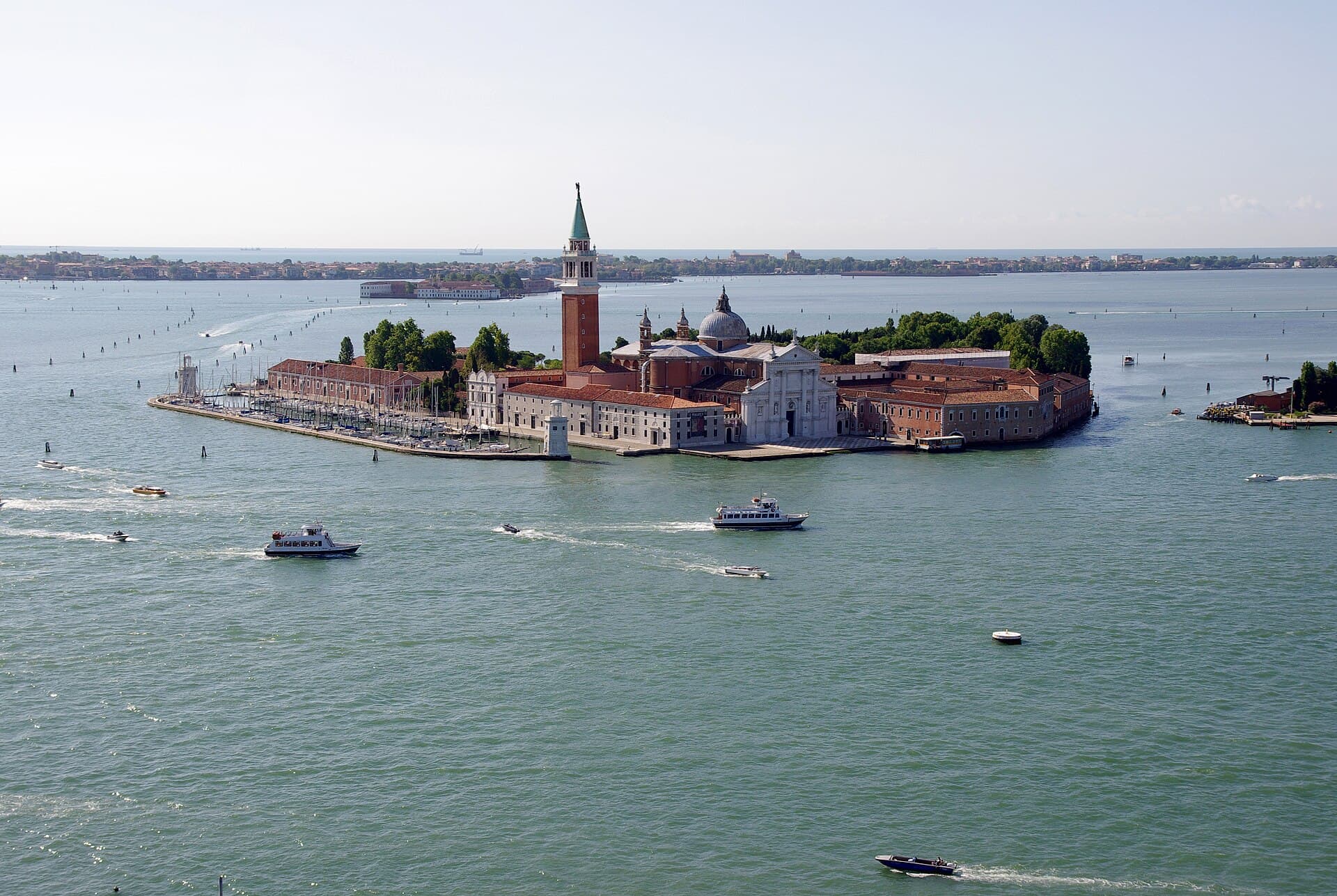
From Piazzale Roma the city unfolds along the Grand Canal, which curves for 3.8 km to the basin of San Marco past more than 170 palaces and under only four bridges. St Mark’s Square and the Doge’s Palace stand at the far end of that curve, with the Rialto Bridge halfway along it. Out in the lagoon lie Murano with its glass furnaces, Burano with its painted houses and the Lido with its beaches, while the mainland holds Mestre and, further round the water, the Adriatic sands of Jesolo and Cavallino.
San Marco, city centre
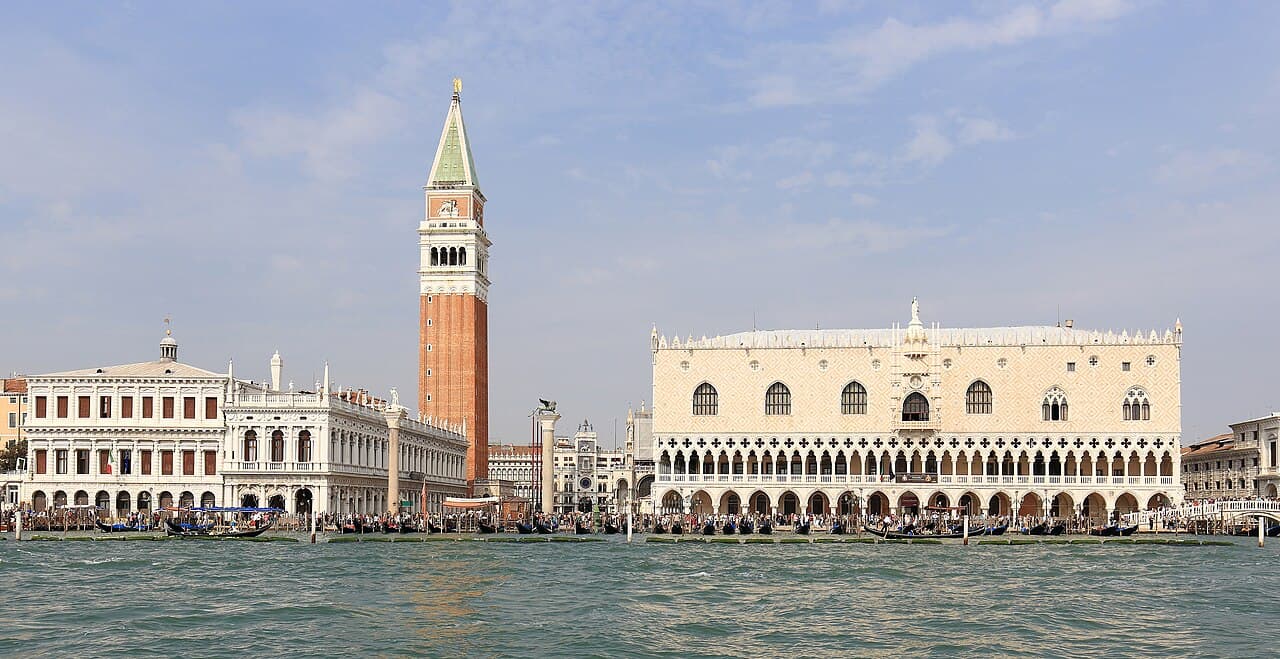
Piazza San Marco is the principal public square of Venice — Venetians call it simply la Piazza, and a remark usually attributed to Napoleon calls it the drawing room of Europe. St Mark’s Basilica closes its eastern end. The present church was begun around 1063, and its domes and vaults were slowly covered with gold-ground mosaics. The four bronze horses above the entrance came from Constantinople after the Fourth Crusade; the originals have been kept inside since 1974. The campanile was rebuilt in 1912, as it was and where it was, after the old tower collapsed in 1902.
Piazzetta San Marco
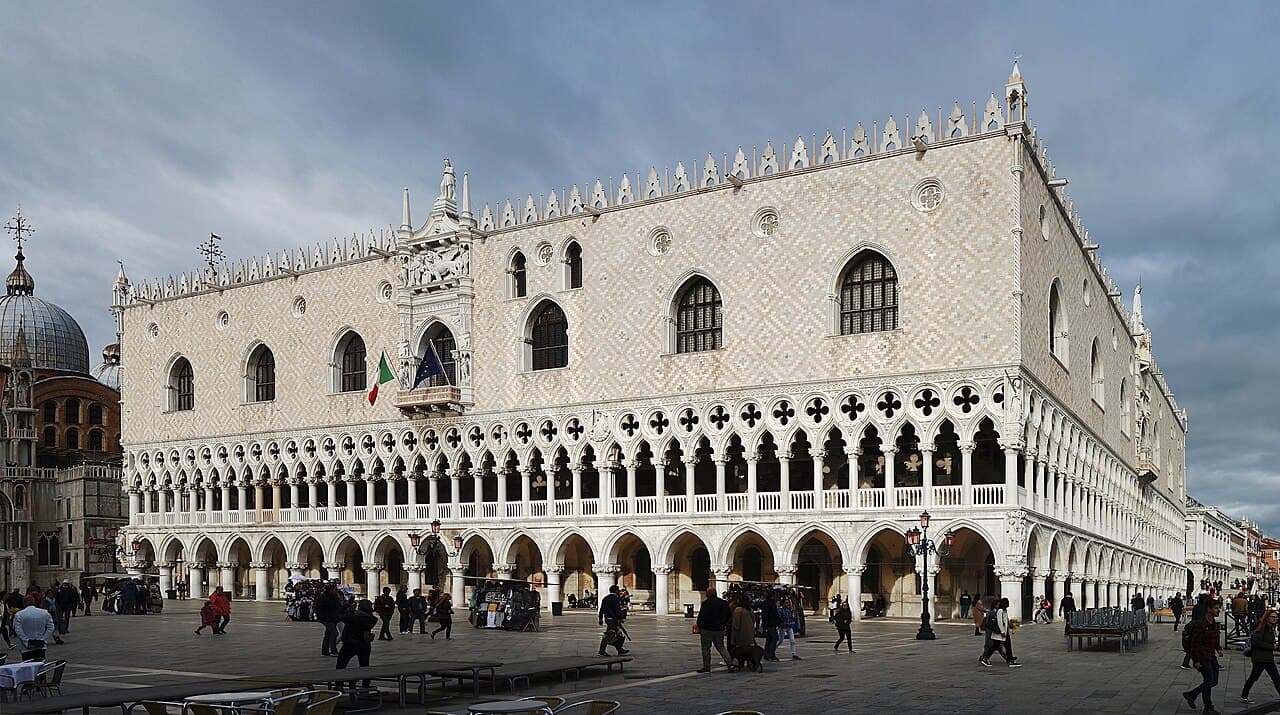
The Doge’s Palace held the whole Republic under one roof: government offices, a jail and the residence of the elected Doge, behind a Venetian Gothic façade of pink and white stone. First built in 810 and rebuilt from 1340, it has been a museum since 1923. The Chamber of the Great Council, 53 metres long and 25 metres wide, is one of the largest rooms in Europe and carries Tintoretto’s Il Paradiso, said to be the widest canvas painting in the world. A covered bridge built shortly after 1600 — the Bridge of Sighs — leads across to the New Prisons.
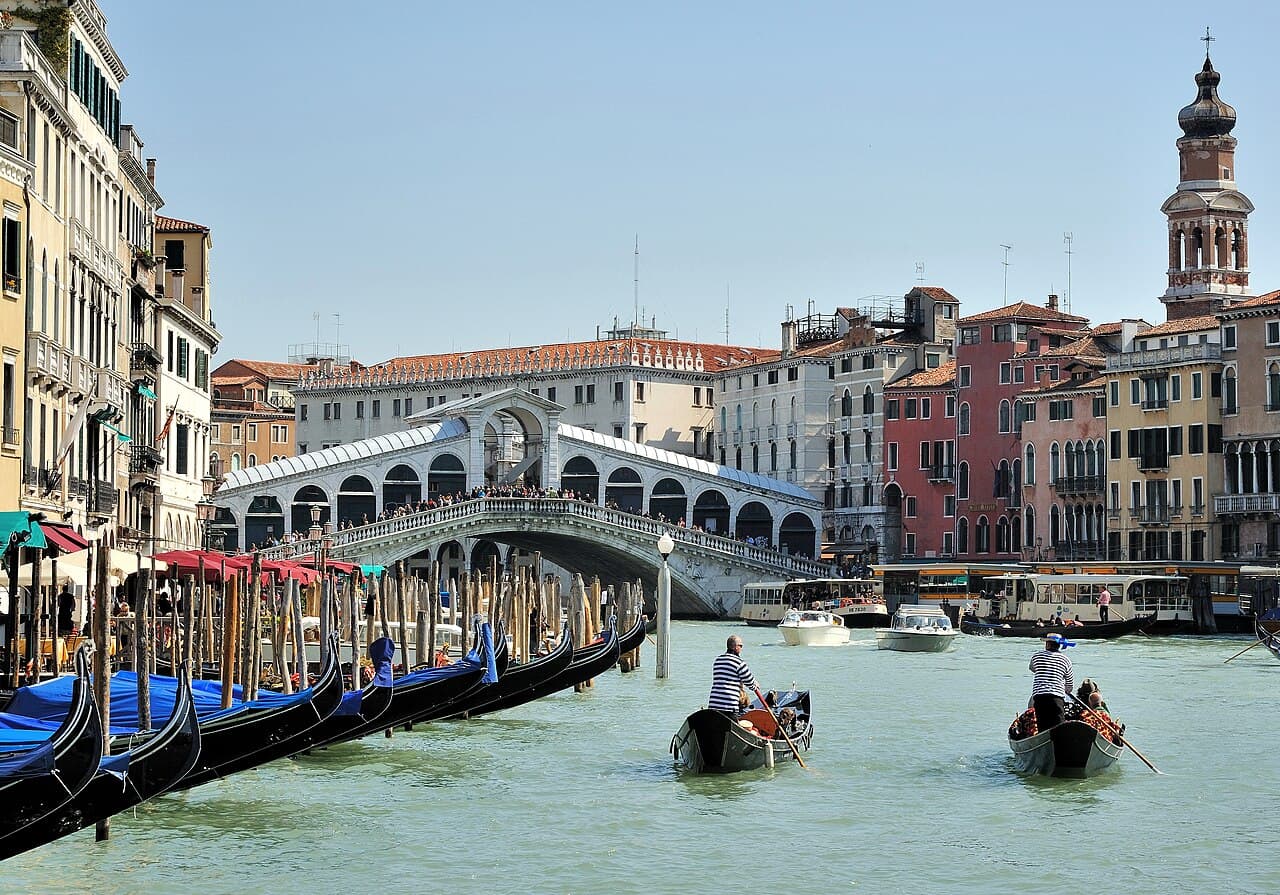
Through the centre of the city
The Grand Canal runs 3.8 km in a reversed S from the lagoon near Santa Lucia station to the basin at San Marco, and is between 30 and 90 metres wide. More than 170 buildings line it, most of them from the 13th to the 18th century. Because the city’s traffic runs along the canal rather than across it, only one bridge spanned it until the 19th century: the Rialto. The present single stone arch, designed by Antonio da Ponte, was begun in 1588 and finished in 1591, with two rows of shops along its covered ramps.
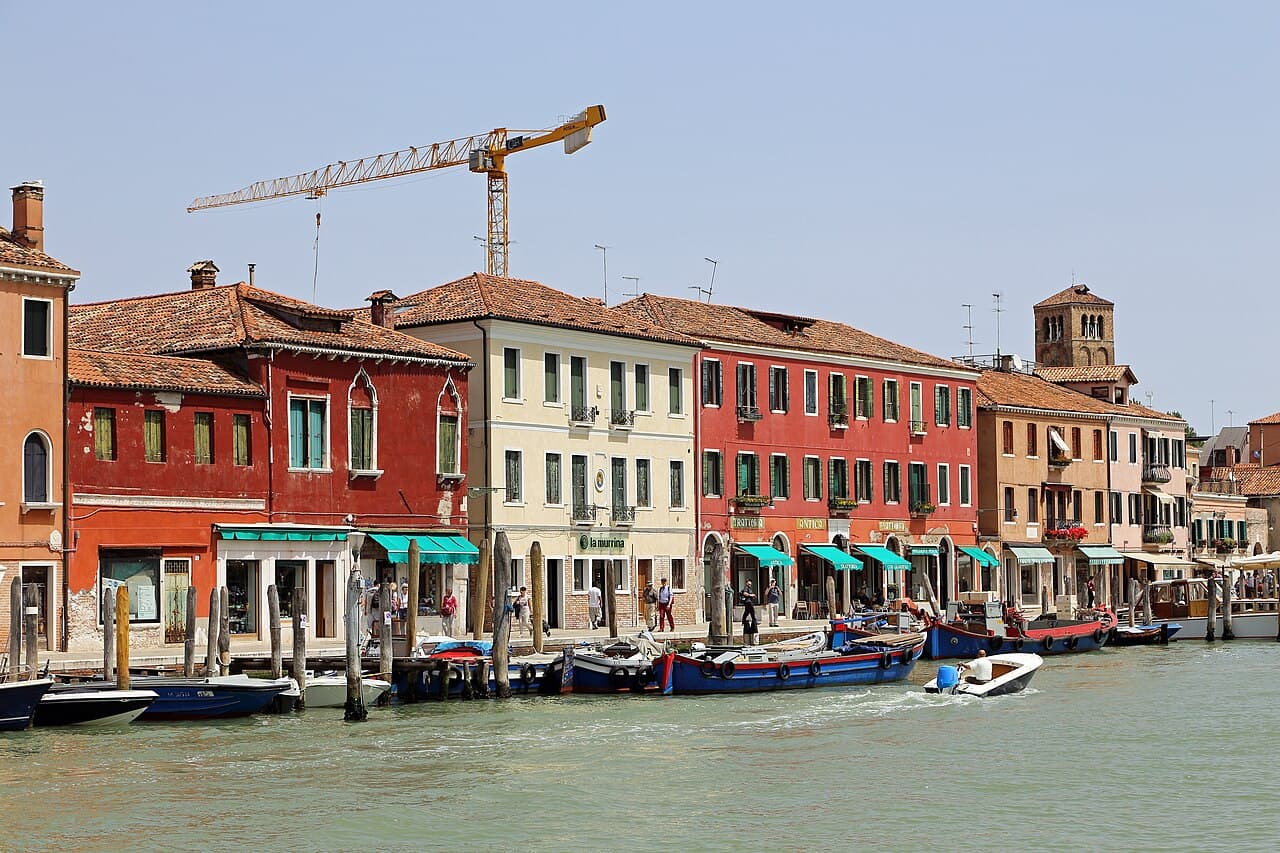
Lagoon island, 1.5 km north of Venice
Murano is a group of islands about 1.5 km north of Venice, linked to one another by bridges. In 1291 every glassmaker in Venice was ordered to move his furnace here, away from the city’s mostly wooden buildings, and the island kept a near-monopoly on fine glass for centuries, refining millefiori, milk glass and gold-threaded aventurine. The Glass Museum fills the Palazzo Giustinian, and the church of Santa Maria e San Donato keeps a twelfth-century Byzantine mosaic pavement. Pauly & C., founded in 1866, is the oldest glass factory still working on the island.
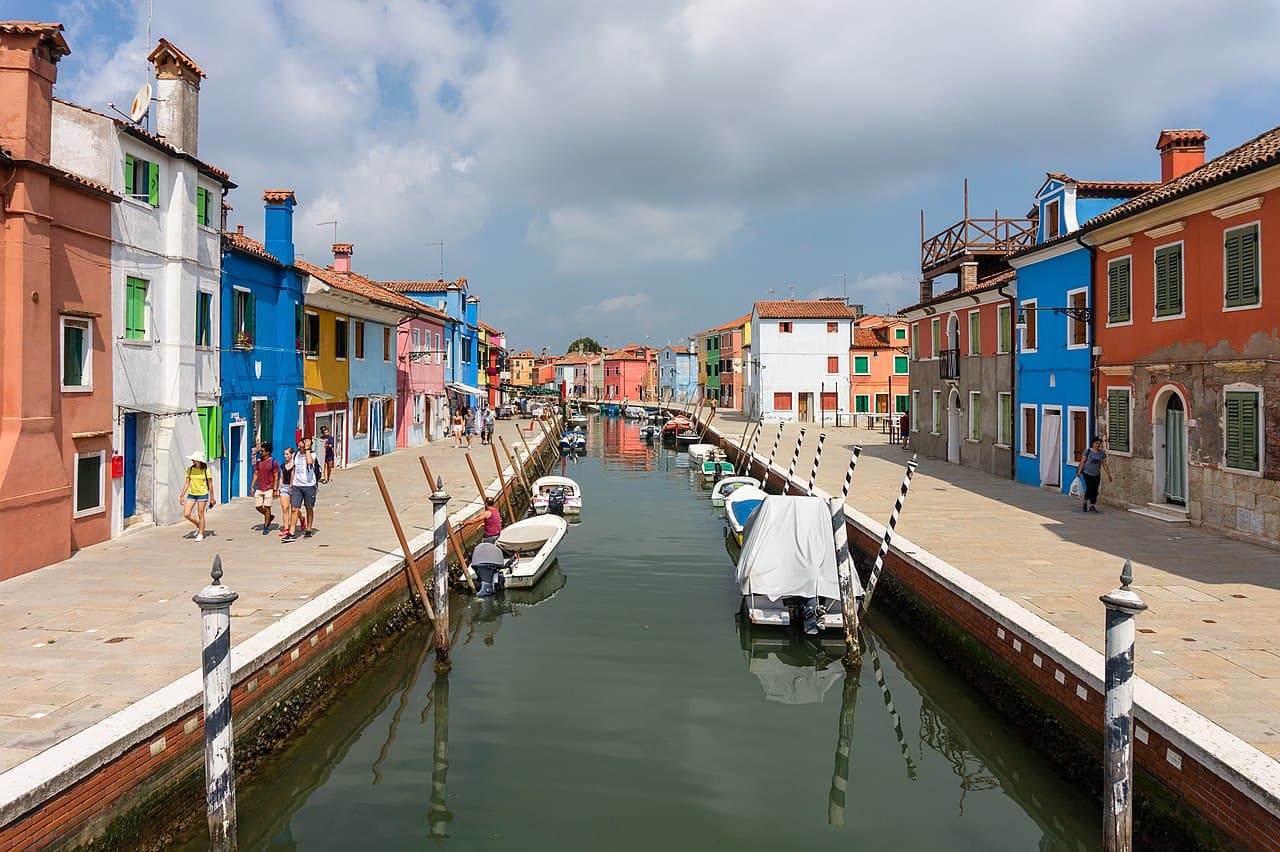
Lagoon island, 7 km from Venice
Burano lies 7 km from Venice, about 45 minutes by vaporetto from St Mark’s Square, and it is the island people photograph: small houses in strong flat colours, which owners may only repaint in the shades the authorities allow for that plot. Women here began making needle lace in the 16th century; the trade declined, then revived when a lacemaking school opened in 1872, and the Lace Museum now stands on Piazza Baldassare Galuppi. The church of San Martino has a conspicuously leaning campanile and a Crucifixion painted by Giambattista Tiepolo in 1727.
Prices start from the lowest published fare for this airport and depend on the destination and vehicle class. Cancel up to 24 hours before pickup for a 90% refund.
Photo credits Jakub Hałun (CC BY-SA 4.0) · Martin Falbisoner (CC BY-SA 4.0) · Velvet (CC BY-SA 4.0) · Saffron Blaze (CC BY-SA 3.0) · Marc Ryckaert (MJJR) (CC BY 3.0) · Marco Ober (CC BY-SA 4.0)