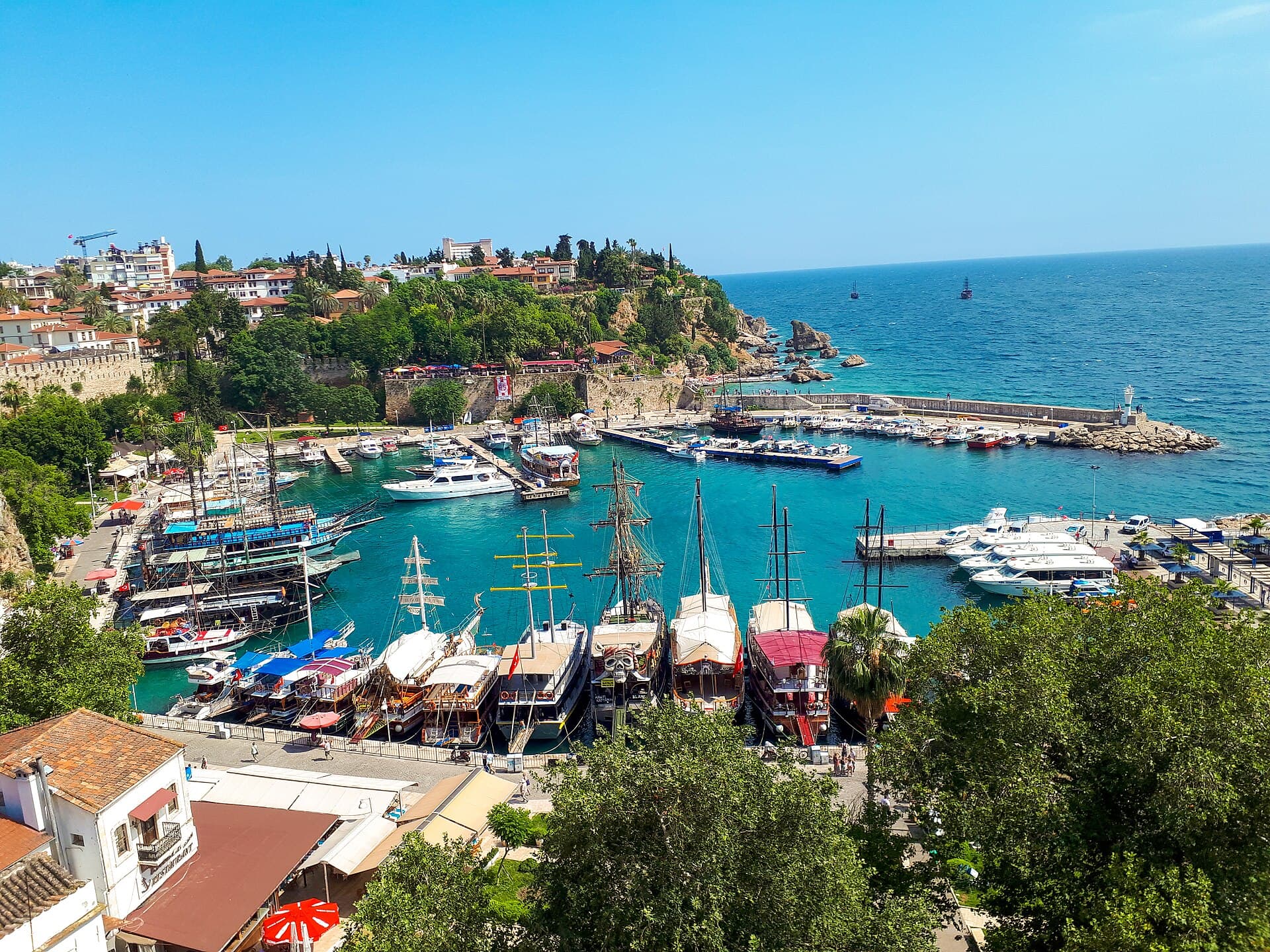
Private, fixed-price transfers from Antalya Airport to the city and the resorts along the coast — plus what to see and how to get around once you arrive.
Antalya is where most holidays on the Turkish Riviera begin. The airport lies on the eastern edge of the city, and from there the coast runs in two directions: south-west past Konyaaltı to Kemer and the Lycian shore, and east through Lara, Belek and Side to Alanya. Almost every visitor lands here and heads straight for a hotel, which makes the airport transfer the one part of the trip worth settling before you fly.
The city itself deserves more than a glimpse from the motorway. The old town of Kaleiçi wraps around a Roman-era harbour, Konyaaltı beach runs west beneath the Beydağları mountains, and the Düden river drops straight into the sea at the edge of Lara. East of the city lie two of the finest ancient sites in Turkey, Perge and Aspendos, both close enough for a half-day visit.
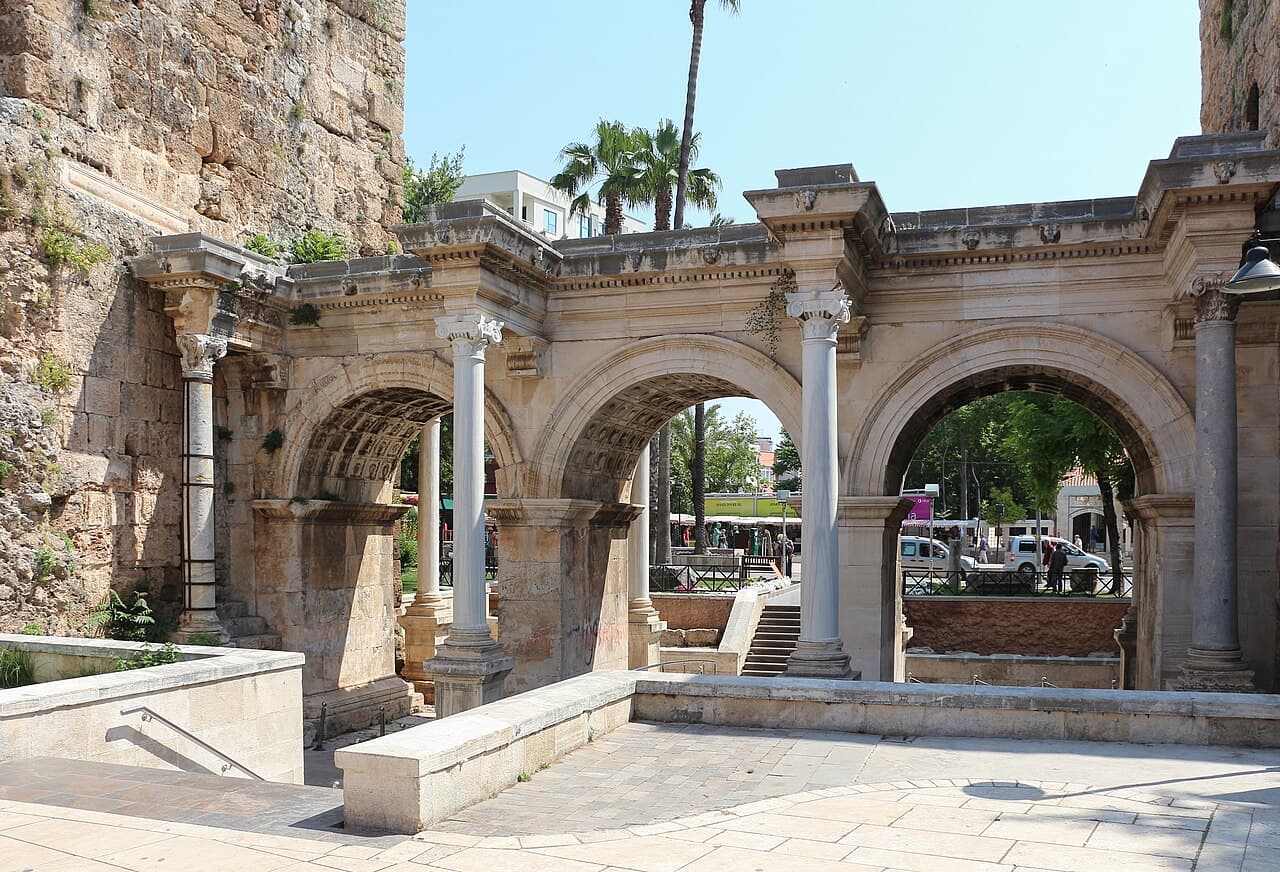
Old town, city centre
Kaleiçi — “inside the castle” — is the original core of Antalya, enclosed by a horseshoe of old city walls. Around 3,000 traditional houses with red-tiled roofs line narrow lanes that run down to the old harbour, now a marina for yachts and excursion boats. Walk in through Hadrian’s Gate, the three-arched marble gate built around 150 CE in the name of the emperor who visited the city in 130 CE; clear panels in the floor show the grooves worn into the paving by carts. Inside the walls, look for the fluted Yivli Minaret, the Hıdırlık Tower and the Kesik Minare.
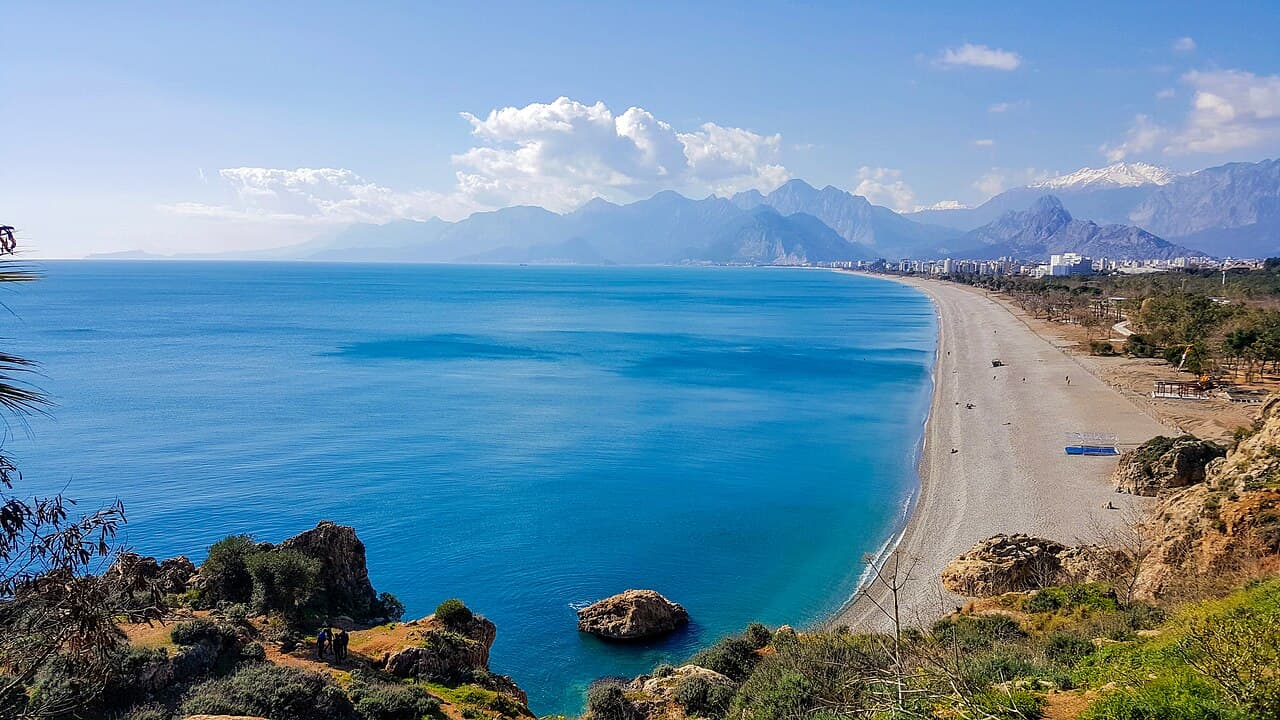
West side of the city
The city’s main beach stretches for about 13 km along the western side of Antalya, with the Beydağları mountains rising behind it. The shore is mostly fine pebbles with some sandy stretches, and the Blue Flag beach is backed by a long park with cafés, free changing rooms and showers. Lifeguards patrol the beach, and one section has adapted facilities for visitors with disabilities.
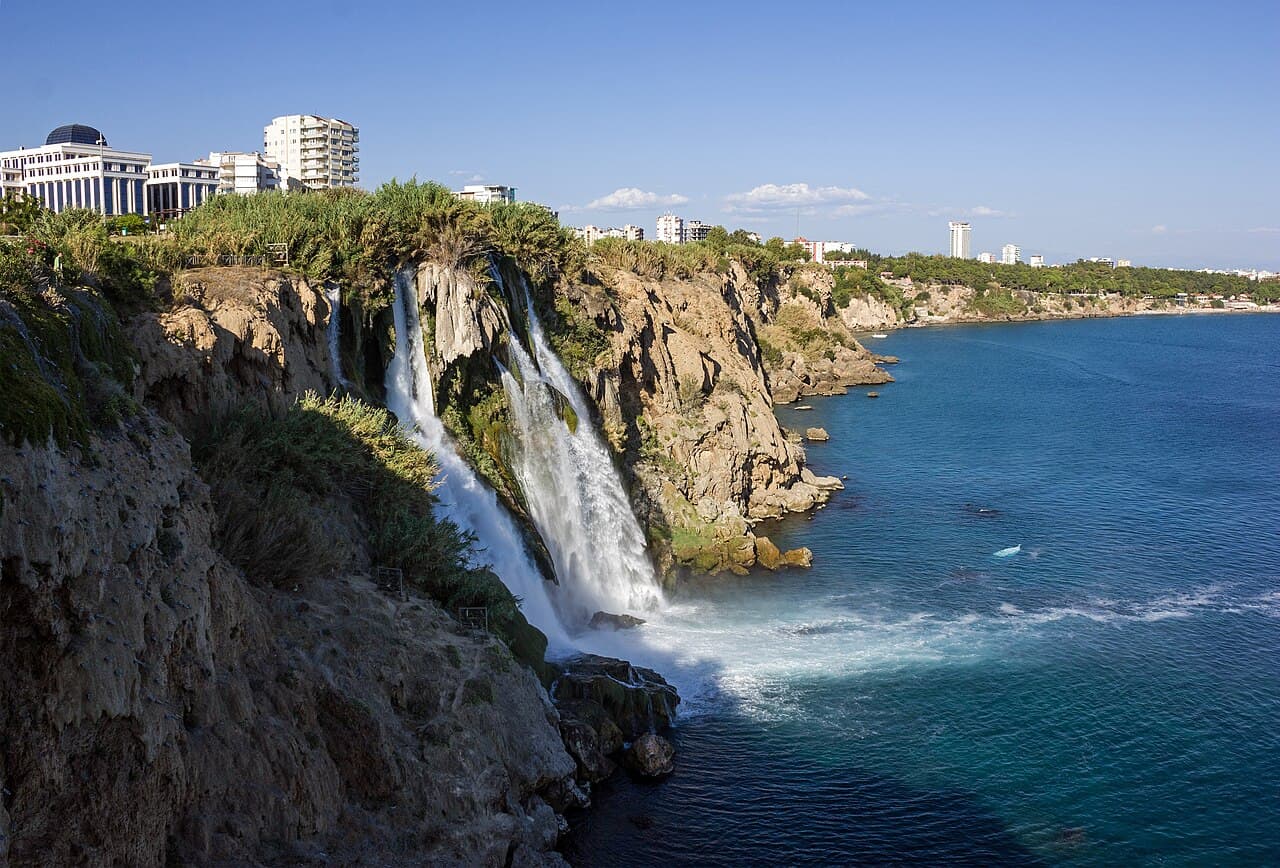
Lara, east of the centre
The Düden river reaches the Mediterranean in spectacular fashion: at the Lower Düden Waterfall it drops about 40 metres from the cliffs straight into the sea. Düden Park, on the clifftop, is open around the clock and free to enter. Inland, the Upper Düden Waterfall is a separate fenced park with an entrance fee, where the river pours into a basin surrounded by greenery.
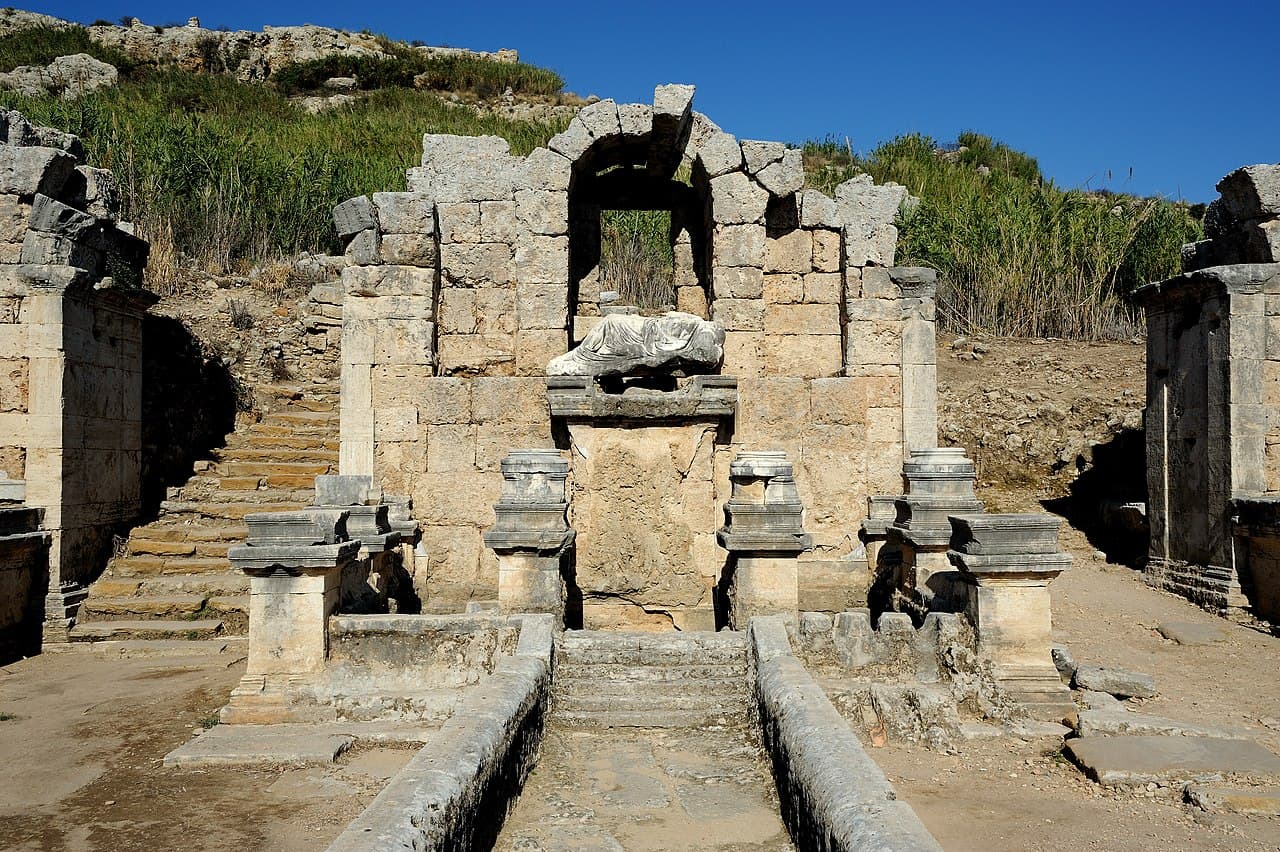
Aksu, 15 km east of the centre
Perge flourished under Roman rule between the 1st and 3rd centuries AD and became one of the most beautiful towns in Anatolia. You enter past the towers of its Hellenistic gate and follow a colonnaded main street with a water channel down its centre, which once fed a series of cascading pools. The site also has a Roman theatre, a stadium and baths, and it was the birthplace of Apollonius, the mathematician known for his work on conic sections.
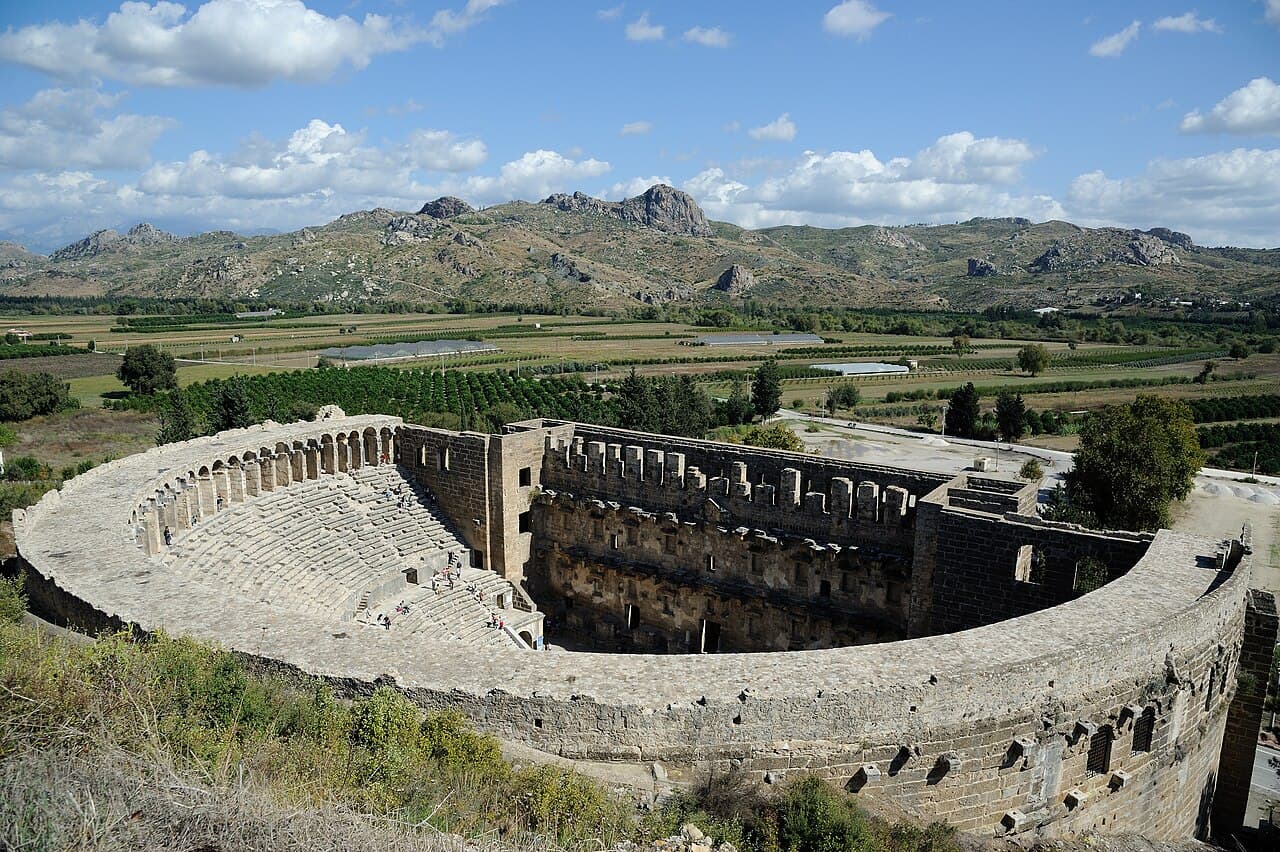
Near Serik, 40 km east of the centre
Aspendos has the best-preserved theatre of antiquity. Built in 155 AD by Zenon, an architect from the city itself, it measures 96 metres across and seats around 7,000 people, and its stage wall still stands complete. The theatre is not just a ruin: it hosts the annual Aspendos International Opera and Ballet Festival, staged by the Turkish State Opera and Ballet since 1994.
Prices start from the lowest published fare for this airport and depend on the destination and vehicle class. Cancel up to 24 hours before pickup for a 90% refund.
Photo credits REHBER0770 (CC BY-SA 4.0) · Bernard Gagnon (CC BY-SA 3.0) · Esginmurat (CC BY-SA 4.0) · Bestalex (CC BY-SA 4.0) · Saffron Blaze (CC BY-SA 3.0) · Saffron Blaze (CC BY-SA 3.0)