Private, fixed-price transfers from Split Airport to the city and the towns along the Dalmatian coast — plus what to see and how to get around once you arrive.
Split Airport is not in Split. It stands at Kaštela on the far side of Kaštela Bay, 20 km from the city and 6 km from Trogir, so arrivals set off in two directions. West of the terminal lie Trogir, Seget and the island of Čiovo, all of them a short drive away. East the road runs through Kaštela and Solin into Split, and then on down the coast past Omiš to the Makarska Riviera. Where you are staying, rather than the distance, is what decides how your first hour goes.
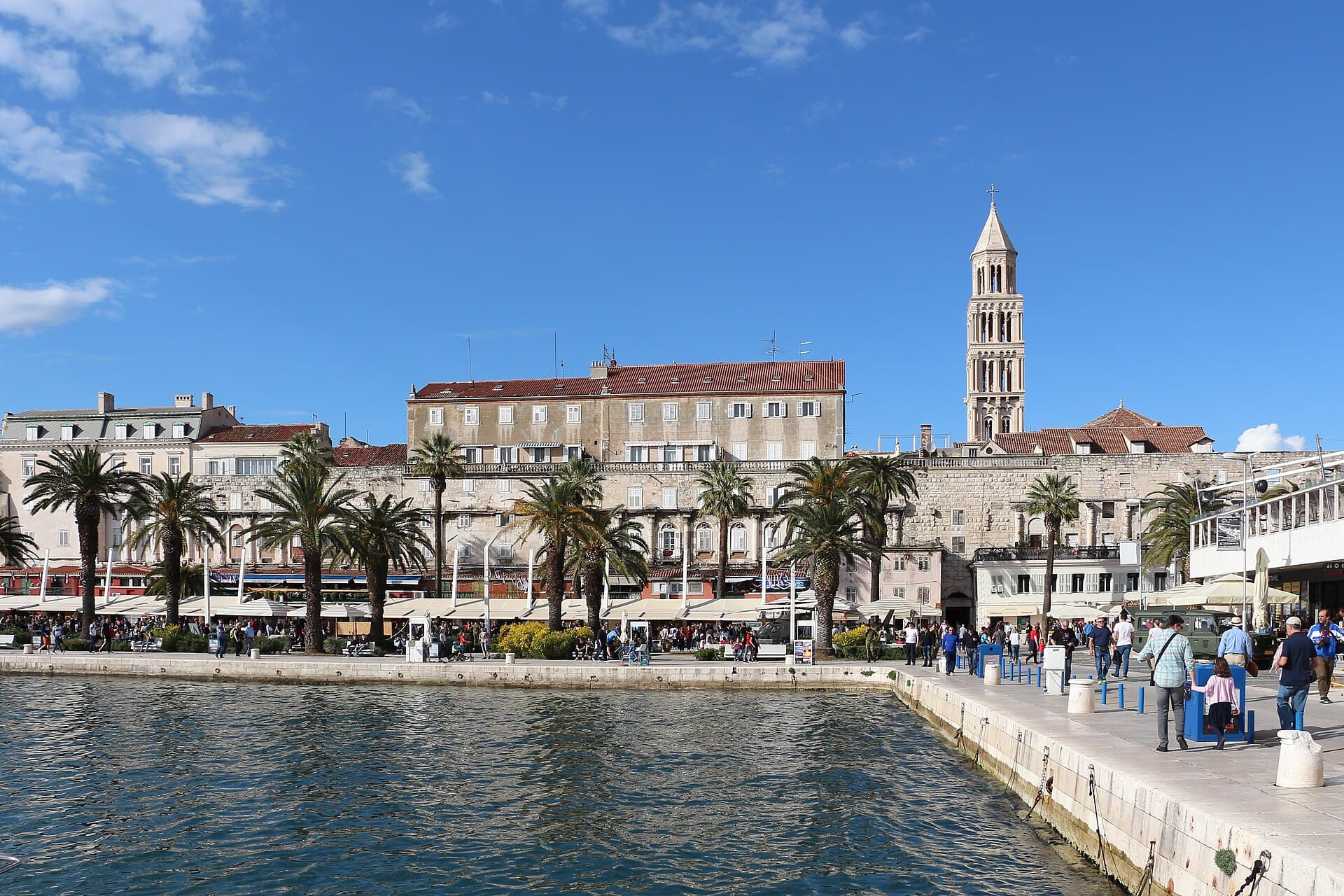
Split itself sits on a peninsula between Kaštela Bay and the Split Channel, with the wooded Marjan hill at its western end and the Kozjak and Mosor ridges behind it. The old town is the Roman palace Diocletian built for his retirement, still lived in and listed by UNESCO. Along the seafront runs the Riva, the city’s palm-lined promenade, and beside it the port, one of the busiest passenger ports in the Mediterranean and the gateway to Brač, Hvar, Šolta and Vis.
Old town, city centre
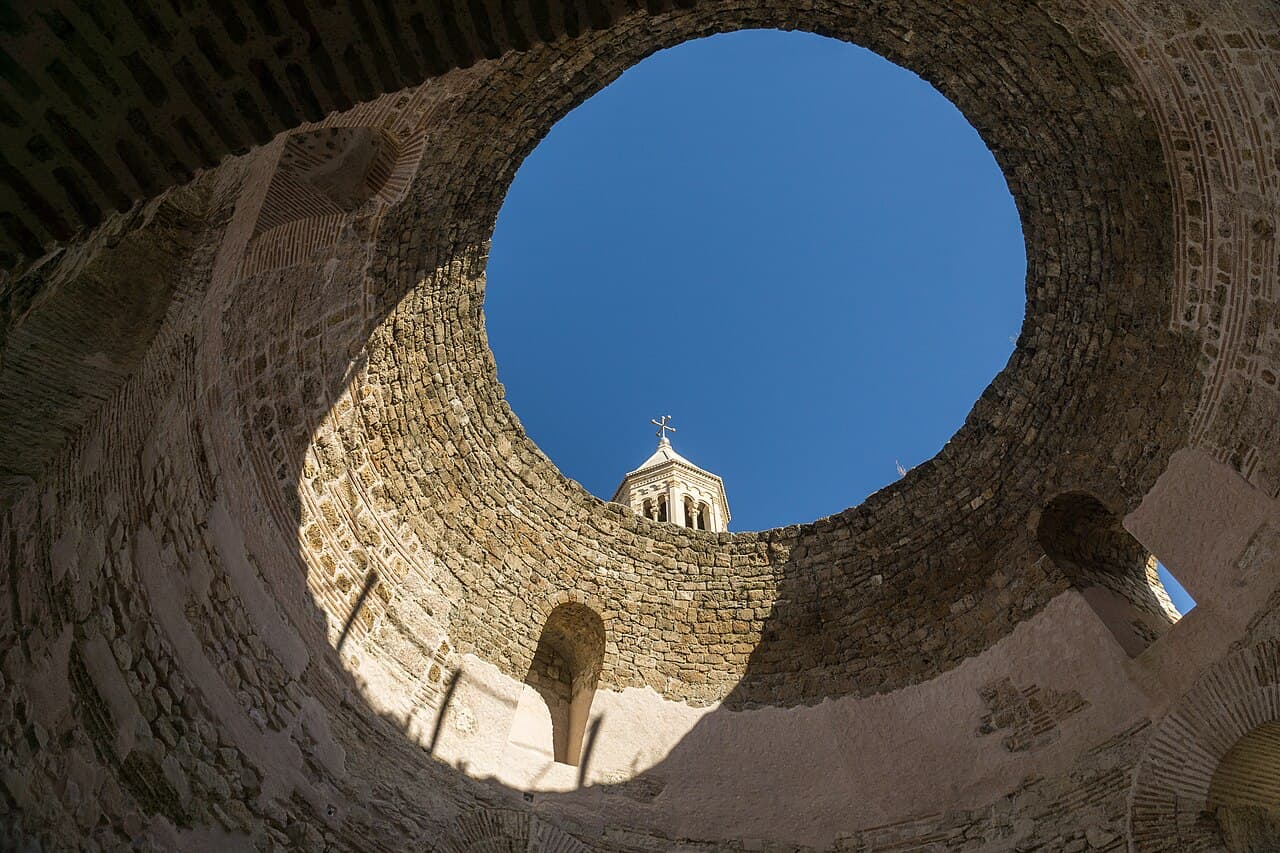
Split’s old town is not a district around a palace: about half of it is the palace. Diocletian built the fortified complex at the end of the third century AD as his retirement residence, an irregular rectangle some 215 m along its eastern side with sixteen towers on the landward walls. Today around 3,000 people live inside it, and it has been a UNESCO World Heritage Site since 1979. The Peristyle court opens on one side to the emperor’s mausoleum, now the Cathedral of Saint Domnius, and on the other to the Temple of Jupiter, later a baptistery.
West end of the city peninsula
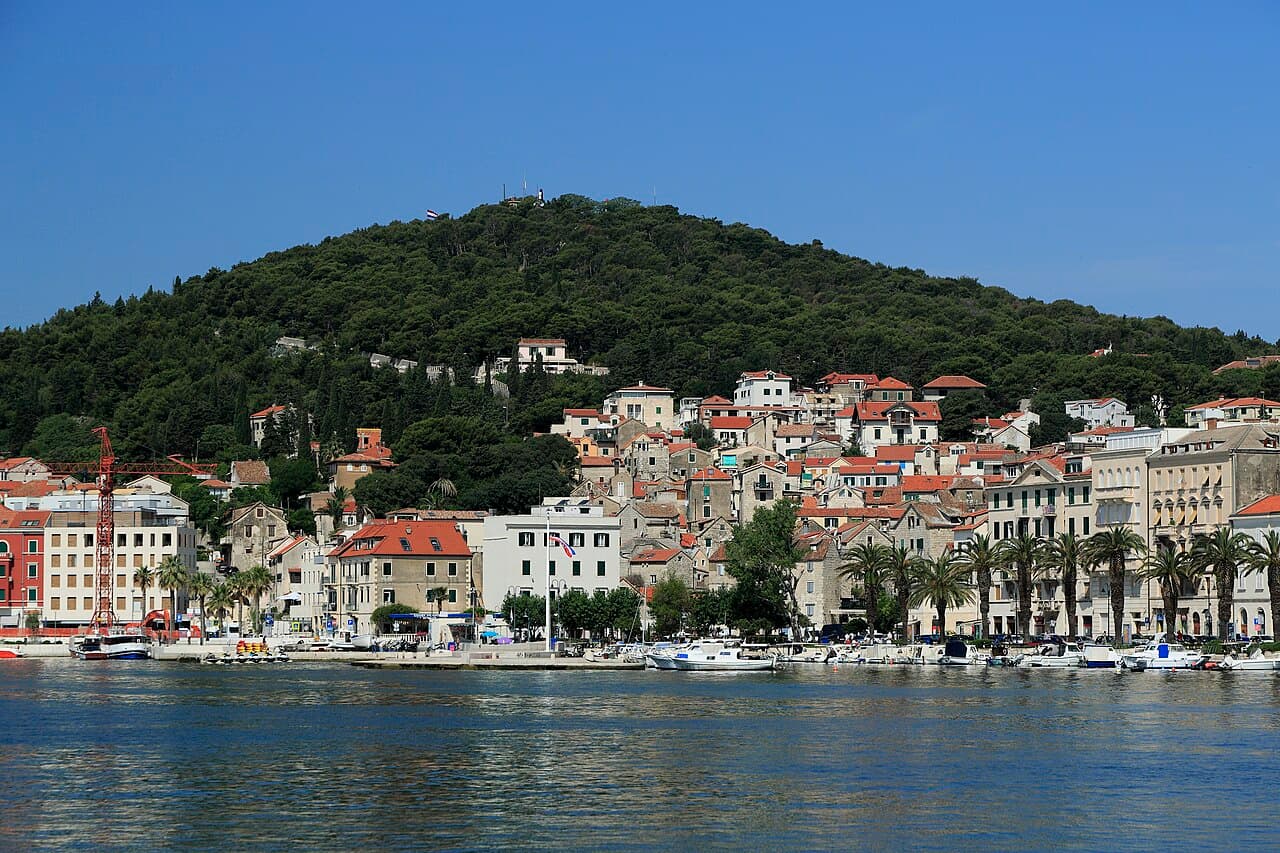
The hill that closes the western end of the peninsula is covered in dense Mediterranean pine forest and surrounded by the city and the sea. Citizens have used it as a park since as early as the 3rd century, and it remains the city’s recreation ground, with jogging trails, an early 13th-century church dedicated to Saint Nicholas and the beaches Obojena, Kašjuni and Bene at its foot. Marjan is 178 m tall, and from the top you look over the whole city, the surrounding islands and the mountains of Mosor and Kozjak.
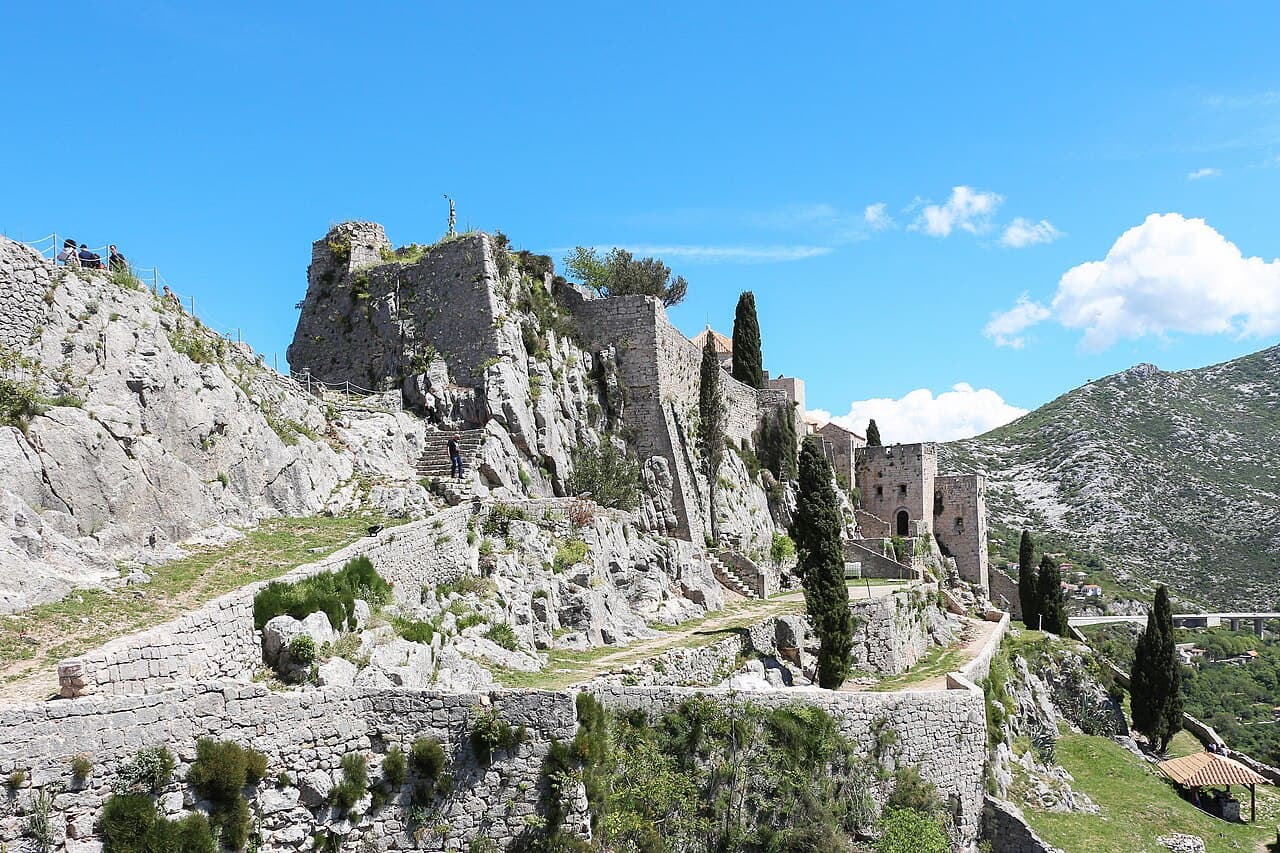
Klis, north-east of Split
Klis guards the pass that separates the mountains Mosor and Kozjak, 360 m up and looking down on Split, Solin, Kaštela, Trogir and most of the central Dalmatian islands. It has been fought over for 2,000 years: seat of Croatian rulers from the middle of the 9th century, defended by captain Petar Kružić against an Ottoman siege that lasted more than a quarter of a century, lost to the Ottomans in 1537, then taken by Venice in 1669 and enlarged. A museum inside shows arms, armour and traditional uniforms.
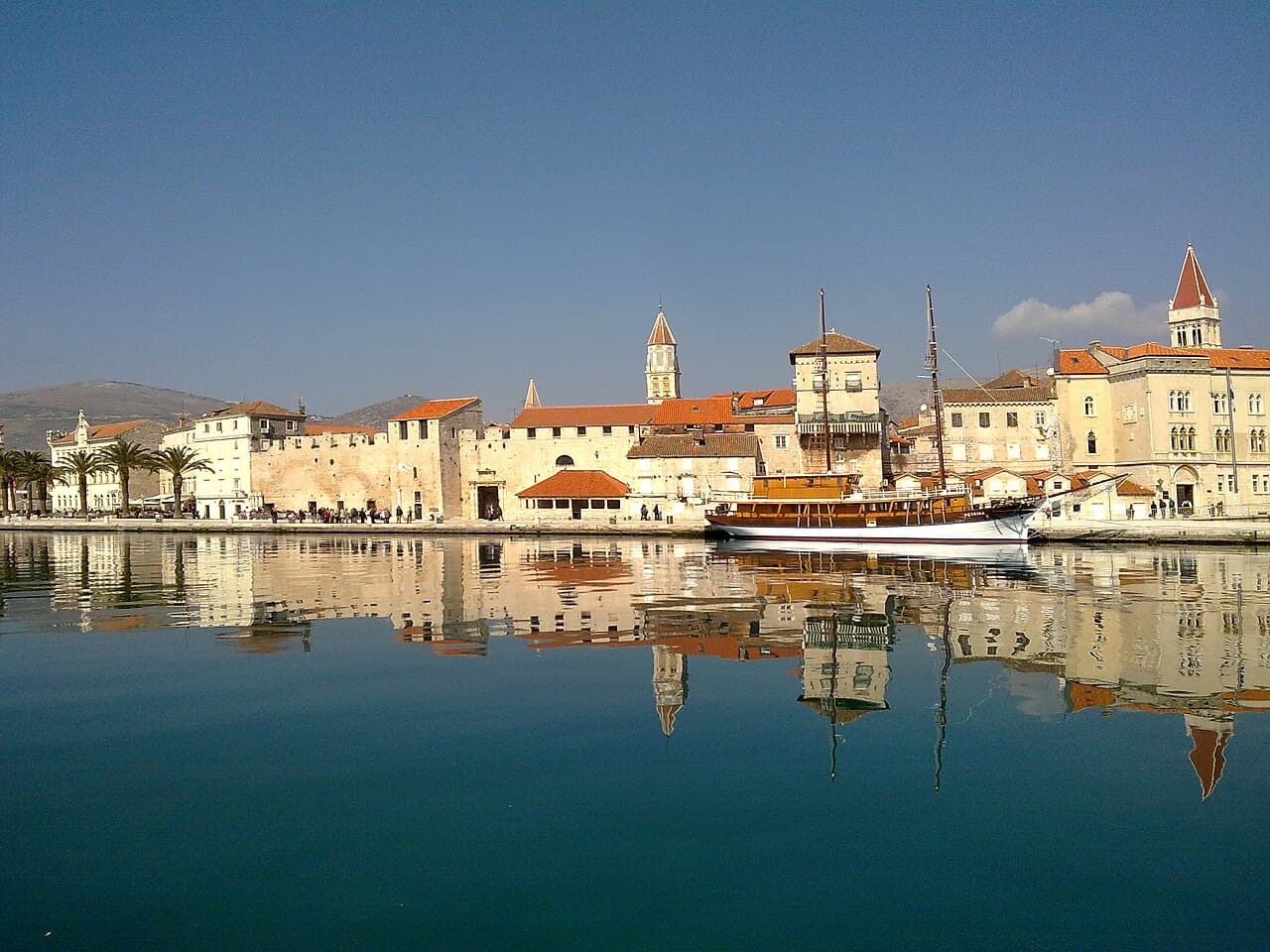
27 km west of Split, 6 km from the airport
The historic centre of Trogir stands on a small island between the mainland and Čiovo, reached by bridges from both sides, and has been a UNESCO World Heritage Site since 1997 for its Venetian architecture. Greek colonists founded Tragurion here in the 3rd century BC, giving the town 2,300 years of continuous urban life. Its grandest building is the cathedral of St Lawrence, whose west portal by the sculptor Radovan is the finest Romanesque-Gothic work in Croatia, and the 15th-century Kamerlengo fortress stands at the end of the waterfront.
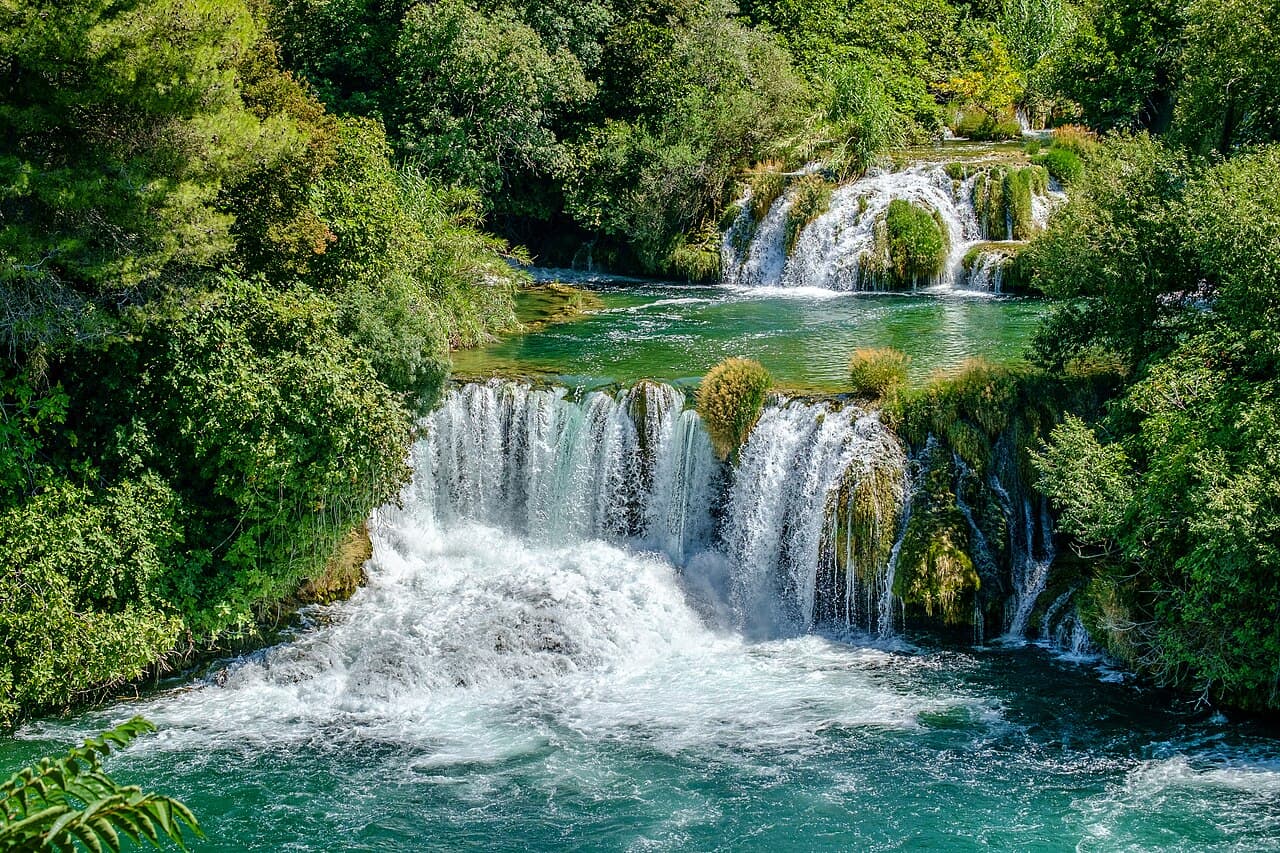
Šibenik-Knin County, on the Krka river
Croatia’s seventh national park, proclaimed in 1985, follows 109 square kilometres of the Krka river inland from the coast. Its best-known stretch is Skradinski buk, where 17 waterfalls drop a total of 47.7 m within an area 400 m long and 100 m wide — the largest travertine cascade system in Europe. Boardwalks run around the pools, and boats leave from Skradinski buk for the island of Visovac, where Franciscans founded a monastery in 1445. It makes a straightforward day trip north-west of Split.
Prices start from the lowest published fare for this airport and depend on the destination and vehicle class. Cancel up to 24 hours before pickup for a 90% refund.
Photo credits Bernard Gagnon (CC BY-SA 4.0) · Sumitsurai (CC BY-SA 4.0) · Falk2 (CC BY-SA 4.0) · Bernard Gagnon (CC BY-SA 4.0) · Macic7 (CC BY-SA 3.0) · Skot (CC BY-SA 4.0)