Private, fixed-price transfers from Heraklion Airport to the city and the resorts of Crete — plus what to see and how to get around once you arrive.
Heraklion is the largest city on Crete and the island’s capital, and its airport is the busiest on the island. The terminal lies about 5 km east of the city centre, and from there the resorts spread out in both directions along the north coast: east through Gouves and Hersonissos to Malia, Sissi, Agios Nikolaos and Elounda, and west to Agia Pelagia, Bali and on towards Rethymno and Chania. To the south, the road crosses the island to Matala and Agia Galini. With hotels spread that widely, the airport transfer is the one part of the trip worth settling before you fly.
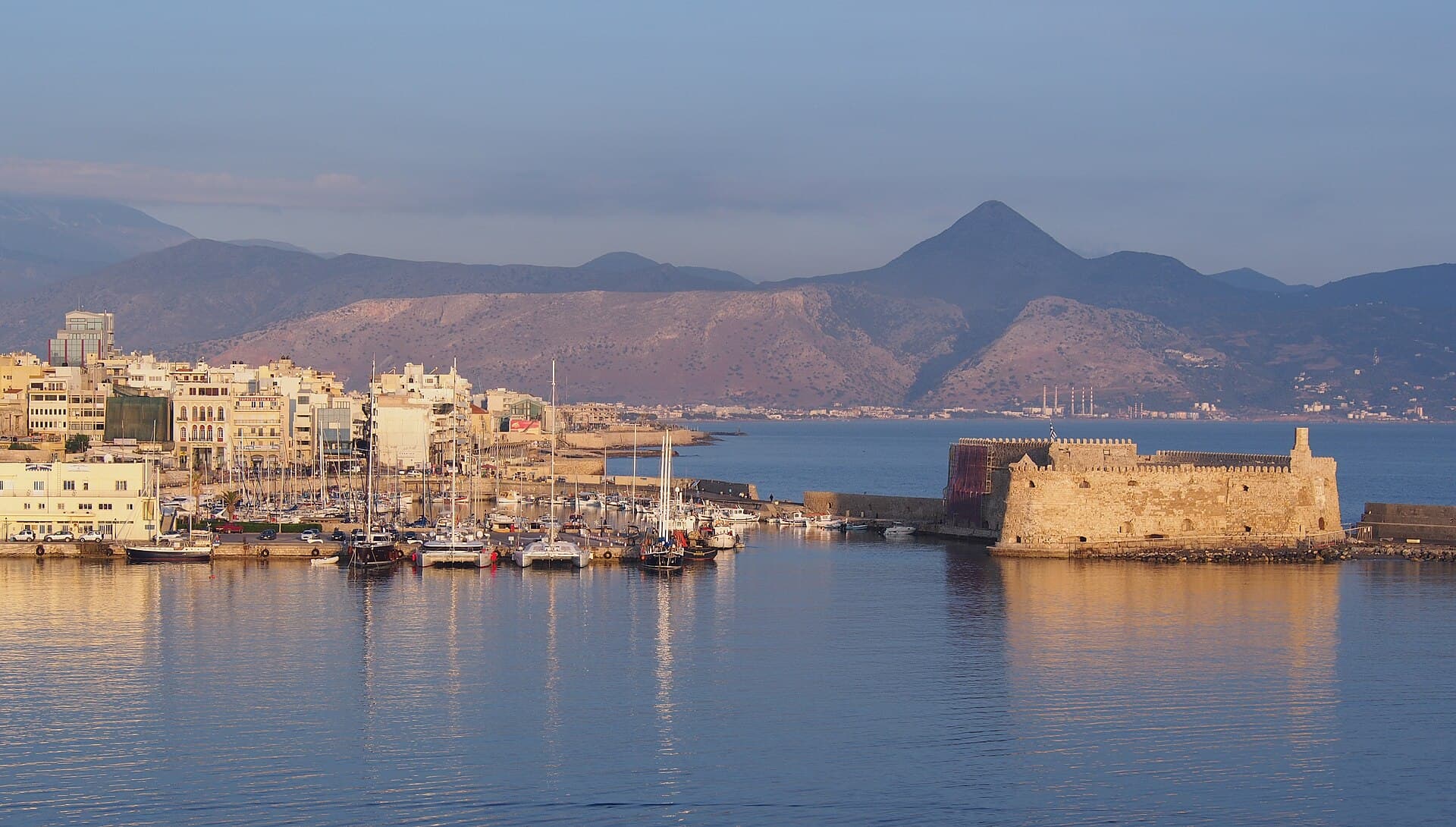
The city itself deserves more than a glimpse on the way to the beach. The Venetians ringed Heraklion with walls up to 40 metres thick and seven bastions, and their Koules fortress still guards the entrance to the old harbour. The Archaeological Museum holds by far the most important collection of Minoan artefacts, and the palace of Knossos lies about 5 km south of the historic centre. Further afield, tourist boats cross to the fortress island of Spinalonga from Plaka, Elounda and Agios Nikolaos, and the cliffs above the bay at Matala are riddled with caves created in the Neolithic Age.
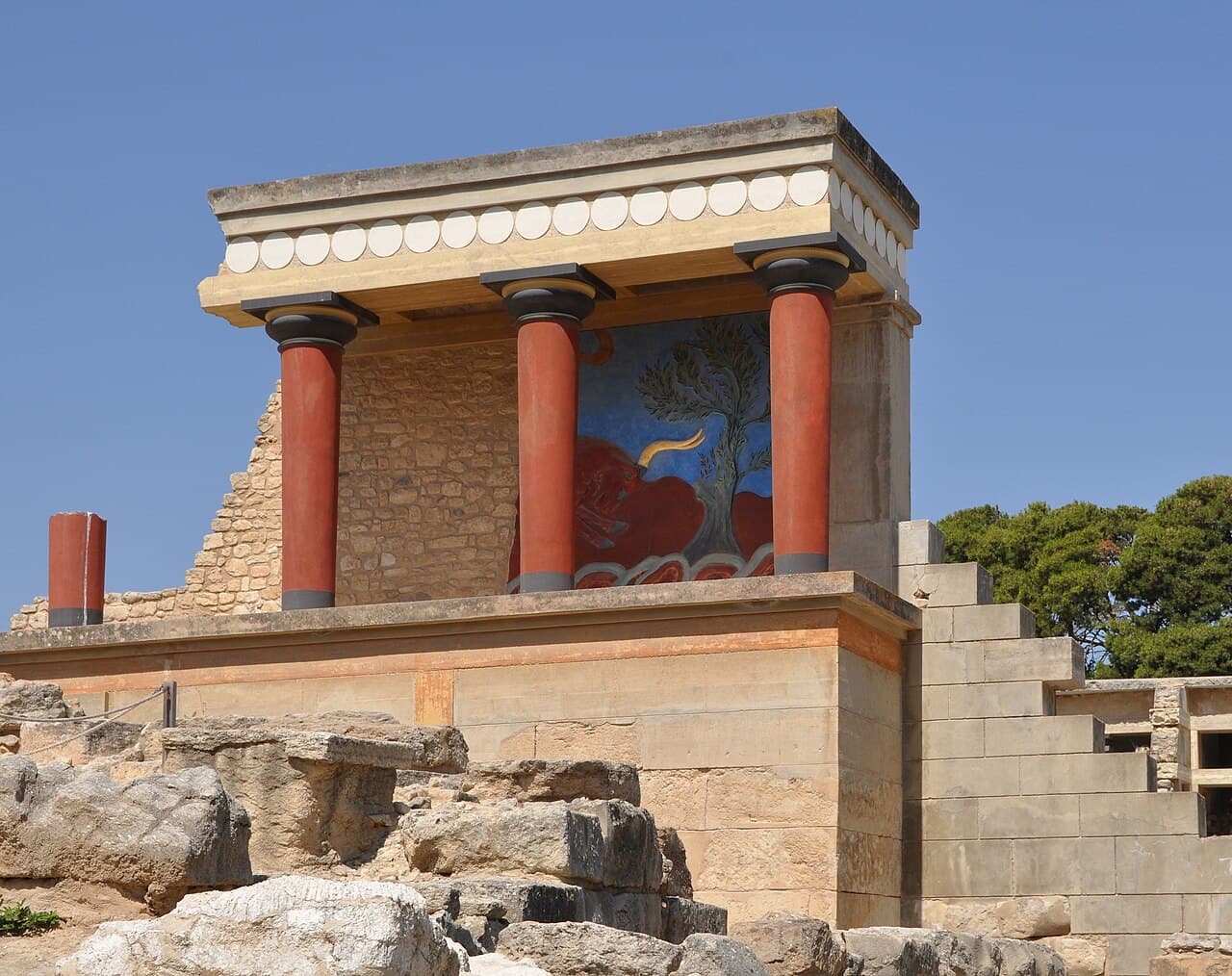
About 5 km south of the centre
Knossos became the largest and best-known centre of the Minoan civilisation, and it is one of the most visited archaeological sites in Greece. Settlement on Kephala hill began around 7000 BC; the first palace was built around 1900 BC, and a major destruction by fire is conventionally dated to about 1350 BC. Arthur Evans began large-scale excavations in 1900 and rebuilt parts of the palace using reinforced concrete and colour. In later Greek tradition, the complex plan of the palace was remembered as the Labyrinth.
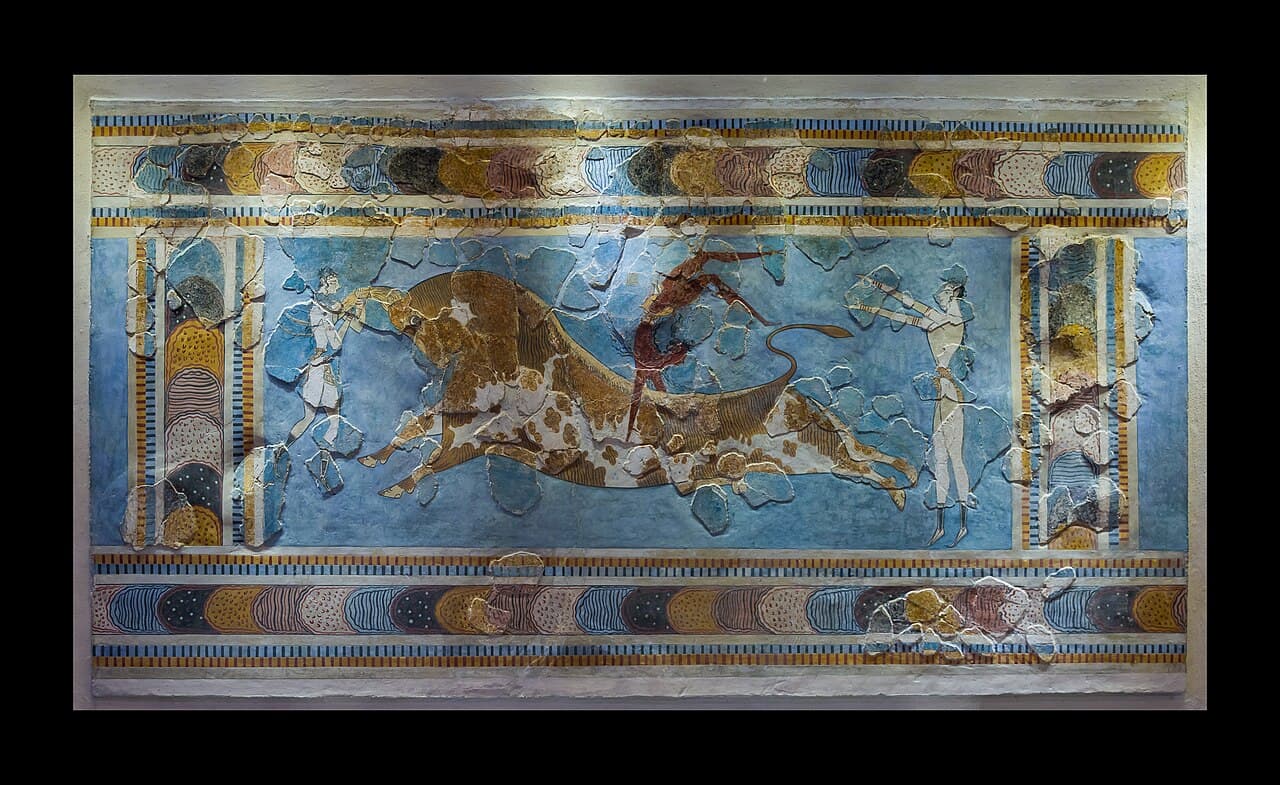
City centre
The museum holds by far the most important and complete collection of artefacts of the Minoan civilisation, and it is regarded as the best in the world for Minoan art. It began in 1883 as a simple collection of antiquities. The present building, designed by the architect Patroklos Karantinos, went up between 1937 and 1940, with skylights that bring daylight into the galleries. Most of the museum closed for renovation in 2006 and reopened in May 2013.
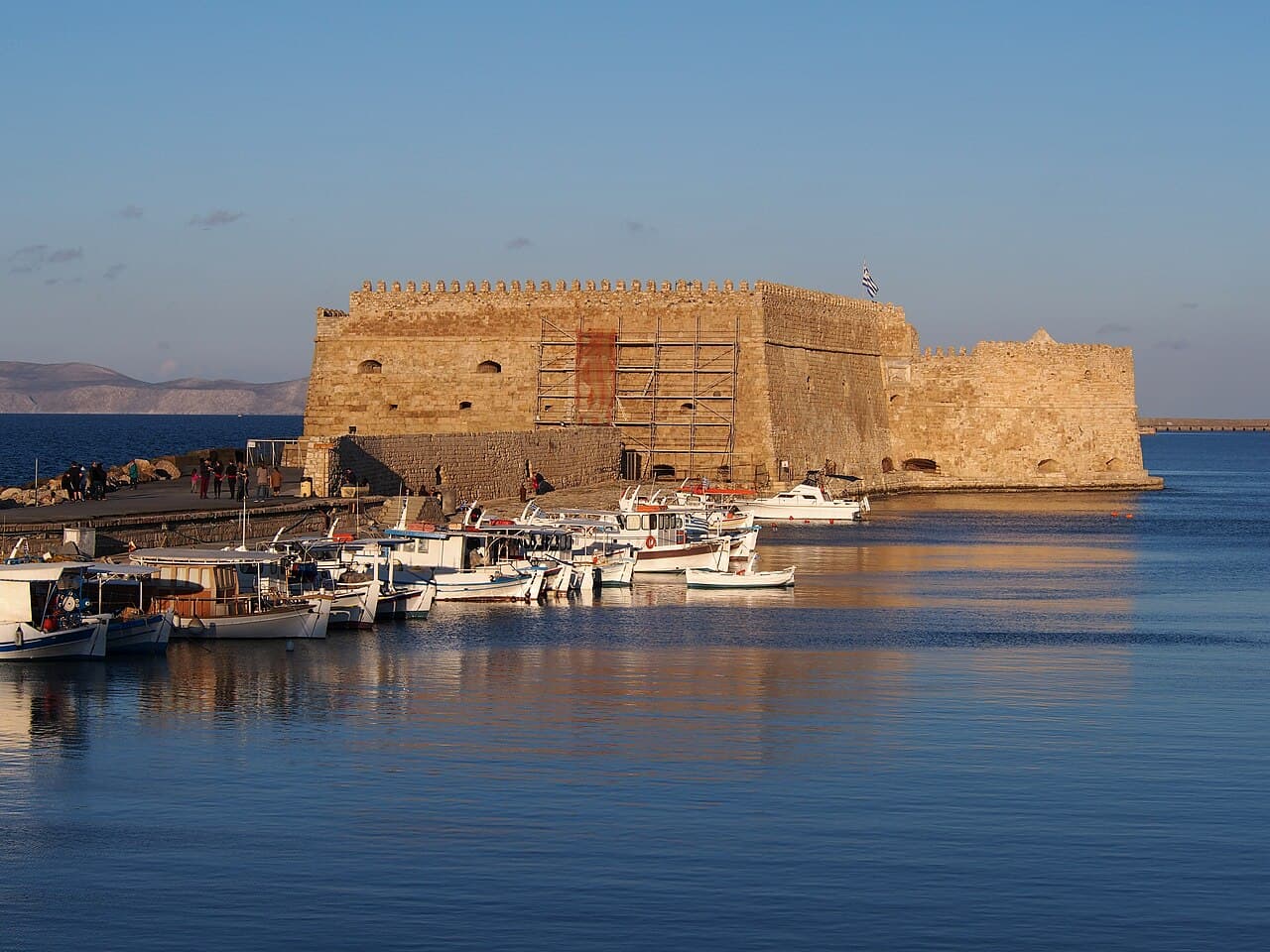
Old harbour, city centre
The Koules, or Castello a Mare — “Fort on the Sea” in Italian — stands at the entrance to Heraklion’s old port. Work began after the Byzantine tower there was demolished in 1523, and the fort was completed in 1540. Its walls are up to 8.7 m thick, and its two storeys hold 26 rooms, once used as barracks, a prison, storerooms, a church, a mill and a bakery. The Ottomans took the fort in 1669; today it is restored, open to the public and occasionally hosts art exhibitions.
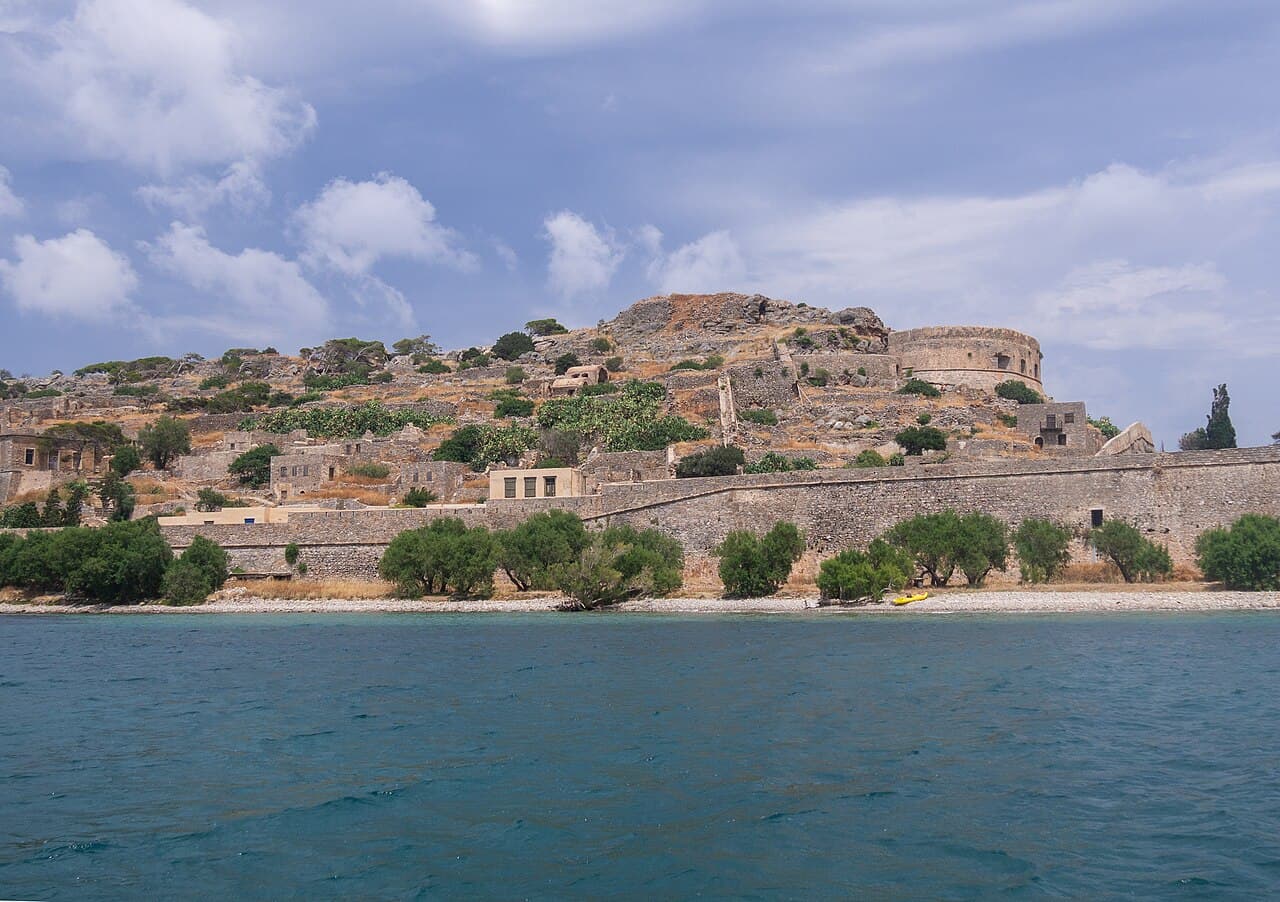
Gulf of Elounda, near Plaka
Spinalonga is a small, rocky island at the northern mouth of the Gulf of Elounda, separated from the village of Plaka by around 750 m of water. In 1579 the Venetians laid the foundation stone of its fortifications, and in 1715 the island was given to the Ottomans by agreement. From 1904 to 1957 it was a leper colony, a history retold in Victoria Hislop’s novel The Island. Tourist boats leave regularly from Plaka, Elounda and Agios Nikolaos, and the island receives hundreds of thousands of visitors a year.
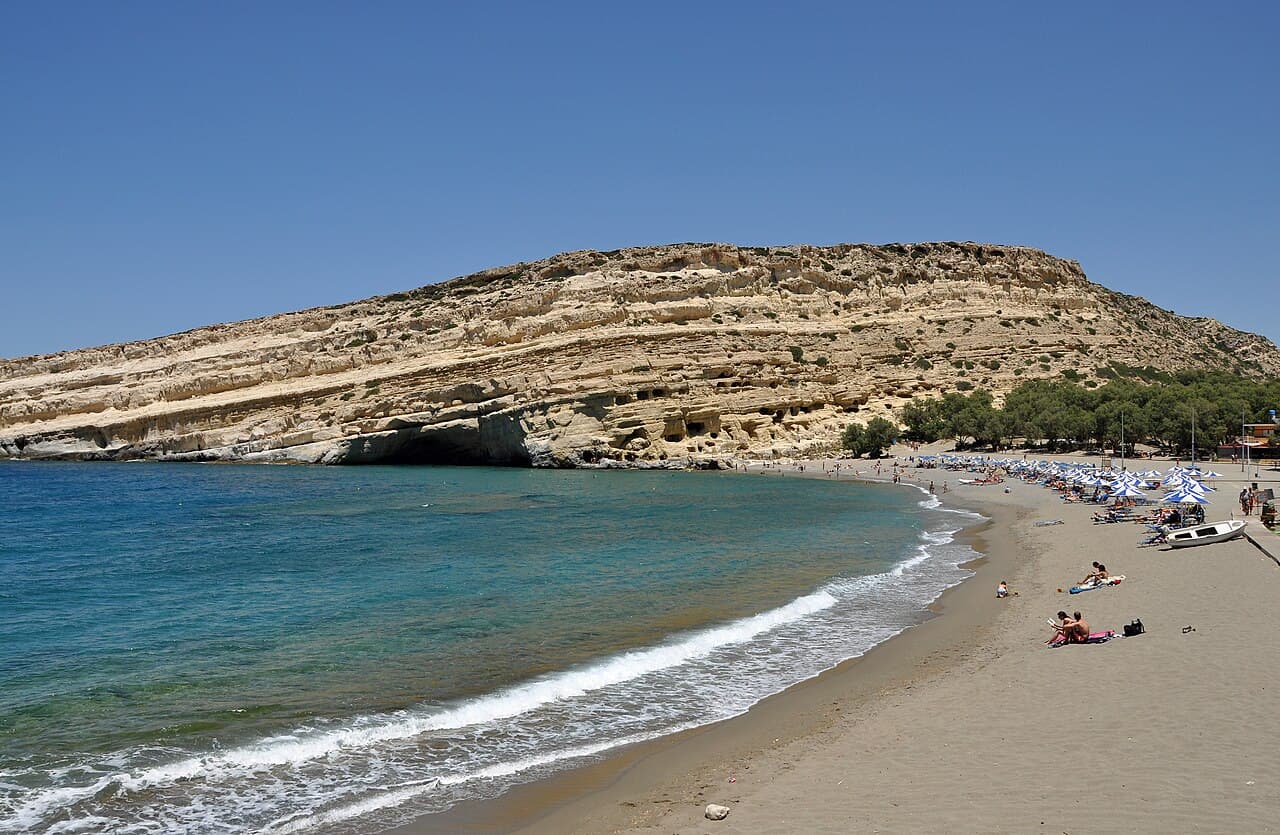
75 km south-west of Heraklion
Matala is a village on a bay whose cliffs are riddled with artificial caves, created in the Neolithic Age. It was the port of Phaistos in Minoan times and, under the Romans, the port of Gortys. In the 1960s the caves were occupied by hippies, who were later driven out by the church and the military junta. That chapter is now celebrated at the three-day Matala Beach Festival, held every June since 2011.
Prices start from the lowest published fare for this airport and depend on the destination and vehicle class. Cancel up to 24 hours before pickup for a 90% refund.
Photo credits C messier (CC BY-SA 4.0) · Marc Ryckaert (MJJR) (CC BY-SA 3.0) · Jebulon (CC0) · C messier (CC BY-SA 4.0) · C messier (CC BY-SA 4.0) · Marc Ryckaert (MJJR) (CC BY 3.0)