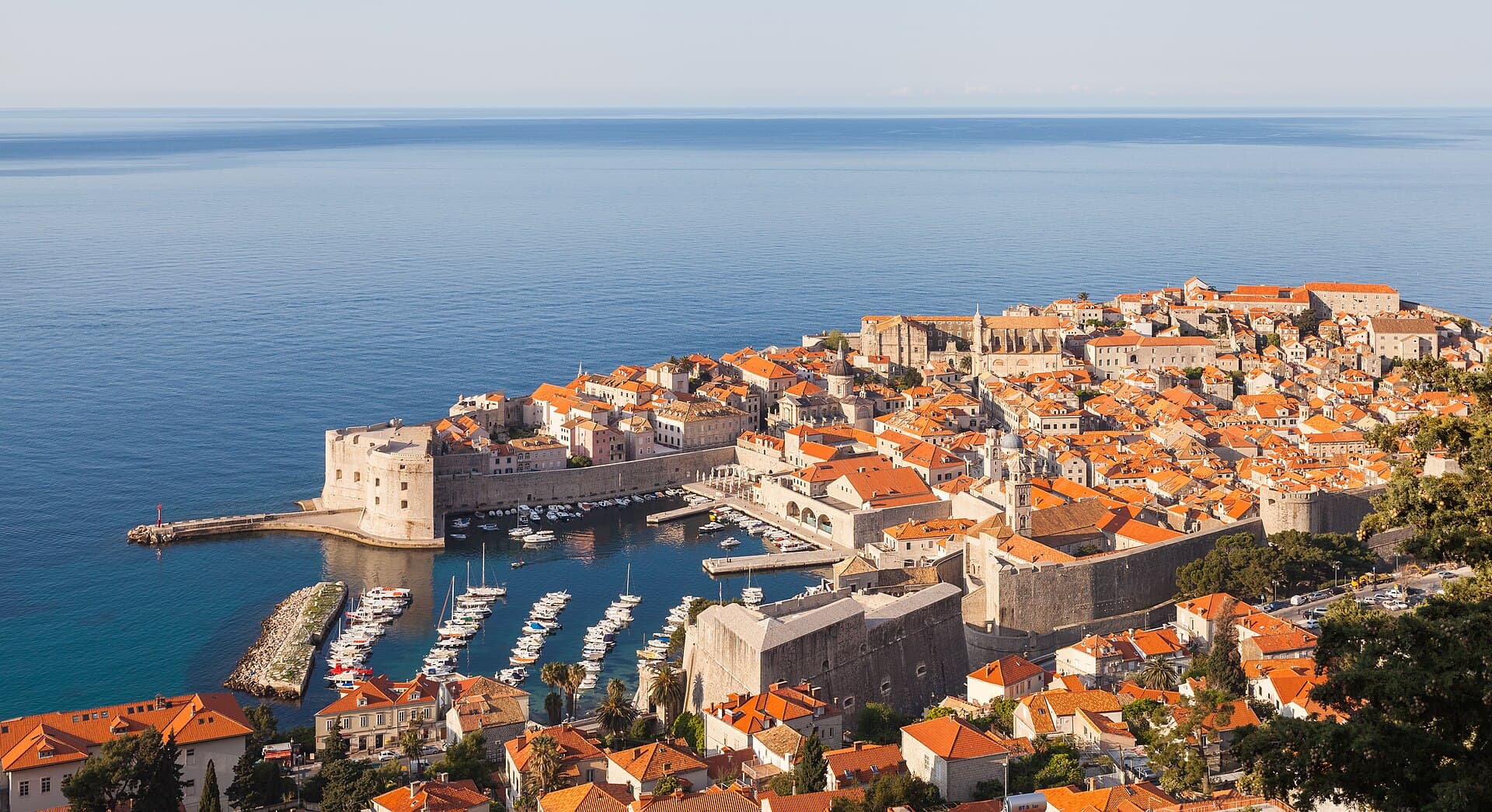
Private, fixed-price transfers from Dubrovnik Airport to the walled city and the coast around it — plus what to see and how to get into town once you arrive.
Dubrovnik sits at the southern tip of Croatia, and almost every visitor arrives at Ruđer Bošković Airport, which the airport itself puts 22.5 km from the city, out at Čilipi. From there the coast runs in two directions. Cavtat lies just below the runway, the nearest town of all, while the drive into the city goes the other way, north-west past the small waterfront villages of the Župa Dubrovačka bay — Plat, Mlini and Srebreno. Beyond the walls the road carries on onto the Lapad and Babin Kuk peninsula, where most of the larger hotels stand, and then up the coast to Zaton, Orašac and Slano.
The old city is the reason to come, and it is closed to traffic: every arrival ends at the Pile or Ploče gate and you walk from there. Inside, the limestone Stradun runs from one gate to the other, and the city walls make an uninterrupted circuit above the rooftops and the sea. Lokrum lies a few hundred metres offshore, reached by boat from the old harbour, and a cable car climbs Srđ, the hill immediately behind the city, for the view back down over it. Further up the coast, the walls of Ston guard the neck of the Pelješac peninsula.
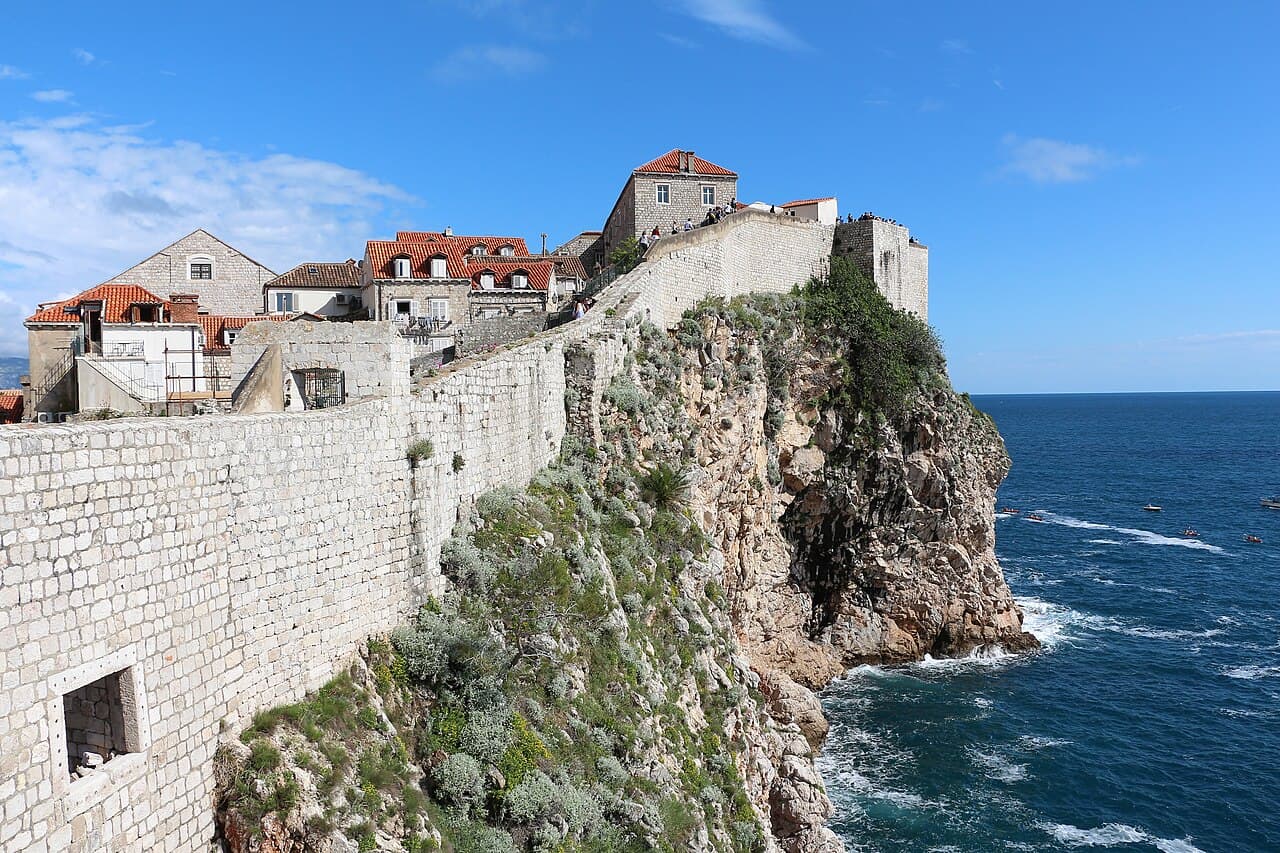
Around the Old Town
The walls run an uninterrupted course of roughly 1,940 metres around the old city and reach about 25 metres at their highest, built mainly between the 13th and 17th centuries. Three round and 14 quadrangular towers reinforce them, along with five bastions and the great St John’s Fortress; on the land side stands Fort Bokar, the oldest preserved casemate fort of its kind in Europe. The old city joined the UNESCO World Heritage list in 1979, and the walls drew more than 1.2 million visitors in 2019.
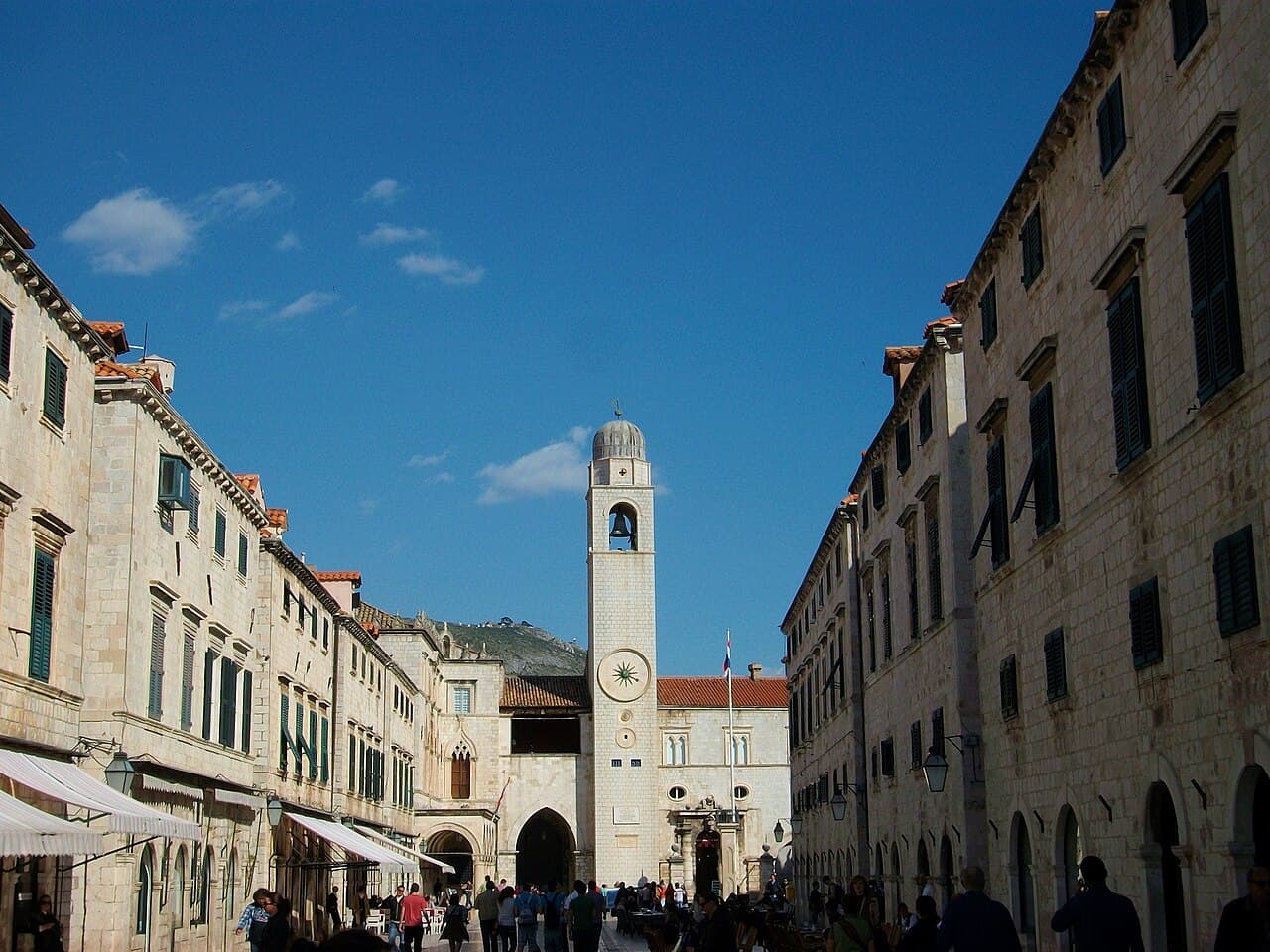
Old Town, Pile to Ploče
Stradun, also called Placa, is the Old Town’s main street: a limestone-paved pedestrian run of some 300 metres from the Pile Gate in the west to the Ploče Gate in the east, with a 15th-century Onofrio fountain at either end. It became the city’s main thoroughfare in the 13th century, and its present appearance dates from after the 1667 earthquake, when the Republic of Ragusa passed a law setting out how every new house was to be built — which is why the 17th-century fronts along it match so exactly.
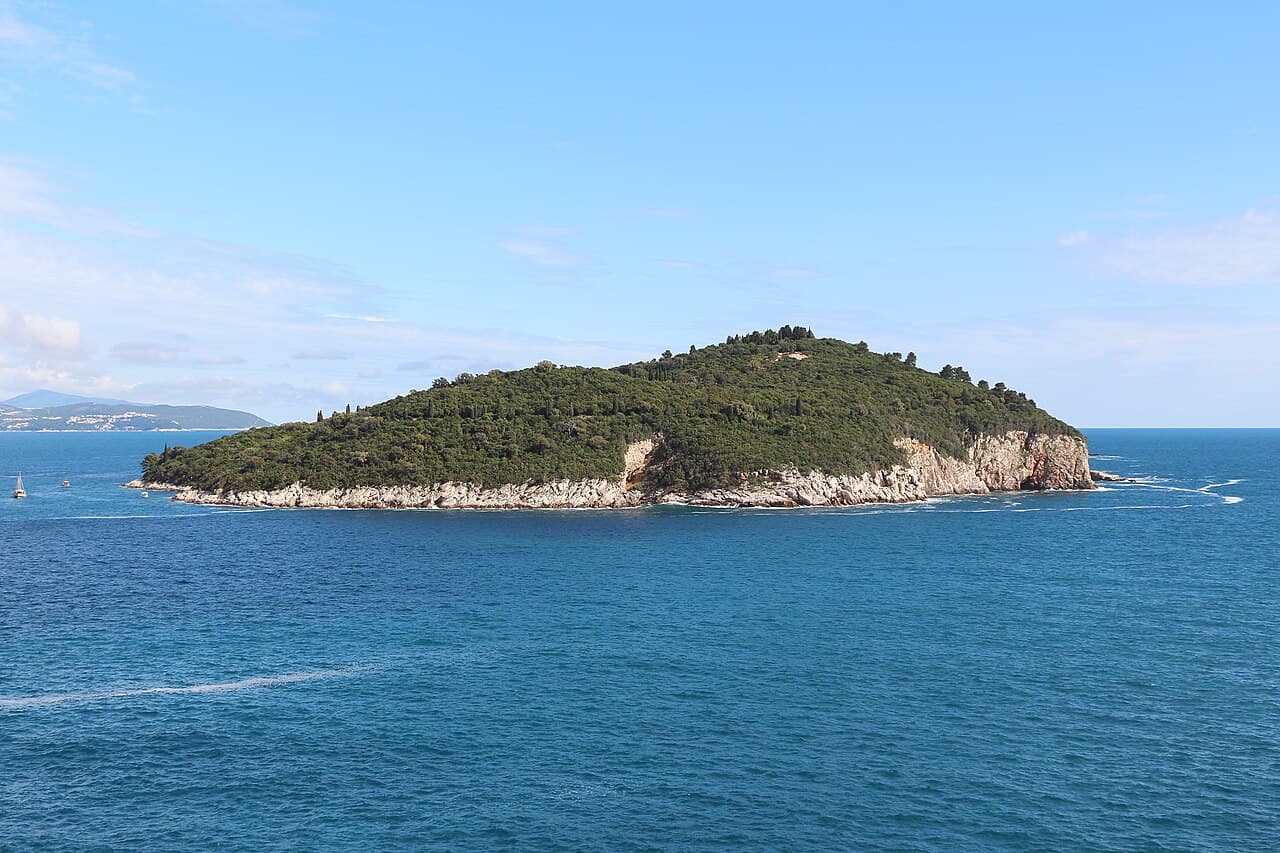
600 metres off the Old Town
Lokrum lies 600 metres from the city and has a regular ferry from the Old City port, which makes it the easiest half-day escape from the walls. A Benedictine abbey and monastery were founded here in 1023, and the monastery survives alongside a botanical garden from the time of Archduke Maximilian, who kept a holiday home on the island. At the highest point, 96 metres above the sea, stands Fort Royal Castle, built by the French during Napoleon’s occupation.
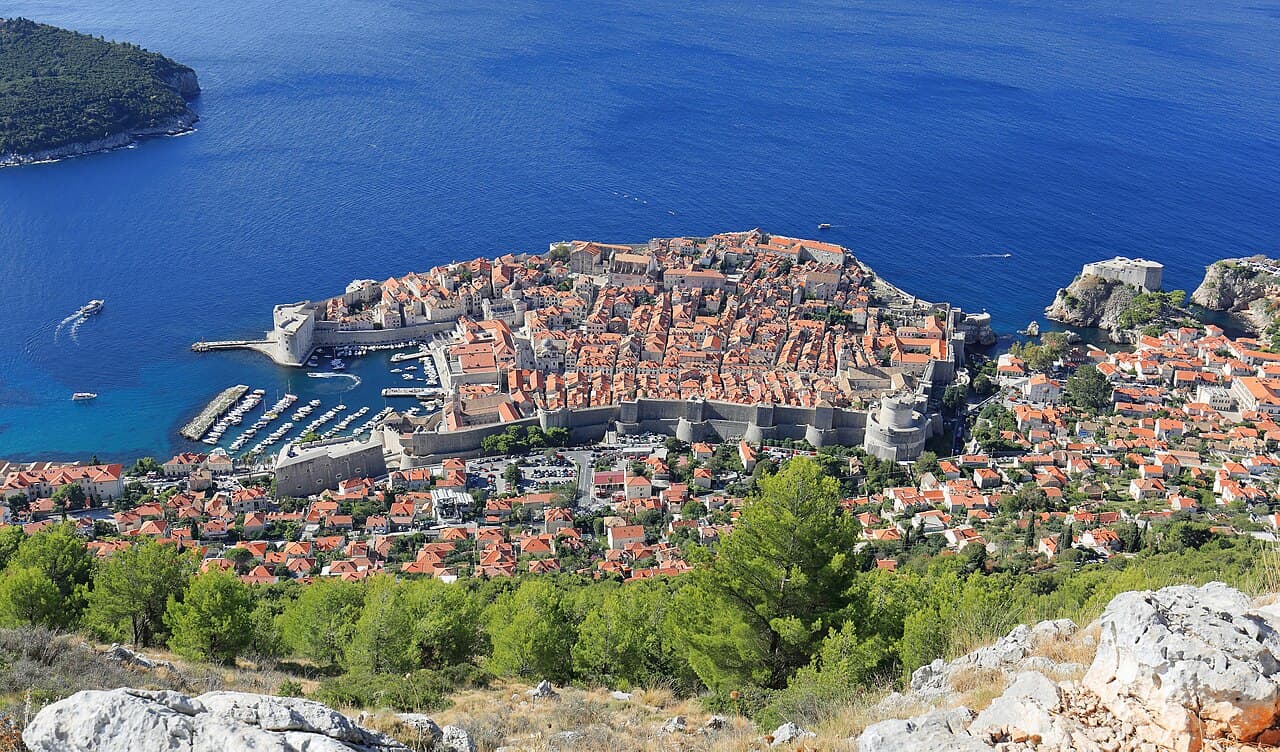
The hill behind the walled city
Srđ is the low mountain directly behind the walled city, 412 metres high, with a large white stone cross and Fort Imperial on top — built by the French in 1810 and now home to the Museum of the Croatian War of Independence. From up here you look down on the Old Town, Lokrum and the open Adriatic. The cable car from the Old Town first ran in 1969 and was the first in the Adriatic region; severely damaged during the siege in 1991, it reopened after restoration in 2010.
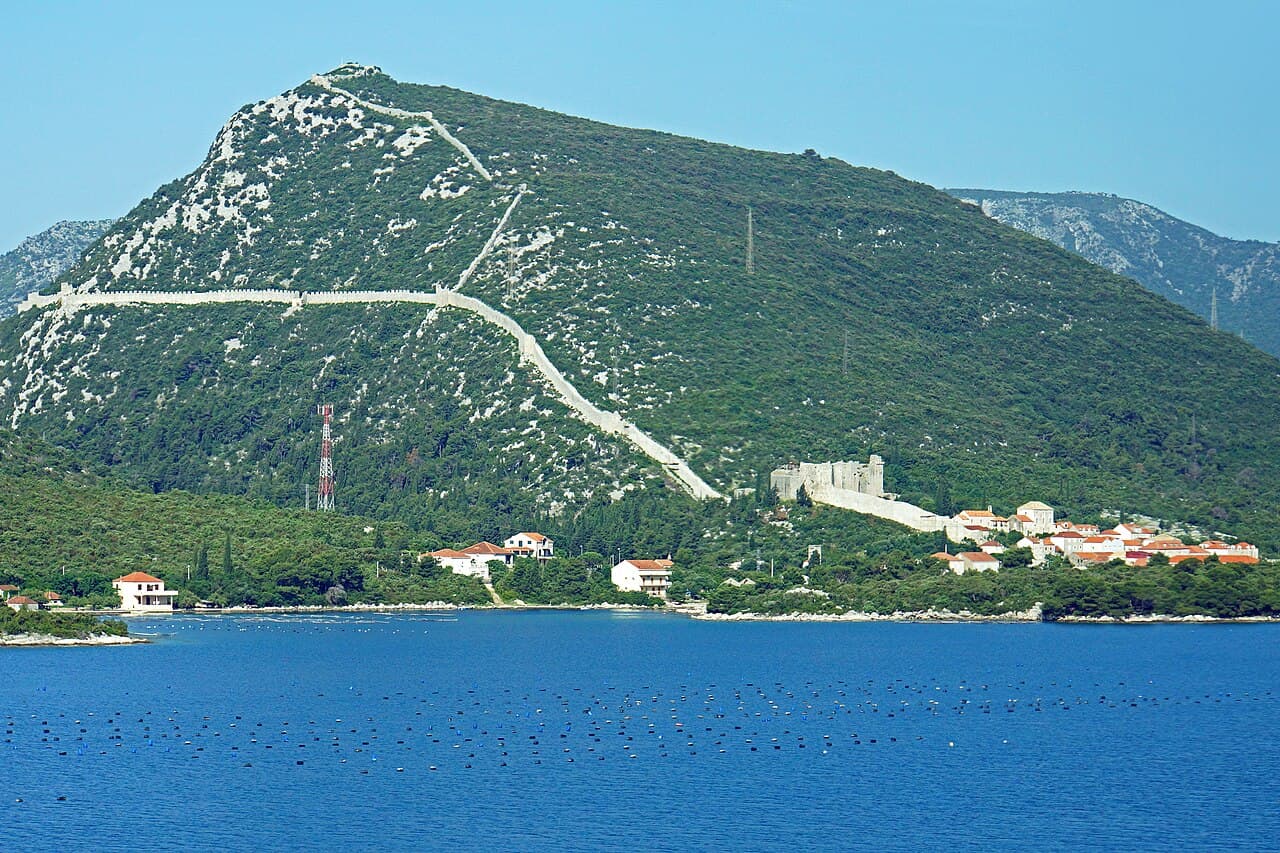
Ston, on the Pelješac peninsula
Ston guards the neck of the Pelješac peninsula up the coast from the city, behind one of the longest preserved fortification systems in the world. Begun in 1358 by the Republic of Ragusa, the walls originally ran more than 7 kilometres and still run 5.5, linking Ston to Mali Ston with 40 towers, of which 20 survive, and five fortresses. They were built to protect the salt pans that helped pay for Dubrovnik’s wealth, and those pans are still worked today.
Prices start from the lowest published fare for this airport and depend on the destination and vehicle class. Cancel up to 24 hours before pickup for a 90% refund.
Photo credits Diego Delso (CC BY-SA 3.0) · Bernard Gagnon (CC BY-SA 4.0) · Joanbanjo (CC BY-SA 3.0) · Bernard Gagnon (CC BY-SA 4.0) · Martin Falbisoner (CC BY-SA 4.0) · Dennis G. Jarvis (CC BY-SA 2.0)